China Top 10 Network Cable To USB Adapter Manufacturers

Time:2026-09-25 Author:Oliver
0%

Reliable wired links still matter, even as offices add Wi-Fi, cloud services, and connected devices. Cisco’s Annual Internet Report (2018–2023), published in 2020, forecast 29.3 billion networked devices worldwide by 2023. That figure was a forecast, not a current device count. It nevertheless shows why dependable ways to connect computers and other equipment remain relevant.

A Network Cable To Usb Adapter bridges a familiar Ethernet cable and a device with a USB port. Its real-world performance depends on more than the connector: chipset, supported USB and Ethernet standards, driver compatibility, heat management, and build quality all matter. USB-IF specifies USB data rates, while IEEE 802.3 defines Ethernet standards. Those specifications provide useful reference points, but advertised speeds do not guarantee matching file-transfer results. Small details count. A poorly fitted plug or unstable driver can disrupt an otherwise capable setup.

This guide introduces ten China-based manufacturers and considers the details buyers should verify: product range, technical documentation, customization options, quality-control practices, and communication support. The comparison is intended as a starting point, not a substitute for sample testing or supplier due diligence. Manufacturer claims can be incomplete. That deserves a closer look. Check the exact chipset and supported operating systems, then test the adapter with your own cable, port, and network conditions before making a larger purchase.
China Top 10 Network Cable To USB Adapter Manufacturers

What Is a Network Cable-to-USB Adapter?

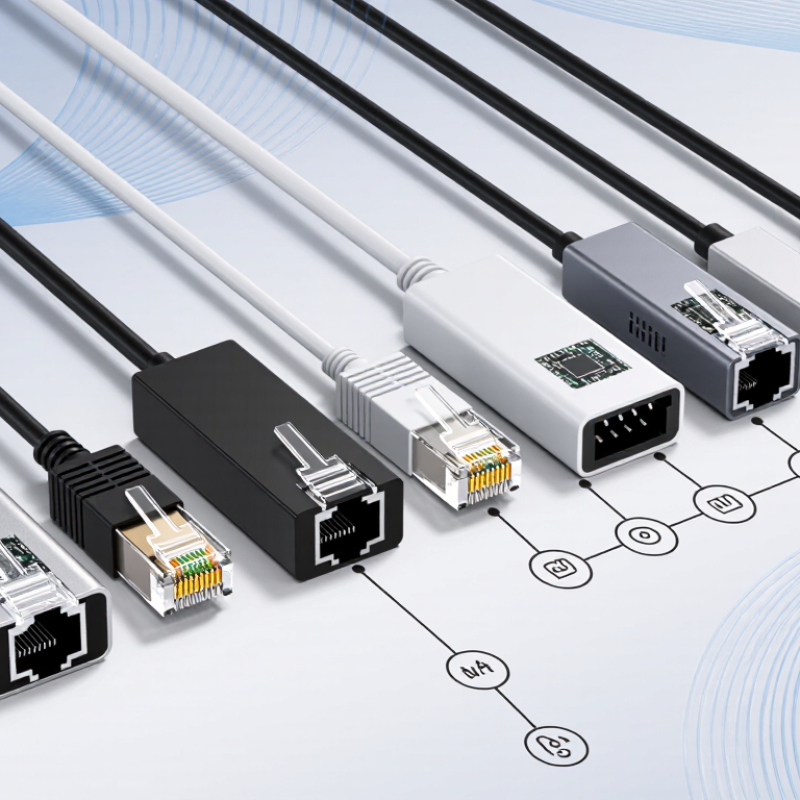
A network cable-to-USB adapter connects an Ethernet cable to a computer or other device through a USB port. One end typically has an RJ45 socket for the network cable; the other has a USB-A or USB-C plug. Inside, a small network interface chip translates data between USB and Ethernet. It is not just a passive pin converter.

This adapter can add wired networking to a laptop without an Ethernet socket, or provide a practical connection when Wi-Fi is weak. Performance depends on the adapter’s USB version, Ethernet speed, device compatibility, and network equipment. Check these details before choosing one. Some systems install drivers automatically; others may need a manual setup. The terminology is not always tidy, and product descriptions can blur the difference between supported link speed and real-world speed.

Tips: Match the connector to your device, then check its operating-system support and stated Ethernet speed. Use a sound cable and secure the RJ45 clip. If the connection drops, try another USB port and inspect the cable ends. Small details matter. Even then, results can vary, so avoid assuming every adapter performs alike.

How China’s Network Adapter Manufacturing Sector Is Organized

China’s network cable-to-USB adapter sector is organized as a layered supply chain, not a single factory model. Some firms design circuit boards and manage product specifications; others focus on assembly, cable processing, or testing. A compact adapter may contain a USB connector, an Ethernet port, a controller chip, and a small printed circuit board. Each part can come from a different supplier.

Coordination matters.

Manufacturing and sourcing often cluster around electronics hubs such as Shenzhen and Dongguan, while other regions contribute components and logistics. Contract manufacturers may build products to a buyer’s design, whereas design-focused suppliers can develop hardware and firmware together.

The labels are not always clear. A factory that assembles devices may rely on outside partners for chip selection, tooling, or compliance testing.

Quality checks should cover more than whether a cable fits. Technicians can test data transfer, port stability, heat under sustained use, and compatibility across operating systems and USB standards.

Small details matter. A loose connector or poorly controlled solder joint can cause intermittent faults that are hard to reproduce. Production samples also deserve scrutiny, because a successful prototype does not guarantee consistent batches.

The sector is efficient, but its supply chain can be difficult to read from a catalog alone. Some gaps remain, and buyers should verify them directly.

Criteria for Selecting Leading Chinese Manufacturers

China Top 10 Network Cable To USB Adapter Manufacturers

When assessing Chinese manufacturers, begin with the adapter’s actual use case. Check whether samples support the required USB-A or USB-C connection and Ethernet speed. Ask for compatibility details across operating systems, including driver requirements. Then test sustained data transfer, not just a quick connection. A warm casing after extended use may signal a design issue. So can unstable throughput.

Look beyond the sample. Request documented quality checks, component traceability, and clear procedures for handling design changes. Ask how each production batch is tested for connection stability, port fit, and cable strain relief. Verify that supplied compliance documents match your target market and the exact product configuration. A polished catalog is not proof; I would still compare multiple samples, and even that can miss problems that appear at scale. Check production capacity, lead times, and packaging details in writing. Reliable suppliers answer technical questions with specific evidence, rather than broad promises. Some uncertainty remains. A factory visit or independent inspection can help, though neither replaces ongoing quality checks.

Profiles of 10 Chinese Network Cable-to-USB Adapter Manufacturers

The ten profiles highlight different capabilities found among Chinese network cable-to-USB adapter manufacturers. One focuses on compact USB-A adapters for everyday laptops. Another develops USB-C models for newer devices. A third emphasizes metal housings that handle frequent plugging. Other profiles cover braided cables, short travel adapters, integrated network ports, custom cable lengths, bulk production, packaging options, and product testing. These differences matter: a sturdy connector and stable network link are more useful than a long feature list.

Supplier descriptions should be treated as starting points, not proof of performance. Ask for interface specifications, supported operating systems, chipset details, and test records. Check whether the adapter maintains a steady connection during longer use. Some catalogs appear thorough, yet leave compatibility details unclear. That deserves a follow-up question. A sample can reveal stiff cable jackets, loose ports, or heat that photographs miss.

Tips: Confirm the exact USB connector and network speed your device supports. Request a sample and test it with your own equipment before placing a larger order.

Product Features, Certifications, and Sourcing Considerations

For a network cable to USB adapter, check the interface, chipset support, and heat control—not just the advertised speed. USB-IF’s published USB 3.2 specification lists signaling rates of 5, 10, and 20 Gbps, depending on the version. These are bus rates, not guaranteed file-transfer speeds. A 1GbE adapter also needs a compatible host port and stable drivers to approach gigabit throughput.

Look for clear support for IEEE 802.3 Ethernet, the intended operating systems, and features such as Wake-on-LAN if required. Ask suppliers for relevant USB-IF compliance evidence and market-specific safety or electromagnetic compatibility documents. Certification claims should match the exact model, not a similar product. Small detail. Check the connector shell and cable strain relief; these often reveal more about daily durability than glossy photos.

For sourcing, request chipset documentation, production test records, warranty terms, and samples from the same production configuration. Test sustained transfers, sleep-wake recovery, and temperatures under load. USB 2.0’s 480 Mbps signaling rate can constrain a gigabit adapter, even before protocol overhead. A neat datasheet may still omit this bottleneck. Results also vary by computer, cable, and network, so one sample test is useful, but not conclusive.

FAQS

How should I choose a network cable-to-USB adapter?

Match the USB-A or USB-C connector and Ethernet speed to your device. Check operating-system support and driver requirements.

Why should I test a sample before ordering?

A sample can reveal a loose port, stiff cable, or casing that gets warm. Test it with your own equipment.

Is a quick connection test enough?

No. Run sustained data transfers and watch for unstable speeds or dropped connections.

What quality records should I request?

Ask for documented inspections, component traceability, and procedures for design changes. Request batch test records, too.

What should batch testing cover?

It should check connection stability, port fit, and cable strain relief. Small details matter.

How can I assess compatibility claims?

Request chipset details, supported operating systems, and driver information. Then confirm these details against your device.

Do product catalogs prove an adapter will perform well?

No. Some catalogs leave compatibility unclear. Ask follow-up questions and inspect physical samples.

What should I confirm before a larger order?

Get production capacity, lead times, and packaging details in writing. Check that compliance documents match the exact product configuration and target market. One sample may not reveal every production issue.

Conclusion

This article introduces the Network Cable To Usb Adapter, explaining how it connects a wired network interface to a USB port and where it can be useful. It also outlines how China’s network adapter manufacturing sector is organized, from product development and component sourcing to assembly and quality control. Readers will find practical criteria for evaluating manufacturers, including production capabilities, technical support, consistency, and communication during the sourcing process.

The article profiles ten Chinese manufacturers without focusing on brand promotion, and compares the kinds of products and services they may offer. It also discusses product features, relevant certifications, and sourcing considerations such as compatibility, performance requirements, sample evaluation, and clear purchasing specifications. Together, these sections provide a structured starting point for buyers researching suppliers and selecting an adapter suited to their intended application.

Oliver

Oliver

Oliver is a seasoned marketing professional with a wealth of expertise in driving brand awareness and engagement. With a deep understanding of our company's product offerings, he consistently delivers high-quality content that enriches our professional blog. His insights not only shed light on......