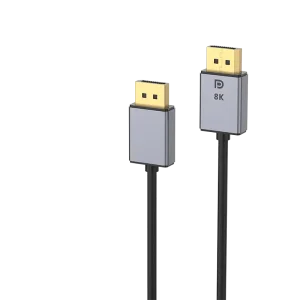
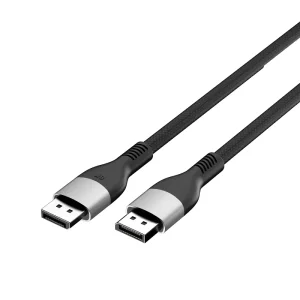
Explore our engineering-focused, certified products custom-manufactured for high-bandwidth commercial, gaming, and industrial environments.
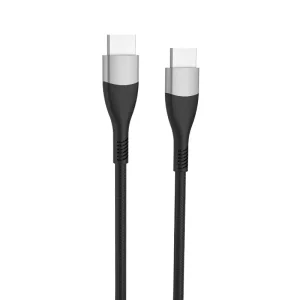
An Industrial Guide to Bandwidth, Data Integrity, and Next-Generation Panel Interconnections.
As standard-resolution displays transition to ultra-high-definition (UHD) arrays, DisplayPort 1.4 (DP1.4) remains a cornerstone technology for enterprise display infrastructures, medical imaging fields, high-performance gaming terminals, and virtual reality processing. Standardized by the Video Electronics Standards Association (VESA), DP1.4 introduces complex technical improvements over its predecessors to enable stable, high-throughput content streams.
At the center of DP1.4's capabilities is the High Bit Rate 3 (HBR3) transmission mode. Operating across four physical lanes, HBR3 achieves a gross bandwidth of 32.4 Gbps and a net data throughput of 25.92 Gbps, utilizing 8b/10b transport coding. This transmission capability supports 8K UHD resolutions (7680x4320) at 60Hz or 4K configurations at 144Hz with full HDR support. Delivering this performance across custom, physical cable architectures requires strict impedance control, high-quality copper formulations, and advanced shielding, which are critical elements for enterprise procurement managers selecting supply chain partners.
Technical Insight: To maintain signal integrity over longer distances, DP1.4 integrates Display Stream Compression 1.2 (DSC). This visually lossless, low-latency compression algorithm enables up to a 3:1 compression ratio, allowing the transport of ultra-high bandwidth data over standard physical lines without sacrificing color accuracy or introducing visible latency.
Furthermore, DP1.4 introduces Forward Error Correction (FEC). FEC operates in tandem with DSC 1.2, providing the necessary packet validation and recovery mechanisms to detect and correct transport errors. This ensures a glitch-free, robust display stream in environments prone to high electromagnetic interference (EMI), such as industrial assembly floors and medical control rooms. When combined with High-Bandwidth Digital Content Protection (HDCP 2.2), DP1.4 ensures secure, end-to-end signal routes suitable for modern media distribution systems.
Engineering-level specifications designed for critical, long-term deployment applications.
Supports daisy-chaining configurations across multiple display screens. Simplifies complex workspace designs by allowing a single source DP1.4 output to drive several independent high-resolution panel arrays without signal degradation.
Cables feature high-density insulation materials and precisely controlled copper pairings. Minimizes impedance fluctuations to within ±5 ohms of the VESA target, significantly reducing return loss and signal reflections over distance.
Designed with triple-layer protection (Al-Mylar foil, high-density metal braiding, and insulated inner cores) to prevent external electro-magnetic interference. Ensures stable display feeds even when positioned adjacent to high-voltage equipment.
In 1984, Dongguan Taitron Electronics Limited., formerly known as Tonetron, was founded in Keelung, Taiwan. In 1993, it moved to the self-built independent production industrial park in Dalingshan Town, Dongguan City, China, and changed its name to Dongguan Taitron Electronics Limited.
38 years to pass professional video and audio peripheral equipment connection line manufacturing as the foundation, Gradually develop to the high-end audio and video cable data cable such as HDMI2.1 cable, DP2.0 cable, USB4 data cable, USB-C 3.1Gen2 data cable, high-power USB charging cable, 8K HD conversion cable, multi-functional Type-C expansion dock and other products research and development and manufacturing.
Taitron’s legacy spans four decades of refinement in high-frequency transmission. Our manufacturing capabilities include raw wire extrusion, automated solder shielding assembly, and detailed electronic validation, guaranteeing consistent performance across massive batch runs.
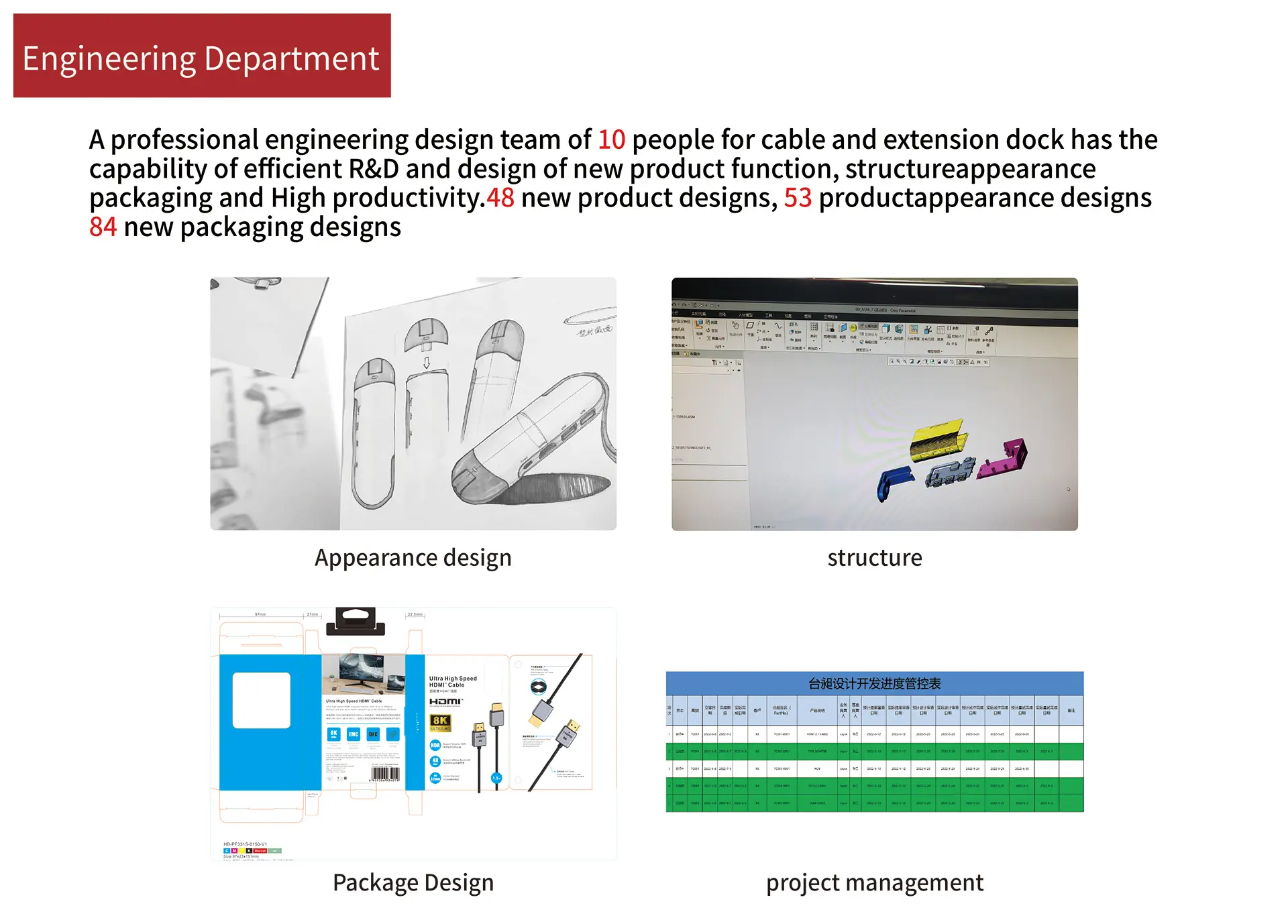
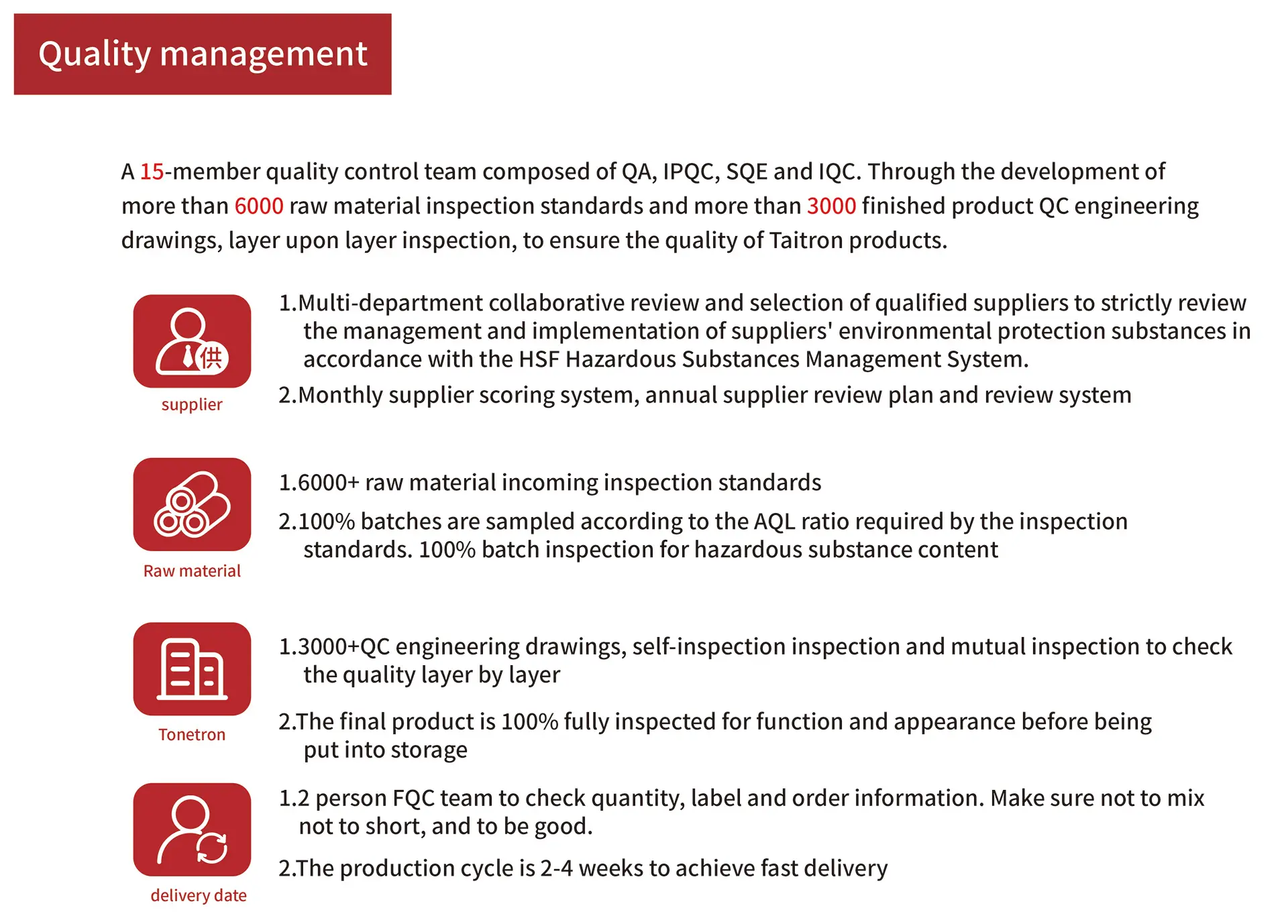

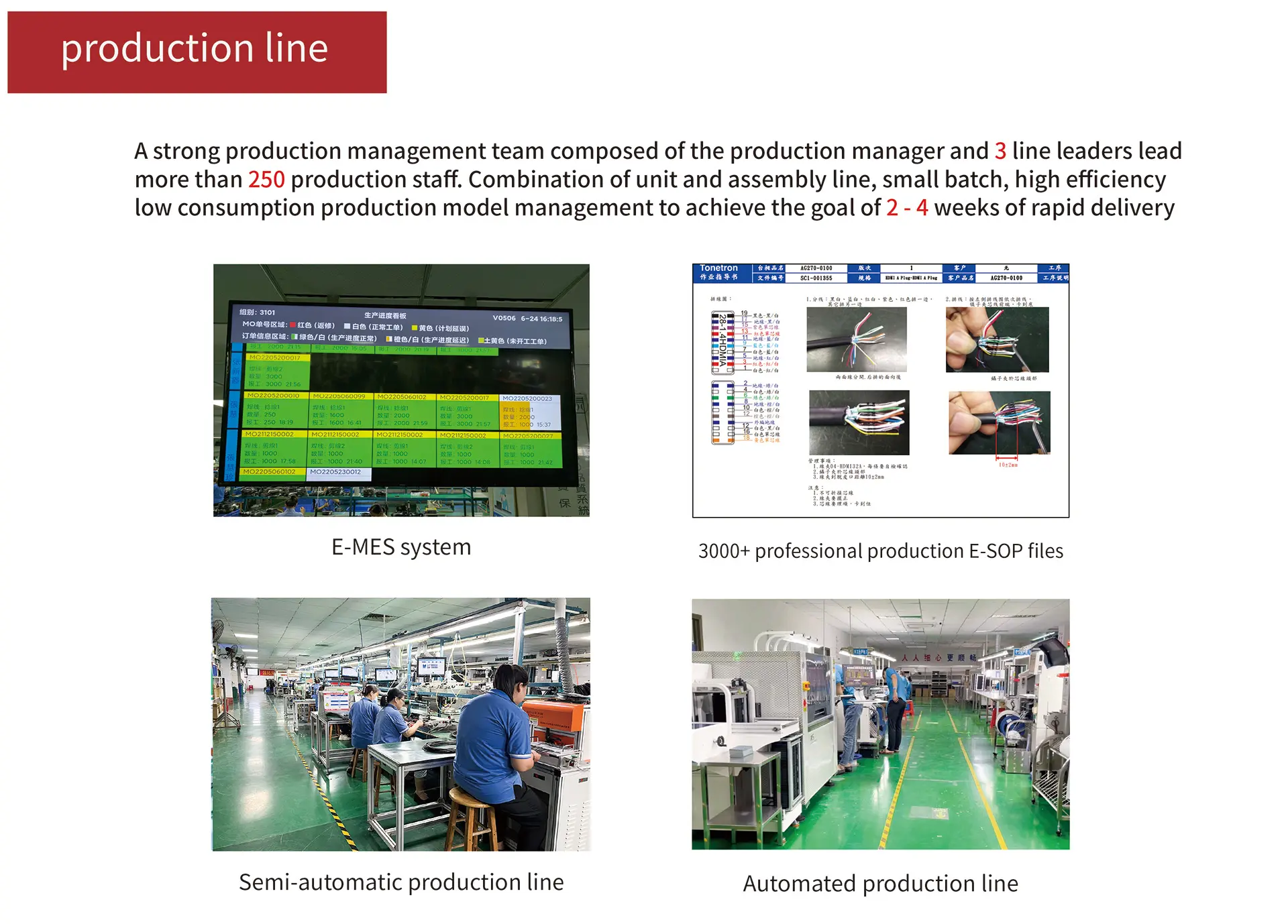
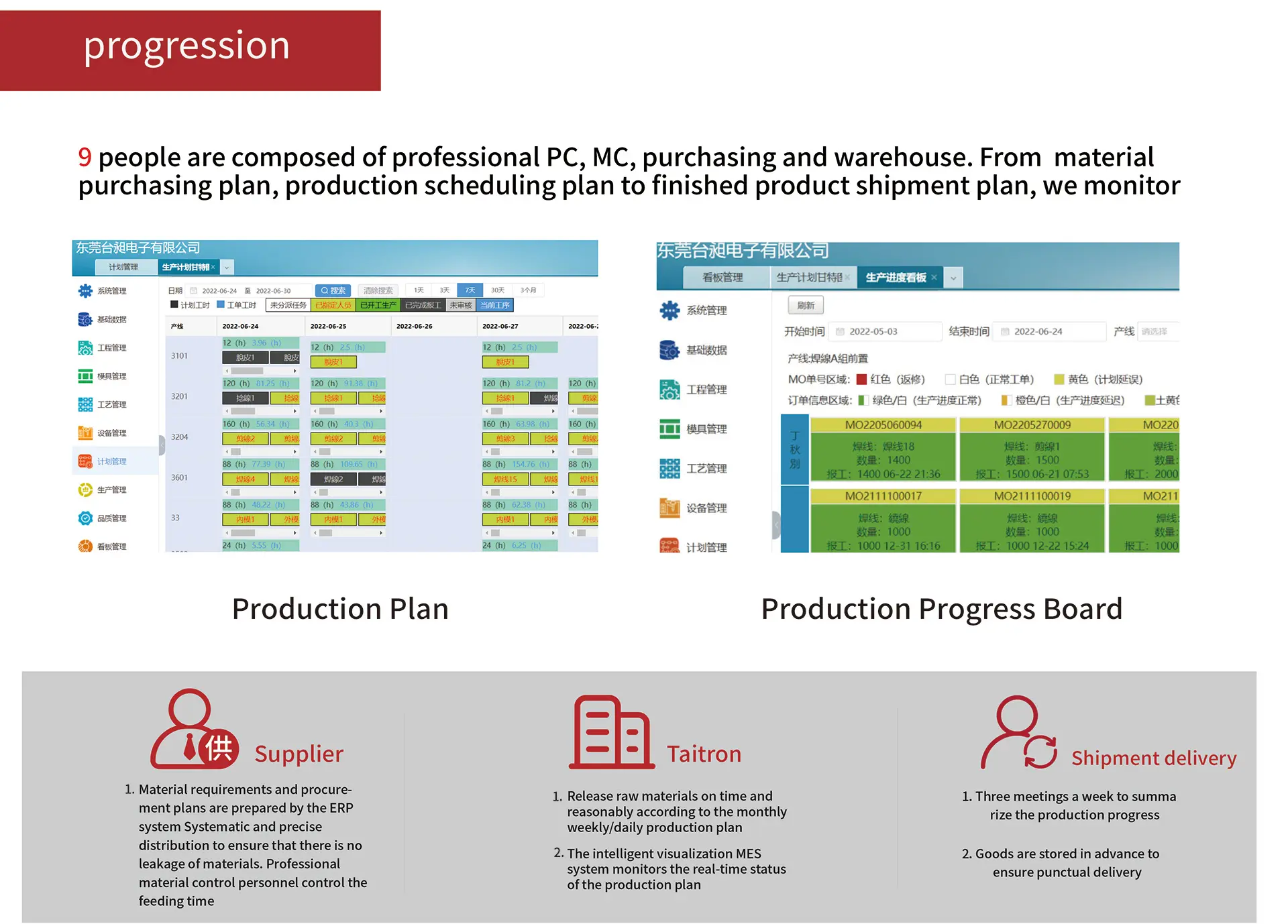
How localized production clusters and advanced supply chains benefit international enterprise clients.
Dongguan's manufacturing ecosystem allows for local sourcing of high-purity copper, specialized shielding foils, and durable outer jacket compounds. This proximity reduces transit latency, optimizes raw material costs, and minimizes manufacturing delays.
By managing raw copper wire drawing, core twisting, and shield wrapping under a unified quality system, our facility maintains tight control over conductor impedance tolerances, ensuring reliable performance in DP1.4 high-speed channels.
Our quality control process utilizes advanced physical testing instrumentation. Every batch undergoes time-domain reflectometer (TDR) measurements, eye-pattern diagnostics, and vector network analysis to evaluate signal attenuation, cross-talk, and return loss.
This rigorous screening prevents typical signal anomalies (like screen flickering or signal loss at high refresh rates) from reaching downstream distribution channels, protecting our clients' brand reputations.
Navigating international regulatory requirements and compliance certifications to ensure smooth customs and market entry.
Exporting complex electronic interconnect components requires adherence to various regional standards. Our products are engineered and manufactured in compliance with international certification frameworks, protecting buyers from regulatory holds and legal liabilities:
Additionally, we offer localized packaging, custom barcode integration (such as GS1, UPC, or EAN formats), and tailored import documentation (certificates of origin, custom manifests, and compliance portfolios) to ensure smooth customs clearance at global destination ports.
Addressing core technical questions from engineering teams, sourcing managers, and system integrators.
Passive DP1.4 cables rely entirely on high-quality copper trace configurations and shielding to transmit signal streams. They are effective for runs under 3 meters. Active DP1.4 cables integrate micro-equalizer chipsets in the connector shells to reconstruct and boost the signal, allowing for reliable high-speed transmissions over longer distances (up to 15 meters) without data degradation.
DSC 1.2 is a visually lossless compression standard. In double-blind studies conducted by VESA, observers were unable to distinguish compressed content from raw display feeds. The latency introduced by DSC is exceptionally low—typically less than a fraction of a millisecond—making it ideal for real-time applications like gaming, medical diagnostics, and flight control simulators.
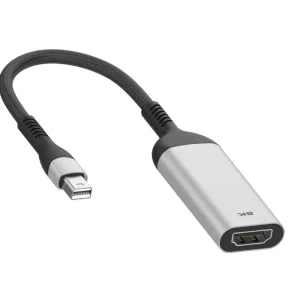
Yes, via Dual-Mode DisplayPort (DP++) or active conversion protocols. A passive adapter works if the source device supports DP++, converting the signaling levels automatically. For true 8K/4K high-refresh rate signals, an active adapter (like our PF352K8 MiniDP to HDMI 8K Adapter) is recommended. This active converter chip handles the protocol translation directly, maintaining high refresh rates and proper color representation.
In high-interference industrial or hospital environments, utilizing cables with robust shielding is essential. Look for configurations featuring tinned copper conductors, inner individual line Al-Mylar shielding, and an outer braided layer with over 85% coverage. Metal connector housings also shield the solder joints, preventing electromagnetic ingress at the connection point.
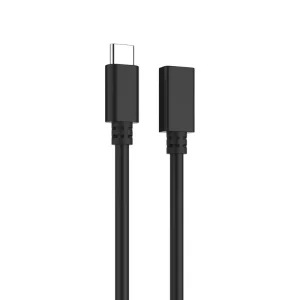
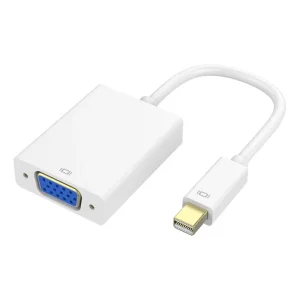
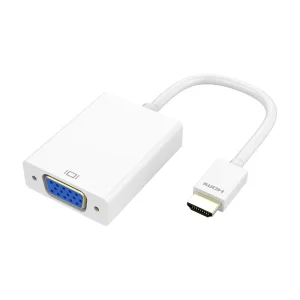
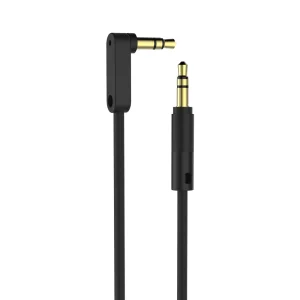
Additional conversion devices, interface extenders, and specialized transmission options for commercial installations.
 Taichang Electronic