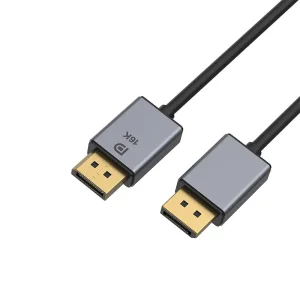
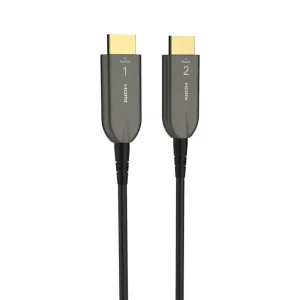
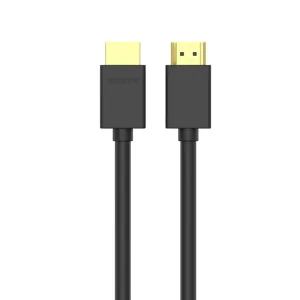
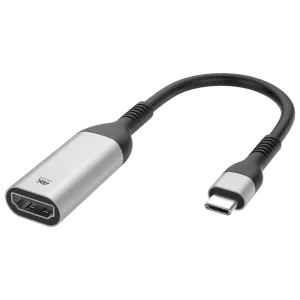
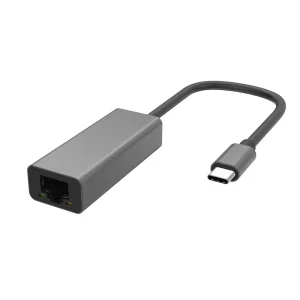
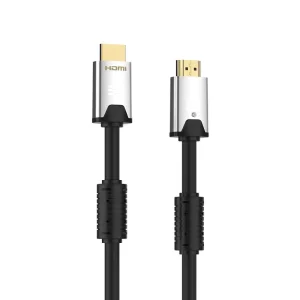
Explore our premium commercial-grade display interface components, certified for high resolution, fast frame rates, and rugged environmental stability.
How the evolution from HBR3 to UHBR20 signals a quantum leap in display throughput, color fidelity, and screen synchronization.
Leveraging 128b/132b line coding, DisplayPort 2.0 achieves over 97% efficiency, transferring up to 77.37 Gbps of raw visual data. This facilitates resolutions up to 16K at 60Hz with HDR enabled using DSC.
Visually lossless DSC 1.2a compression protocol enables smooth multi-stream configurations (MST) without degradation in color depth, latency, or image details, essential for scientific and industrial monitors.
Supports Ultra-High Bit Rate profiles: UHBR 10 (40 Gbps), UHBR 13.5 (54 Gbps), and UHBR 20 (80 Gbps), allowing system engineers to design cables that match customized deployment distances and hardware budgets.
| Interface Standard | Max Raw Bandwidth | Max Effective Throughput | Encoding Scheme | Max Resolution (Single Display) | Dynamic HDR Support |
|---|---|---|---|---|---|
| DisplayPort 2.0 / 2.1 (UHBR 20) | 80.0 Gbps | 77.37 Gbps | 128b/132b | 16K @ 60Hz (with DSC) | Yes |
| DisplayPort 1.4a (HBR3) | 32.4 Gbps | 25.92 Gbps | 8b/10b | 8K @ 30Hz (SDR) | Limited |
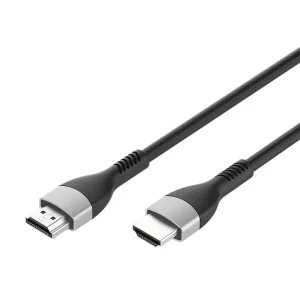
| HDMI 2.1a (FRL) | 48.0 Gbps | 42.6 Gbps | 16b/18b | 10K @ 60Hz | Yes |
Building high-performance, robust, and industry-certified interconnect interfaces since 1984.
In 1984, Dongguan Taitron Electronics Limited, formerly known as Tonetron, was founded in Keelung, Taiwan. Driven by a commitment to signal integrity and mechanical reliability, the organization established its core competency in high-fidelity consumer electronics cabling. Recognizing the industrial cluster advantages in Guangdong, the company relocated to a self-built independent production industrial park in Dalingshan Town, Dongguan City, China in 1993, transitioning officially to Dongguan Taitron Electronics Limited.
With over 38 years of professional video and audio peripheral equipment connection line manufacturing as our foundation, our research and engineering have progressively developed toward premium, high-frequency digital connection platforms. Today, Taitron’s research and manufacturing portfolio covers elite high-end protocols, including HDMI 2.1, DisplayPort 2.0 / 2.1, USB4 data lines, USB-C 3.1 Gen2 connections, high-wattage USB power-delivery lines, 8K HD signal conversion modules, and multi-functional Type-C docking stations.
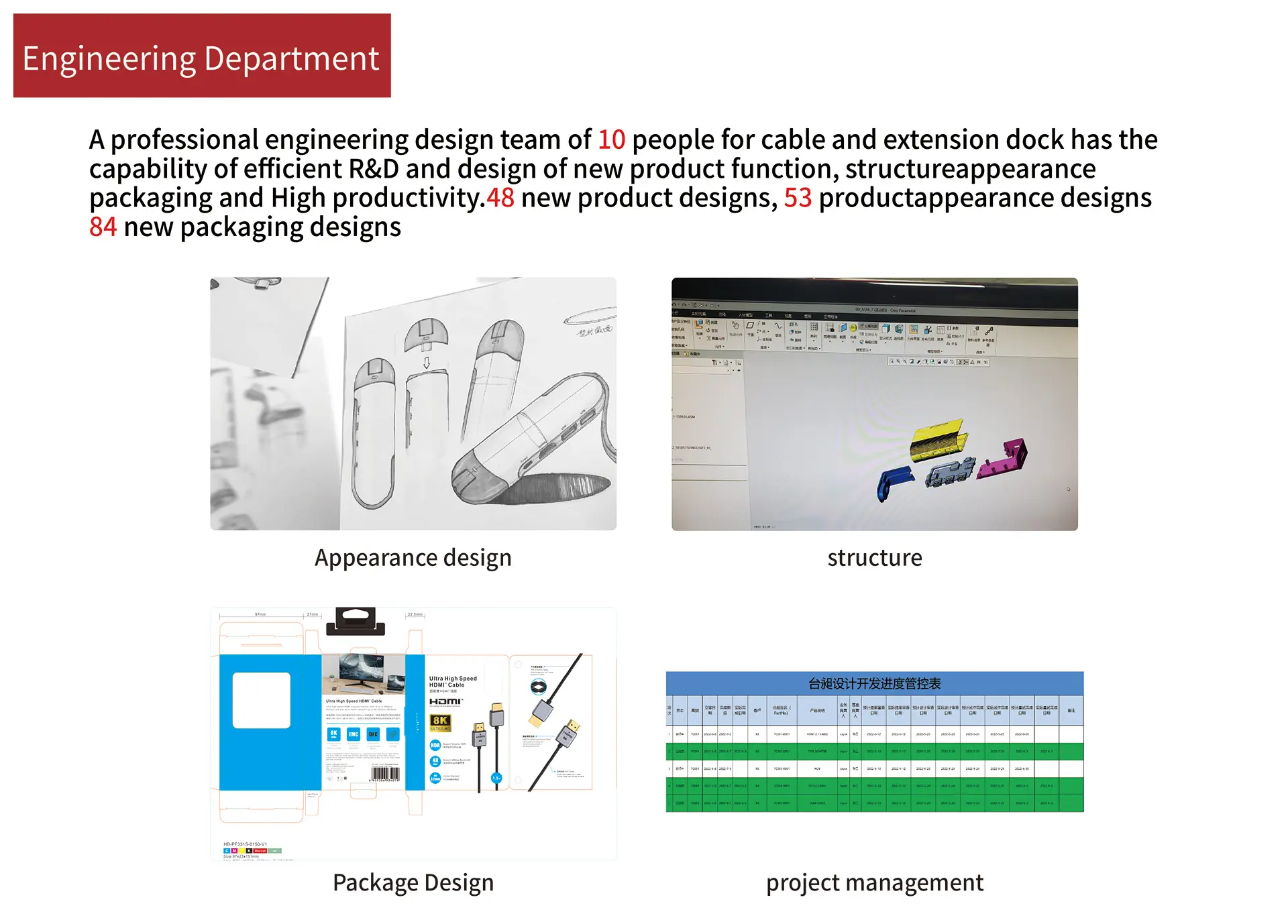
Advanced schematic design & prototyping labs.
Real-time high-frequency physical stress testing.

Maintaining insulation concentricity & shielding ratios.
High reliability soldering & injection molding.
Cleanroom assembly pipelines for commercial bulk packing.
Why Tier-1 global technology brands rely on Dongguan’s infrastructure for next-gen DisplayPort solutions.
Our facility in Dongguan operates at the epicenter of the global electronics component supply chain. We procure copper raw materials, high-density polyethylene insulation, and aluminum shielding foils under raw material contract rates, shielding our global partners from drastic commodity price fluctuations.
From the cross-section design of 34AWG slim lines to custom injection molding geometries for locking mechanisms, our engineers control the design process in-house. This cuts down prototyping cycles to less than 10 days for custom enterprise specifications.
Unlike standard generic cable houses, Taitron conducts 100% vector network analyzer testing. We sweep cables for Return Loss, Far-End Crosstalk (FEXT), and Intra-pair skew, verifying that every DP 2.0 or DP 2.1 cable assembly meets physical VESA standards before shipping.
Eliminating frames stuttering by driving dual screen configurations at 4K resolution at 165Hz or single streams up to 240Hz without chroma subsampling.
Feeding raw 8K uncompressed footage from cameras directly to high-fidelity reference displays, guaranteeing absolute color and time-code accuracy.
Supporting deep grey-scale resolution screens used in MRI and CT scans where lossy compression is legally prohibited and display precision is critical.
Delivering high-integrity, vibration-tested connectivity for continuous panoramic displays across vehicle dashboards under severe thermal loads.
Navigating technical benchmarks, compliance certifications, and structural specifications for global enterprise sourcing.
When procurement managers negotiate OEM/ODM contracts, one primary consideration is wire construction. For DP 2.0 high-frequency signals running at 20Ghz per lane, coaxial wiring offers significant benefits over traditional shielded twisted pair (STP) structures. Coaxial wire layout provides superior impedance stability, minimizing return loss and eliminating crosstalk in ultra-thin form factors such as our 34AWG slim line cables (which maintain a strict 4.5mm outer diameter).
To qualify for entry in highly regulated jurisdictions, high-speed cables must conform to local environmental and electromagnetic emission standards. Dongguan Taitron Electronics Limited ensures that all OEM/ODM designs are fully compliant with RoHS, REACH, CE, and FCC frameworks. Crucially, our products are subjected to rigorous signal validation processes using time-domain reflectometry (TDR) to confirm that impedance variations remain within VESA's specified limits of 85 ohms ± 10%.
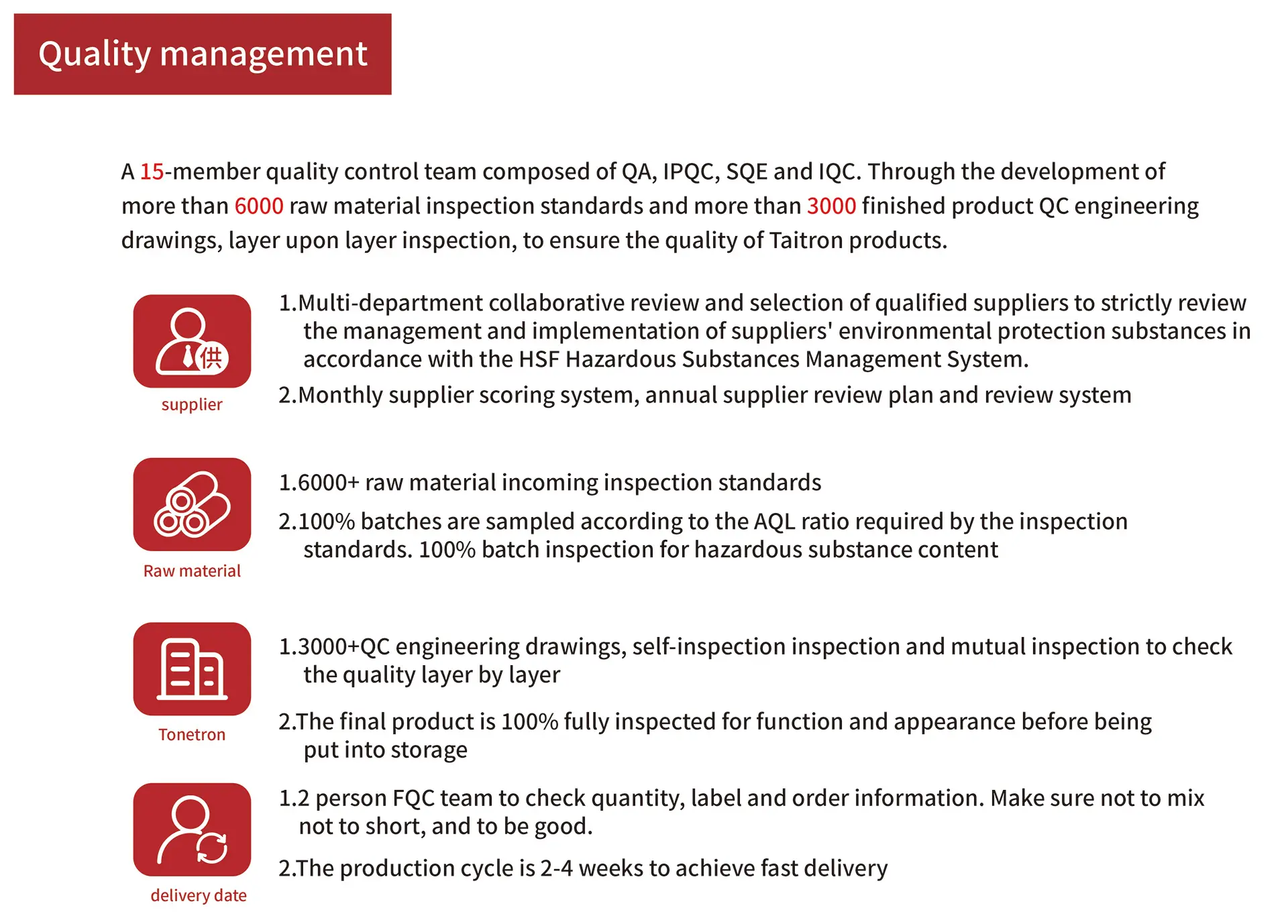
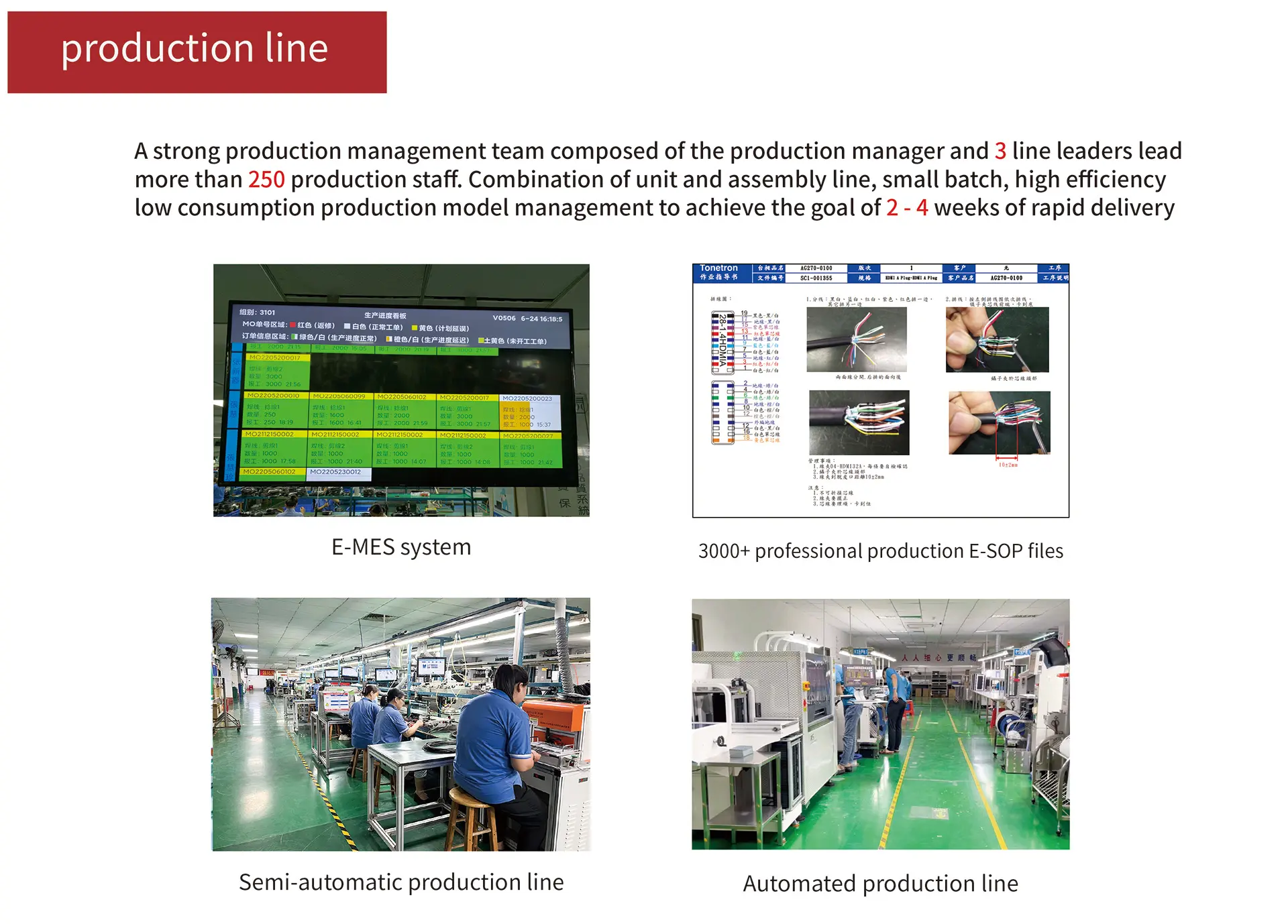
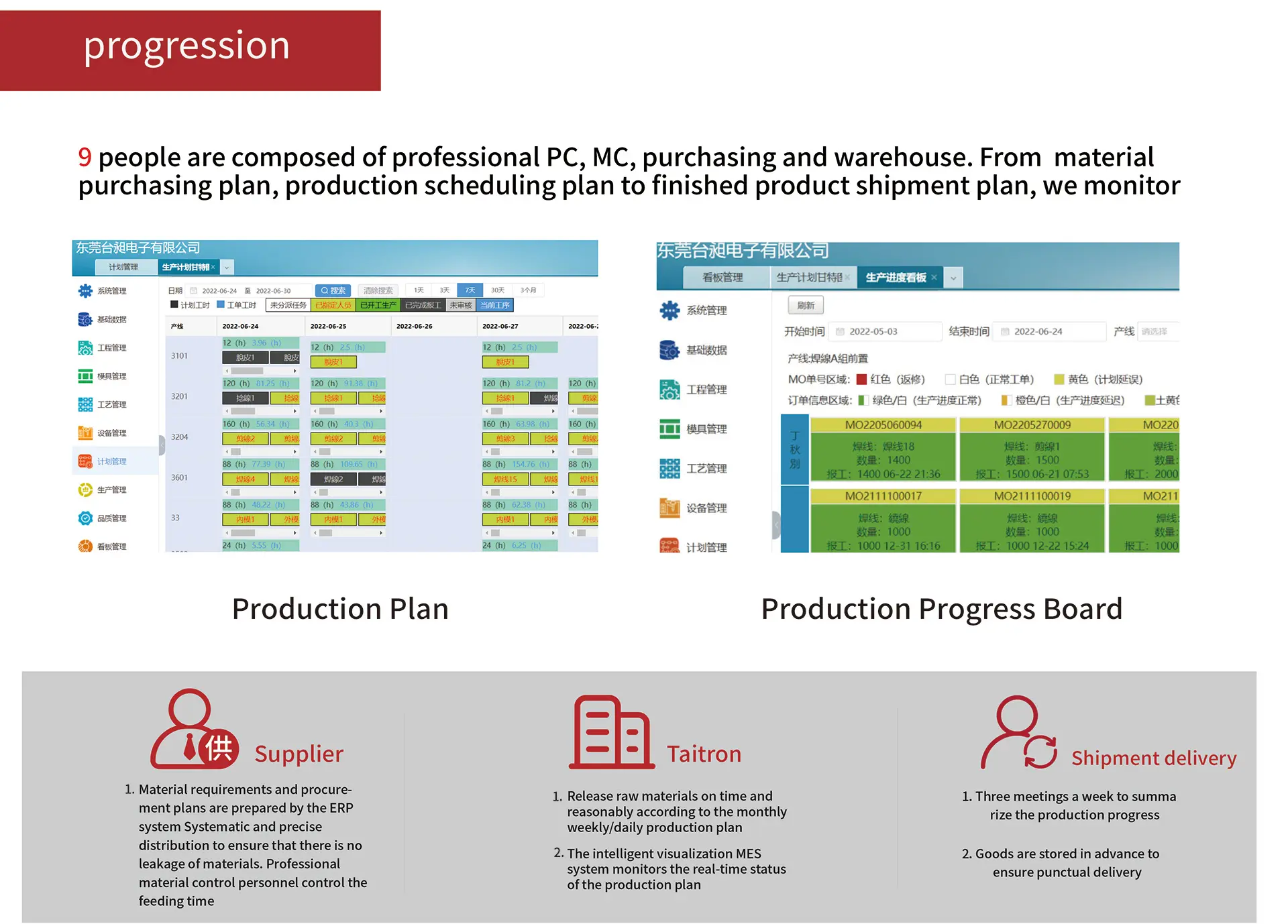
Using computer-vision inspection systems to detect visual defects, wire placement accuracy, and connector solder integrity automatically.
Applying double-layered aluminum mylar wraps and high-coverage tinned copper braiding to assure performance in high-EMI industrial environments.
Supporting emerging scaleups and enterprise brands with tailored initial order quantities alongside robust mass manufacturing scalability.
Answers to technical design and supply queries commonly raised by hardware system engineers and procurement professionals.
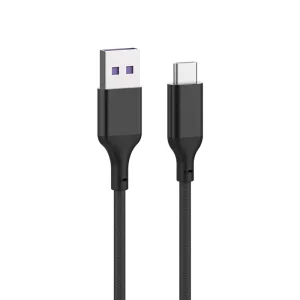
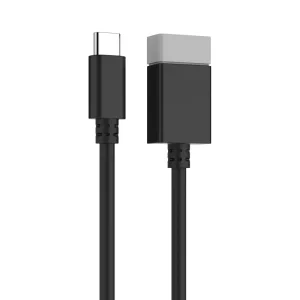
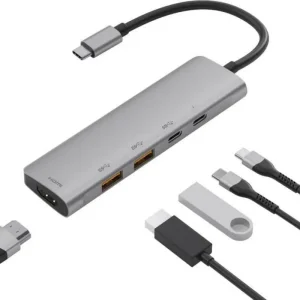
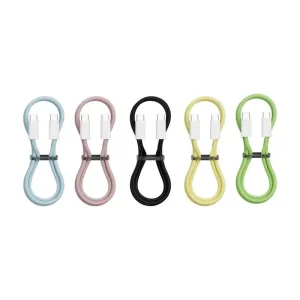
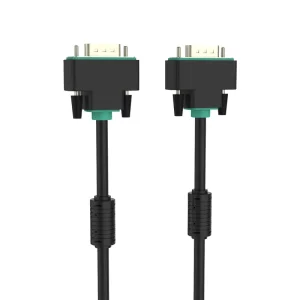
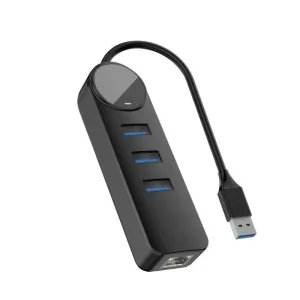
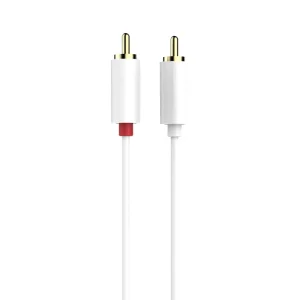
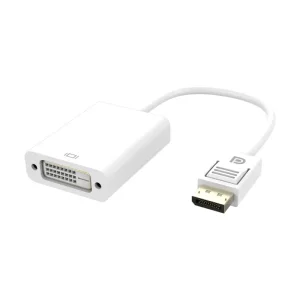
Complete your deployment system with our auxiliary conversion components, built using matching high-fidelity interfaces and robust physical shielding.
 Taichang Electronic