China Top 10 Ethernet to USB Connectors for Buyers

Time:2026-09-15 Author:Henry
0%

Choosing the right Ethernet To Usb Connector now requires more than comparing prices and port shapes. USB networking supports compact offices, industrial workstations, retail terminals, and mobile service kits. A small adapter can determine whether a laptop maintains a stable connection through a crowded switch cabinet.

Grand View Research valued the global USB devices market at approximately USD 27 billion in 2022. Its report also anticipates continued growth through 2030, driven by connectivity, mobility, and device compatibility. MarketsandMarkets identifies Ethernet switching as a growing infrastructure segment, supported by cloud services, data centers, and enterprise upgrades. These figures do not measure adapters directly. They still show the market pressure behind reliable USB-to-Ethernet solutions.

Brad Saunders, USB Implementers Forum Chairman and CEO, said, “USB4 is the next generation of USB.” His statement highlights a practical issue: connector selection must consider protocol capability, not only physical appearance. USB 3.x support, Gigabit Ethernet performance, chipset stability, heat control, operating-system compatibility, and warranty terms deserve equal attention.

This guide examines ten leading Ethernet To Usb Connector options for buyers. Each selection should be checked against its actual use. A metal housing may improve durability, but it can also become warm during continuous transfers. A compact design may travel easily, yet offer limited cable relief.

Rankings are never universal.

Some products perform well in laboratories but disappoint beside noisy industrial equipment. That limitation matters. Buyers should verify independent testing, return policies, driver support, and real-world throughput before purchasing. The following comparison focuses on practical reliability, documented specifications, and value rather than attractive packaging alone.
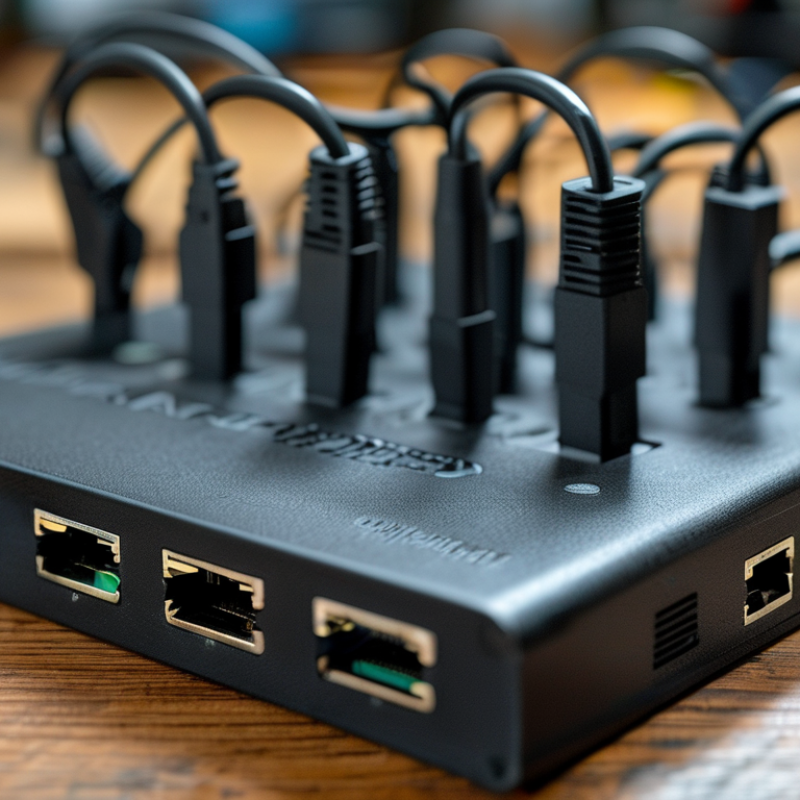
China Top 10 Ethernet to USB Connectors for Buyers

Ethernet-to-USB Connectors: Definition, Functions, and Common Applications

Ethernet-to-USB connectors are compact adapters that translate USB signals into wired Ethernet data. They help devices without an RJ45 port join a local network. A typical unit contains a USB controller, Ethernet transceiver, shielding, and status lights. The small LEDs show link activity beside a laptop or industrial panel.

USB-IF specifications list USB 2.0 at 480 Mbps, while USB 3.2 supports 5 or 10 Gbps, depending on its generation. Ethernet performance still depends on the adapter, cable, network port, and drivers. A 1 Gbps Ethernet link may be realistic, but overhead and heat reduce actual throughput. It is easy to overstate this point. Buyers should test sustained speed, not trust the printed maximum.

The Grand View Research USB devices market analysis reports continued growth in USB hardware demand through 2030, driven by computing, networking, and peripheral expansion. MarketsandMarkets also identifies rising connectivity requirements in industrial automation and smart offices. Common applications include wired internet for ultrathin computers, network access for tablets, temporary service connections, and stable links for point-of-sale terminals. In factories, a shielded connector can reduce interference near motors, although poor grounding may still cause dropouts. Check operating-system support, connector durability, power consumption, and heat during long transfers. A short cable is not always better.

China Top 10 Ethernet-to-USB Connector Categories for Buyers

Comparison of common Ethernet-to-USB adapter configurations by nominal network speed.

The figures show nominal Ethernet link rates in Mbps. USB 2.0 adapters are commonly used for 10/100 Mbps or Gigabit connections, while USB 3.x and USB4 provide the bandwidth required for faster 2.5GbE, 5GbE, and 10GbE solutions. Actual throughput depends on the USB version, Ethernet controller, host system, drivers, cable quality, and network conditions.

Key Specifications Buyers Should Compare Before Choosing a Connector

China Top 10 Ethernet to USB Connectors for Buyers

When comparing China’s top Ethernet to USB connectors, specifications matter more than product photos. For a reliable shortlist, confirm the USB version, connector type, and Ethernet speed. USB-C and USB-A models serve different devices. Ethernet may support 100 Mbps, 1 Gbps, or higher speeds. Actual throughput is usually lower than the advertised rate.

Check chipset stability, operating system compatibility, and driver requirements before ordering samples. Power consumption also matters, especially for compact laptops and industrial equipment. Inspect the connector shell, cable strain relief, and port alignment. Aluminum housing may improve heat dissipation, but it does not guarantee durability. Ask for temperature tests, insertion-cycle results, and production inspection records. A clean specification sheet still proves little. I have seen attractive samples fail after repeated cable movement.

Tips: Request three samples from different production batches. Test them with long cables, crowded USB ports, and continuous data transfer. Measure surface temperature after two hours. Check whether the Ethernet link reconnects automatically. Review shielding performance in an electrically noisy workspace. Confirm packaging, labeling, and traceability before bulk purchasing. Certifications should match the destination market, not merely appear on a sales page. Allow time for defects. It is not pessimism; it is practical purchasing.

China’s Top 10 Ethernet-to-USB Connector Options by Product Features

China’s Top 10 Ethernet-to-USB Connector Options by Product Features

China offers ten practical Ethernet-to-USB connector types for laptops, tablets, industrial panels, and compact workstations. Product selection should follow network speed, USB generation, chipset stability, and thermal design. IEEE 802.3bz supports 2.5GbE and 5GbE over suitable cabling. USB-IF specifications define USB 3.2 transfer rates up to 20Gbps. These figures describe interfaces, not guaranteed real-world performance. Professional testing still matters.

The ten options include:

a USB-A to 10/100Mbps adapter
USB-A to Gigabit adapter
USB-C Gigabit adapter
USB-C 2.5GbE adapter
USB-C 5GbE adapter
USB-C adapter with power delivery
dual-port Ethernet adapter
rugged metal-shell adapter
industrial temperature adapter
a compact travel adapter

Buyers should check driver support, MAC address handling, cable length, and heat output. Market reports from Grand View Research and MarketsandMarkets continue to identify connectivity upgrades and faster wired networking as major hardware trends. However, market forecasts vary widely. Treat them as direction, not proof.

Tips: Request chipset details and independent throughput tests. A 2.5GbE unit may slow down inside a warm plastic shell. I have seen this overlooked. Confirm whether the connector supports full-duplex operation, VLAN use, suspend-and-resume recovery, and the required operating systems. Also inspect port reinforcement. A loose USB-C plug can ruin an otherwise capable adapter. Specification sheets are useful, but sample testing remains more reliable.

Quality, Compatibility, and Certification Checks for Chinese Suppliers

China Top 10 Ethernet to USB Connectors for Buyers

When comparing Chinese suppliers, inspect quality beyond polished product photos. Request samples from the same production batch. Check the housing, contact pins, cable strain relief, and connector fit. A reliable sample should connect smoothly without excessive force. Test data transfer, network stability, heat, and repeated insertion cycles. Small defects often appear after several hours, not during a quick demonstration. Supplier quality records should include process controls, inspection methods, and corrective action reports.

Compatibility requires more than matching USB and Ethernet descriptions. Confirm the USB version, operating systems, data speed, power requirements, chipset details, and cable length. Ask for mechanical drawings and pin definitions. Test the connector with your actual equipment. Some samples work with one device but fail after a system update. That weakness deserves attention. Certification documents should be current, traceable, and linked to the exact model. Review safety, electromagnetic compatibility, material restrictions, and factory quality-management evidence. Do not accept generic files with missing model numbers.

Tips: Request three samples from separate batches. Record test conditions carefully. Verify reports through the issuing laboratory. Keep one approved sample for future comparisons. Price matters, but unstable performance creates higher replacement costs. A supplier may answer quickly yet provide incomplete evidence. Treat that as a warning, not a minor inconvenience. I would also review packaging and labeling, because careless handling can damage reliable connectors before installation. No checklist is perfect. Recheck critical claims before placing a large order.

Pricing, Customization, and Purchasing Tips for Global Buyers

China Top 10 Ethernet to USB Connectors for Buyers

When comparing Chinese Ethernet-to-USB connectors, price depends on chipset, USB version, network speed, housing, and order quantity. Basic models may cost less, but stronger shielding and thermal control increase the unit price. Ask for a detailed quotation. It should separate tooling, packaging, testing, shipping, and sample charges. A low quote can hide important exclusions.

Customization is often available for cable length, casing color, connector shape, labels, and retail packaging. Some suppliers also adjust firmware settings or add customized mounting parts. Request a working sample before approving mass production. Samples matter. Test connection stability, heat, transfer speed, and compatibility with your operating systems. Do not guess. A connector that works on a desk may fail inside a crowded industrial cabinet.

Purchasing teams should confirm MOQ, lead time, payment terms, warranty handling, and inspection procedures. Ask whether production uses automated testing or manual checks. Request test records for every batch when reliability matters. Check the supplier’s experience with similar applications, not only its product photos. Independent inspection can reduce avoidable risk. Still, no process is perfect. Specifications may need revision after real-world testing, especially when cable bending, electromagnetic noise, or limited ventilation affects performance. Keep a written approval sample, tolerance range, and change-control process before placing a larger order.

FAQS

What is an Ethernet-to-USB connector?

It converts USB signals into wired Ethernet data. It helps devices without an RJ45 port connect to a local network.

Which devices commonly use these connectors?

Common examples include thin laptops, tablets, industrial panels, and point-of-sale terminals. They can provide temporary service access too. Small, but useful.

What speeds can these connectors support?

USB 2.0 supports up to 480 Mbps. USB 3.2 may support 5 or 10 Gbps, depending on its generation. Ethernet speed depends on the adapter, cable, port, and drivers.

Will a 1 Gbps connection always reach 1 Gbps?

No. Overhead, heat, cable quality, and hardware limits reduce actual throughput. Test sustained transfers instead of trusting printed maximums. Advertised speed can mislead.

What specifications should buyers compare?

Check the USB version, connector type, Ethernet speed, chipset, and operating-system support. Also review driver requirements, power use, housing quality, and cable strain relief.

How can buyers test samples before bulk purchasing?

Request three samples from different production batches. Use long cables, crowded USB ports, and continuous data transfers. Measure surface temperature after two hours. Test it longer.

Can shielding prevent connection problems in factories?

Shielding may reduce interference near motors and other electrical equipment. However, poor grounding can still cause dropouts. The shield is not magic.

What physical details deserve inspection?

Inspect the connector shell, port alignment, cable strain relief, and housing temperature. Aluminum may improve heat dissipation, but it does not prove durability. Repeated cable movement can expose weak construction.

What should buyers check before placing a large order?

Confirm automatic reconnection, packaging, labeling, traceability, and destination-market certifications. Allow time for defects and repeat testing. A clean specification sheet proves little.

Conclusion

This guide introduces the Ethernet To Usb Connector, explaining how it enables data communication between Ethernet networks and USB-equipped computers, industrial devices, and other digital systems. It covers common applications such as network access, device integration, testing, office connectivity, and portable workstations. Buyers will learn which specifications matter most, including USB and Ethernet standards, transfer speed, connector type, power requirements, operating-system compatibility, cable length, housing durability, and thermal performance.

The article also compares ten China-made Ethernet-to-USB connector options according to practical product features, helping buyers match each option with their intended use. It outlines essential supplier checks, including material quality, production consistency, compatibility testing, safety documentation, and relevant certifications. Finally, it offers guidance on pricing, minimum order quantities, customization, packaging, samples, lead times, and communication, enabling global buyers to make informed purchasing decisions while balancing reliability, performance, and total cost.

Henry

Henry

Henry is a dedicated marketing professional with a profound expertise in the company's offerings. With years of experience in the industry, he possesses an impressive understanding of the market dynamics and consumer behaviors that drive success. Henry is committed to sharing his insights through......