Explore high-performance connectivity components built under strict ISO quality controls.
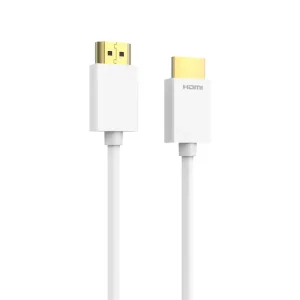
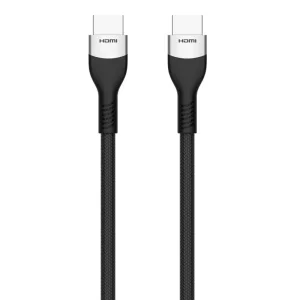
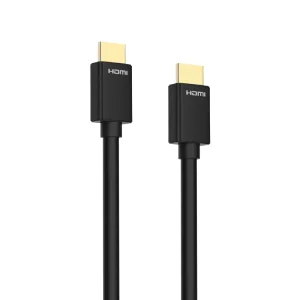
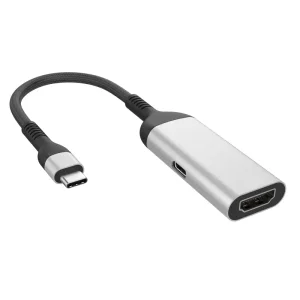
In an era dominated by high-density cloud workflows, hybrid workspaces, and ultra-large-file transfers, wireless network interfaces often fail to provide the deterministic latency and consistent throughput required by modern enterprises. The MacBook Pro, with its sleek profile and sole reliance on Thunderbolt / USB-C interfaces, necessitates high-integrity external physical adapters to integrate with local networks. Identifying the best Macbook Pro LAN adapters involves evaluating structural durability, signal shielding, network controller ICs, and thermodynamic performance under continuous load.
For network engineers, sourcing managers, and system integrators, selecting the right factory partner is critical. Premium OEM/ODM manufacturers focus on reducing electromagnetic interference (EMI) that can degrade concurrent 2.4GHz wireless and Bluetooth connections, ensuring proper impedance matching across the differential signaling lines, and using robust power delivery (PD) pass-through designs. This document provides a technical overview of adapter architecture, manufacturing standards, and supply chain strategies to help optimize purchasing and deployment.
Technical Insight: Poorly shielded USB-C to LAN adapters emit RF noise in the 2.4GHz spectrum, directly degrading Wi-Fi and Bluetooth signals. High-end factories mitigate this using internal metal shield cans around the PCB and controller ICs, plus multi-layer shielding inside the USB-C connector housing.
The reliability of a USB-C Ethernet adapter depends largely on its controller IC. These silicon components handle physical layer translation (PHY) and media access control (MAC), translating USB packages into standard IEEE 802.3 packets. The leading options used by premium factories include:
| Controller Model | Max Speed | macOS Driver Status | Power Consumption | Typical Application |
|---|---|---|---|---|
| Realtek RTL8153B | 1000 Mbps | Driverless (Native) | < 0.6W | General Office & Enterprise deployment |
| Realtek RTL8156B | 2500 Mbps | Driverless (Native) | < 1.2W | Video Editors, NAS, Developers |
| ASIX AX88179A | 1000 Mbps | Driverless (Native) | < 0.5W | Industrial & Cross-OS Systems |
Continuous high-speed data transmission generates heat in the PHY transceiver block. If this heat is not managed, it can cause thermal throttling and packet loss. High-end factories use aluminum alloy enclosures combined with high-performance thermal gap pads that connect the controller IC to the metal shell. This design turns the entire casing into a passive heatsink, ensuring the chip operates within safe temperature limits even under continuous 24/7 full-duplex traffic.
Modern network interfaces must handle varied localized environments, each with unique technical requirements:
In high-density office buildings, Wi-Fi channels are often congested, leading to packet loss and latency spikes during video conferences. SOHO users and enterprise employees rely on MacBook Pro LAN adapters to maintain stable video links (Zoom, Teams) and speed up local file access.
Professional video editors working on MacBook Pros need stable access to Network Attached Storage (NAS). For this application, 2.5G Ethernet adapters are essential. They allow editors to scrub through multi-channel RAW video timelines directly over the network without dropping frames, matching the speed of local SATA SSDs.
Network engineers and field operators use MacBook Pros to configure switches, routers, and industrial machines. In these environments, adapters must support VLAN tagging (IEEE 802.1Q), link aggregation, and wake-on-LAN (WOL), while also featuring robust physical connectors that can withstand frequent insertion cycles.
The production of high-performance MacBook Pro LAN adapters relies on a highly integrated manufacturing ecosystem. China's electronics manufacturing hubs, particularly in the Dongguan and Shenzhen regions, offer unmatched scale and optimization. The region provides access to every stage of production—from raw copper drawn for internal twisted pairs to precision SMT lines, metal extrusion factories, and compliance testing facilities.
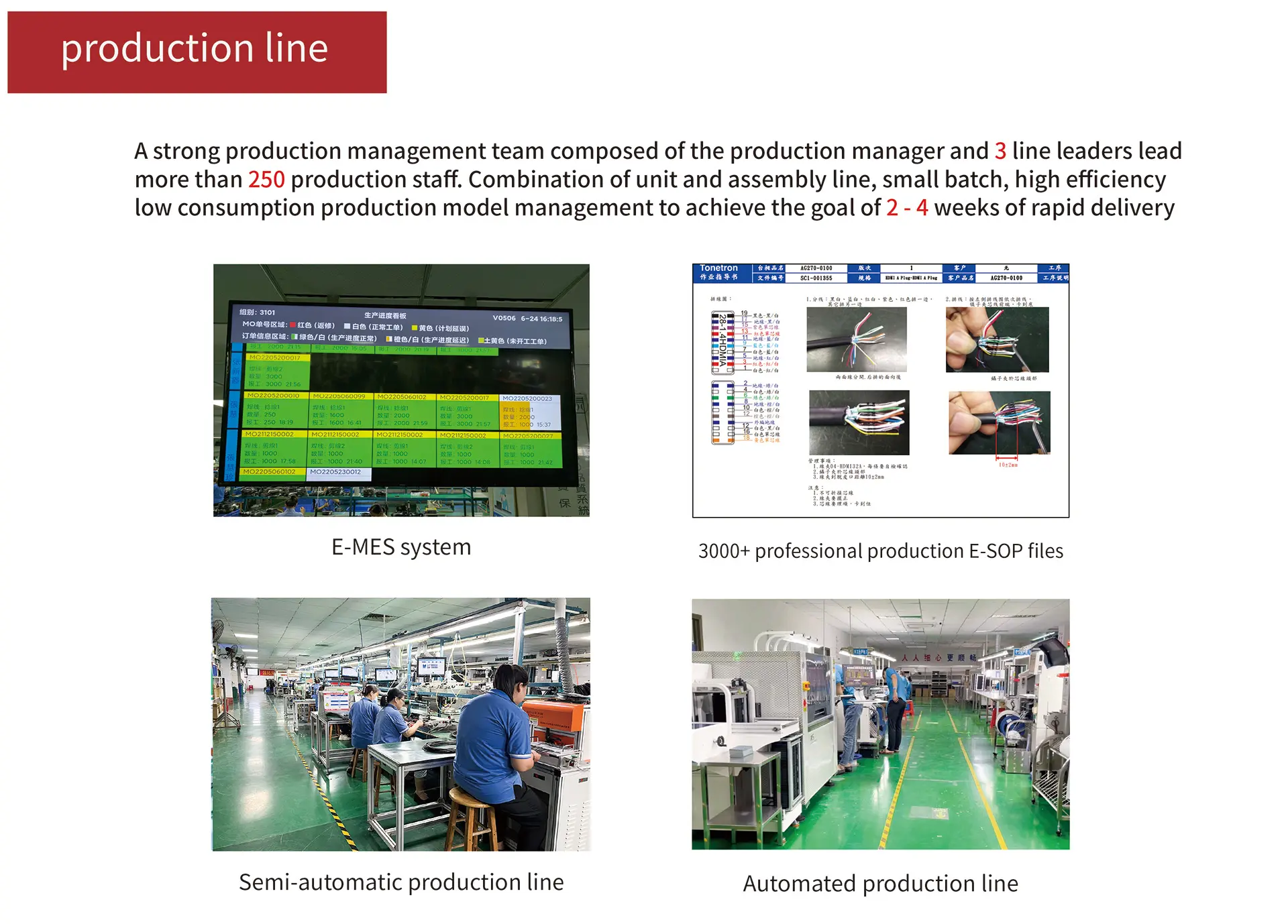
Our manufacturing base in Dongguan, established through decades of continuous investment, uses highly automated production lines. Surface Mount Technology (SMT) systems accurately place controller chips and filter components, while Automated Optical Inspection (AOI) detects component misalignment, solder bridging, and voiding. This integrated approach ensures consistent quality and allows us to offer competitive pricing on bulk production runs.
Factory Insight: In-house production of the USB-C male connectors and RJ45 sockets allows us to optimize contact resistance and Gold-plating thickness (typically 3μ" to 50μ" depending on client needs). This increases the insertion lifespan to over 10,000 cycles for the USB-C plug.
Distributing electronic hardware globally requires strict adherence to regulatory standards:
To maintain these certifications, our factories perform functional testing on 100% of finished units. We test for electrical continuity, cross-talk, network performance under high traffic, and physical tolerances.
Select high-performance adapters designed for professional workstations and media production hubs.
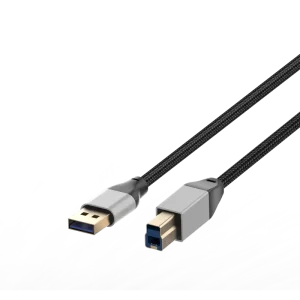
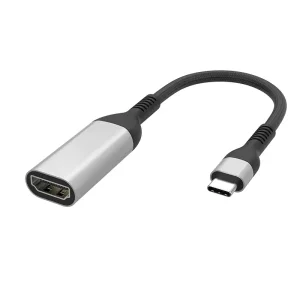
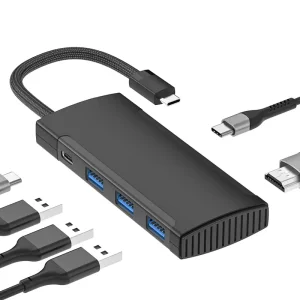
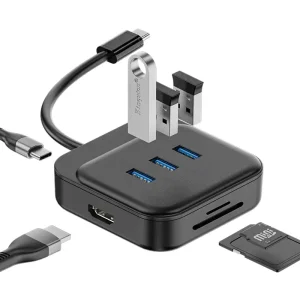
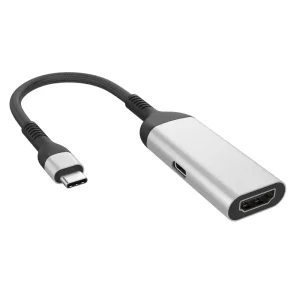
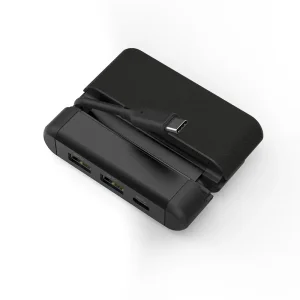
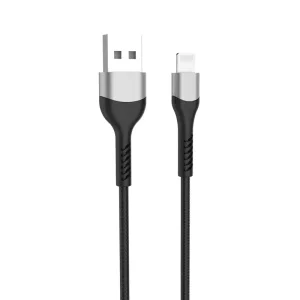
In 1984, Dongguan Taitron Electronics Limited., formerly known as Tonetron, was founded in Keelung, Taiwan. In 1993, it moved to the self-built independent production industrial park in Dalingshan Town, Dongguan City, China, and changed its name to Dongguan Taitron Electronics Limited.
Over the past 38 years, our business has grown from manufacturing professional audio and video peripheral connection cables to developing and manufacturing high-end data cables and hubs. Our lineup now includes HDMI 2.1 cables, DP 2.0 cables, USB4 data cables, USB-C 3.1 Gen2 data cables, high-power USB charging cables, 8K HD conversion cables, and multi-functional Type-C expansion docks.

Technical support, hardware compatibility, and purchasing answers for global buyers.
 Taichang Electronic