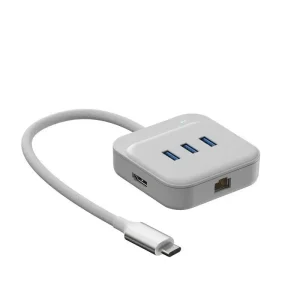
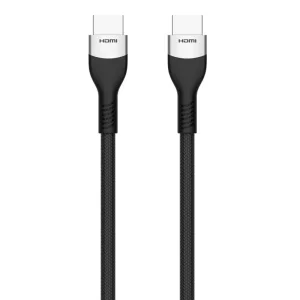
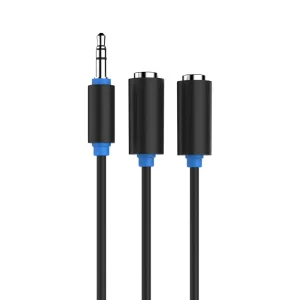
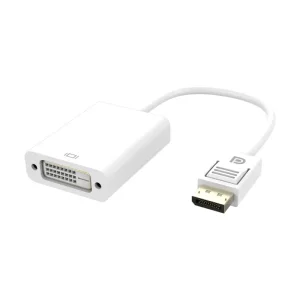
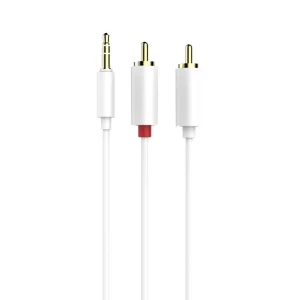
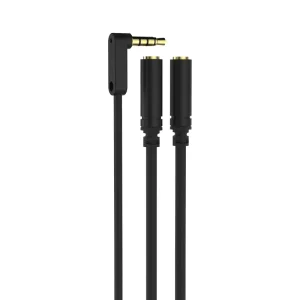
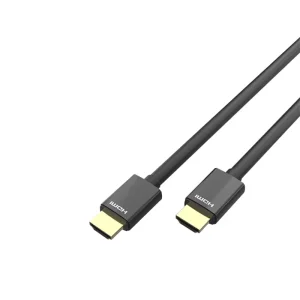
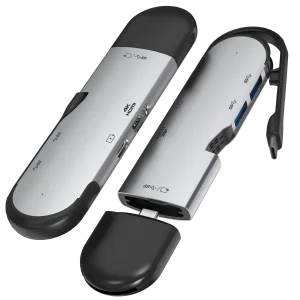
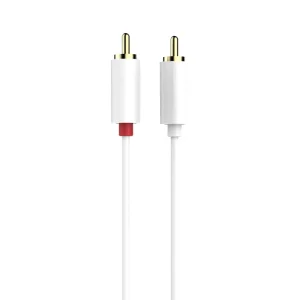
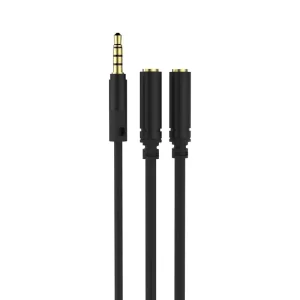
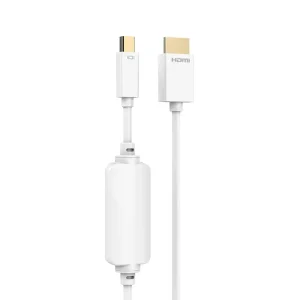
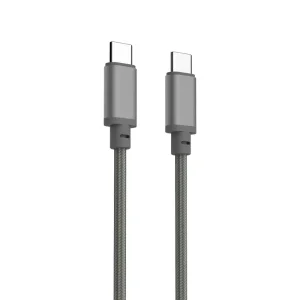
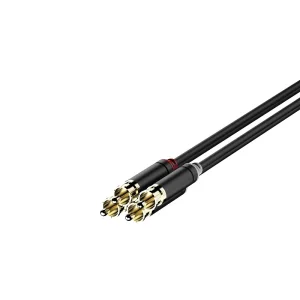
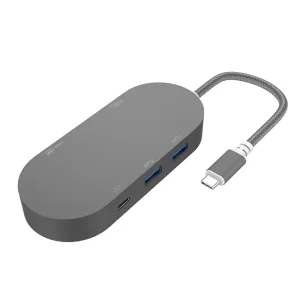
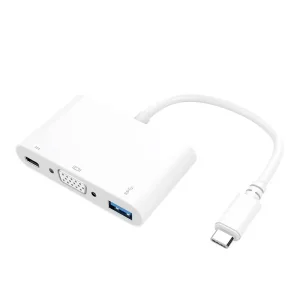
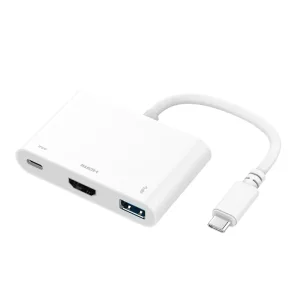
Select from our precision-engineered selection of high-speed interface solutions, audio cables, and multi-functional USB-C adaptors built for low-latency signal fidelity.
In 1984, Dongguan Taitron Electronics Limited., formerly known as Tonetron, was founded in Keelung, Taiwan. In 1993, the company transitioned its physical operations to a self-built independent production industrial park in Dalingshan Town, Dongguan City, China, changing its name to Dongguan Taitron Electronics Limited.
With 38 years of foundational development in professional video and audio peripheral equipment connection line manufacturing, we have steadily expanded our technological reach. Today, we specialize in high-end audio and video cables, data cables, and complex adapter structures, including HDMI 2.1 cables, DP 2.0/2.1 cables, USB4 data cables, USB-C 3.1 Gen2 cables, high-power USB charging pathways, 8K ultra-high-definition conversion adaptors, and multi-functional Type-C expansion docks.

In the landscape of modern digital display networks, physical topology constraints require advanced demultiplexing solutions. A DisplayPort Hub acts as a hardware-based signal distribution mechanism, leveraging VESA's Multi-Stream Transport (MST) protocol. This protocol allows a single DisplayPort output source to broadcast multiple, independent video streams to downstream displays over a single cable run.
Traditional Single-Stream Transport (SST) duplicates or mirrors a single visual coordinate matrix across connected monitors. VESA’s MST divides the overall transmission bandwidth into virtual channels, allowing distinct rendering resolutions and frame rates on each display without screen tearing or frame loss.
To process ultra-high resolutions like dual 8K @ 60Hz or quad 4K @ 120Hz displays, our DisplayPort hubs incorporate DSC 1.2a. This visually lossless, real-time compression algorithm reduces physical line bandwidth requirements by up to 3:1 while maintaining pixel-perfect fidelity.
Integrating DisplayPort Dual-Mode (DP++) technology, our hubs execute internal voltage level shifting and digital protocol conversions. This enables native outputs to interface seamlessly with legacy display devices over HDMI, DVI, and VGA connections.
For global distributors and industrial purchasers, sourcing DisplayPort hubs requires balancing signaling performance with manufacturing compliance. Factory audits are crucial to verify that components can withstand high levels of electrical noise (EMI) and physical vibration.
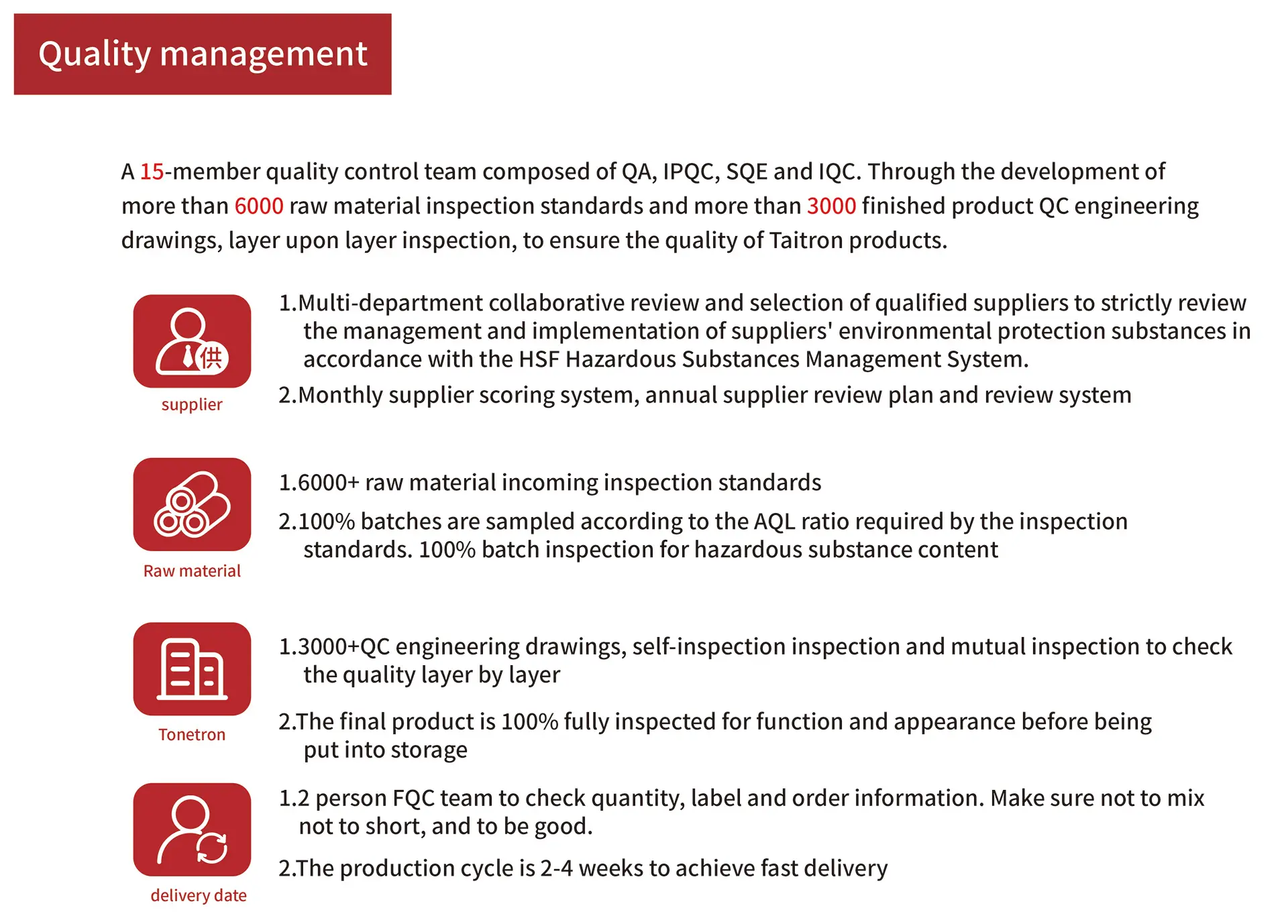
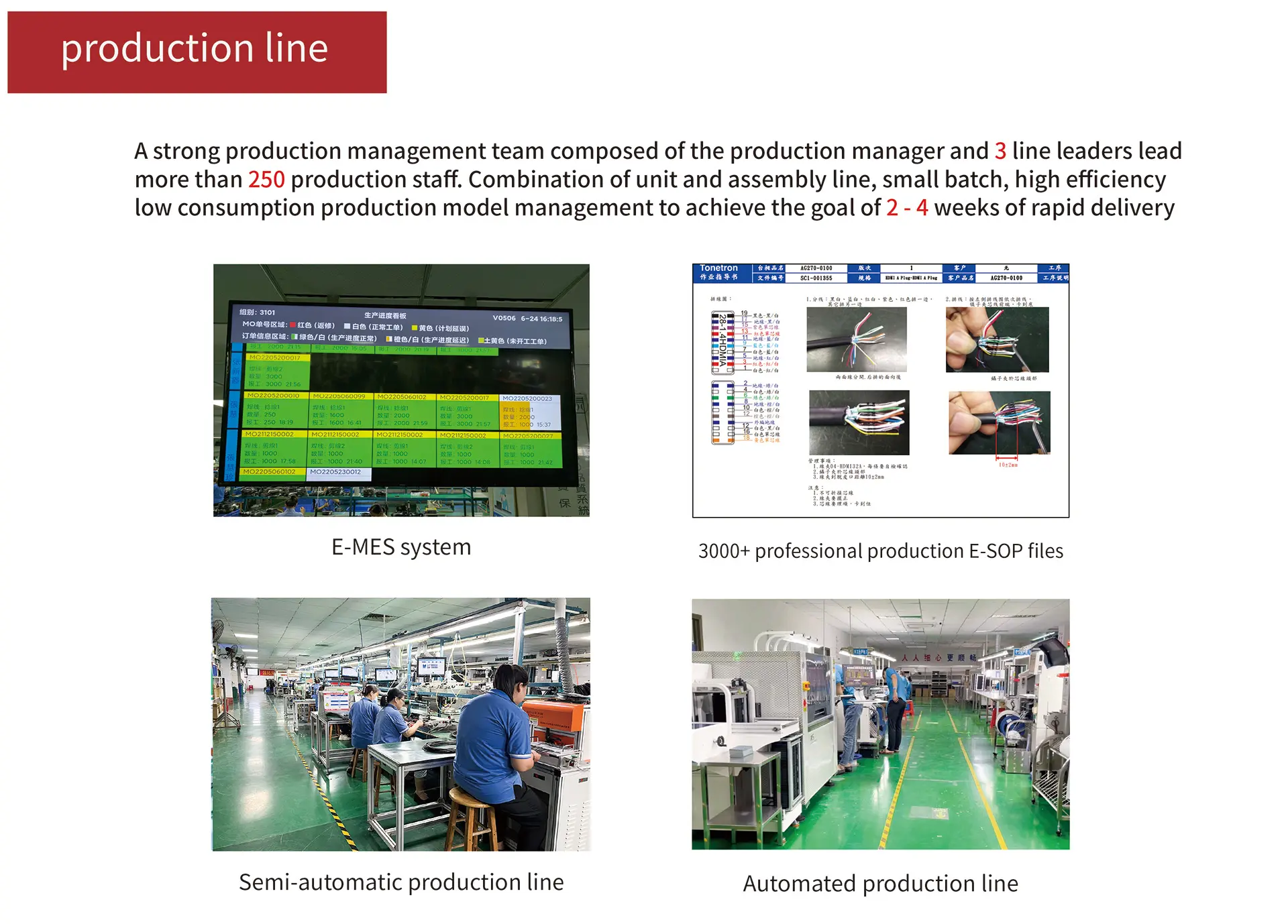
At Dongguan Taitron, our production lines are equipped with automated optical inspection systems (AOI) and time-domain reflectometer (TDR) testing stations. This quality check screens for impedance anomalies along every signal lane, guaranteeing that all products meet the 100-ohm differential target standard for clean data transfer.
Industrial projects often require unique form factors, rugged metal housings, and custom connector layouts. We offer comprehensive OEM/ODM customization services, including custom PCB design, customized housing dimensions, and tailored wire harness lengths to fit specific machine layouts.
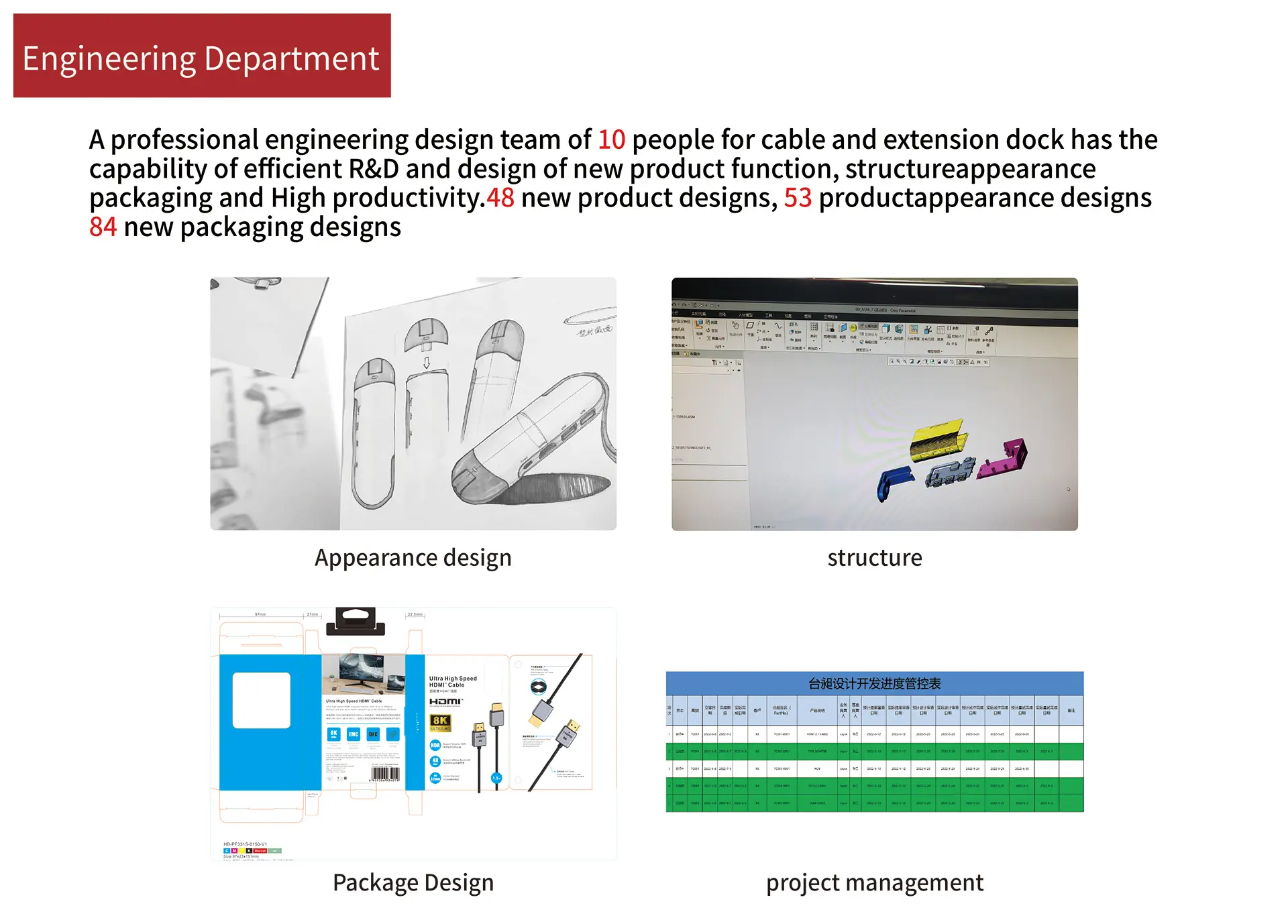
Our engineering team collaborates directly with system integrators to prototype specialized MST boards, incorporating specific chipsets from industry-leading manufacturers like Parade, Synaptics, and Realtek to match complex compatibility profiles.
Exporting high-frequency AV peripherals requires strict adherence to international electrical safety and electromagnetic compliance directives. Hardware destined for North American and European industrial sectors must pass comprehensive laboratory evaluations.
Our products undergo testing for electromagnetic interference (EMI) limits under FCC Part 15 and CE EN55032. This ensures that high-power switching matrices do not disrupt adjacent communications networks.
We strictly limit the use of hazardous substances in our components. Our manufacturing processes conform to RoHS Directive 2011/65/EU and REACH standards, ensuring chemical safety and recyclability across all assembly materials.
We provide local field engineering support, complete with signal integrity verification reports and reference design documentation, helping streamline the system integration process.
In power plants, security centers, and network hubs, operators use Multi-Stream Transport (MST) matrices to monitor multiple data feeds. DisplayPort hubs simplify cabling by driving multi-screen arrays from a single industrial computer.
Diagnostics rooms require extremely sharp, zero-latency displays. By using active hub topologies, medical professionals can connect high-resolution diagnostic monitors to processing units without visual distortion.
Heavy machinery production areas use DisplayPort distribution systems to send real-time status dashboards to workers. Heavy-duty shielding protects signal clarity from electromagnetic noise on the factory floor.
As displays shift toward ultra-high resolutions and faster refresh rates, the demand for underlying bandwidth has skyrocketed. The transition from DisplayPort 1.4 to newer VESA standards forms the foundation of our engineering roadmap.
The newest DisplayPort 2.1 standard introduces Ultra-High Bit Rate (UHBR) transmission modes, delivering up to 80 Gbps of bandwidth. This raw capacity supports uncompressed 8K displays at higher refresh rates and enables multi-display daisy-chain networks over a single interface.
Our R&D division is focused on designing high-frequency PCB layouts with strict trace geometry controls, reducing signal crosstalk for stable performance under DP 2.1 and UHBR requirements.
The convergence of USB4, Thunderbolt, and DisplayPort architectures has transformed signal distribution. DisplayPort Alternate Mode over Type-C allows high-speed AV signals to share physical cables with data pathways.
Our future line of active adapters integrates advanced power delivery (PD) microchips, letting users charge host devices while outputting high-definition video through a single hub connection.
Browse our complete line of certified adapters, high-speed RCA audio links, and customizable USB-C connectors designed for commercial and industrial setups.
 Taichang Electronic