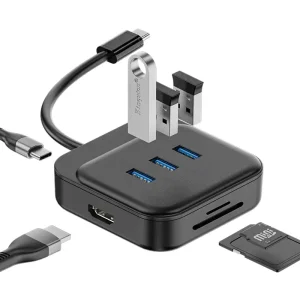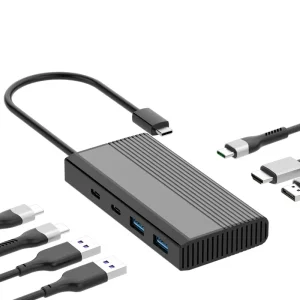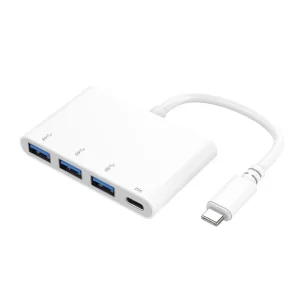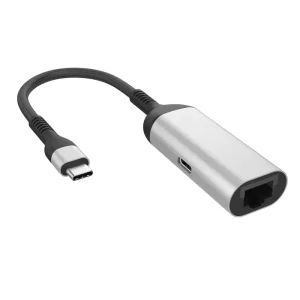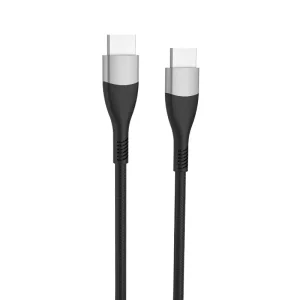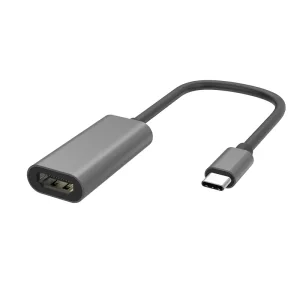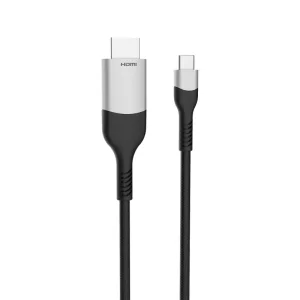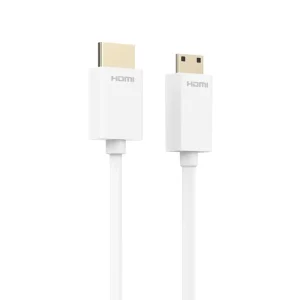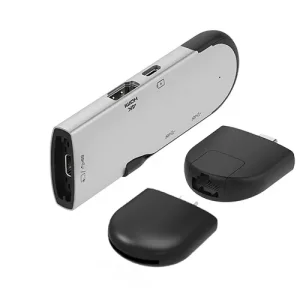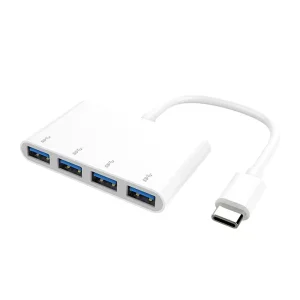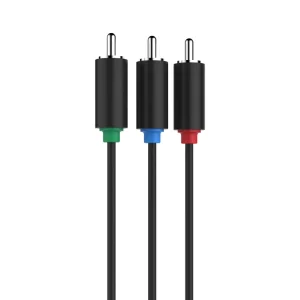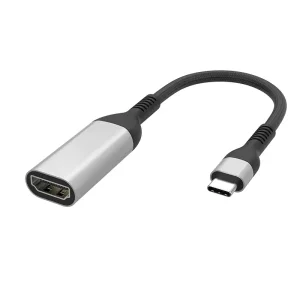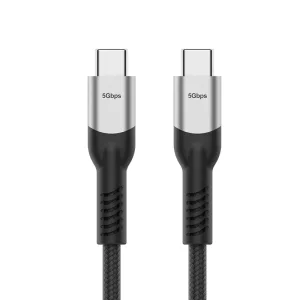
In the era of modern work environments, hardware standardization is a critical lever for operational efficiency and IT management. The transition to ultra-thin laptops has resulted in a massive reduction of native I/O interfaces, positioning the 5-in-1 USB-C Docking Station as a core component of workspace infrastructure. This technical white paper analyzes the engineering principles, data pipelines, power management architectures, and manufacturing protocols behind professional-grade Type-C docking solutions.
Designed for hardware procurement managers, systems integrators, and electronics distributors, this document details how high-quality hardware configurations prevent operational downtime, guarantee hardware safety, and achieve seamless performance across diverse operating systems including Windows, macOS, ChromeOS, and Linux.
Utilizes native DisplayPort Alternate Mode to support raw 4K resolutions at 60Hz without drivers or performance degradation.
Maintains continuous power flow to the host platform while dynamically distributing power to downstream USB devices.
Delivers 5Gbps non-blocking bandwidth paired with BC 1.2 fast charging to ensure high-speed operations and stability.
Standard USB-C video adapters often cap bandwidth at 4K @ 30Hz, resulting in visible latency and eye strain. Taitron's engineered docking station uses DisplayPort 1.4 Alternate Mode over Type-C, providing a raw bandwidth of 18 Gbps to support native 4K @ 60Hz video output (3840 x 2160 pixels).
By utilizing a high-performance converter chipset with active level shifting, the hub guarantees zero frame dropping, accurate color representations (RGB and YCbCr 4:4:4 formats), and strict compliance with HDCP 2.2 for digital rights management. This makes it ideal for professional video editing, financial data monitoring, and medical imaging applications.
Modern workstations require dual-role power management. The integration of USB-PD (Power Delivery 3.0) allows our docking station to accept up to 100W input from a USB-C wall charger.
The intelligent power-negotiation firmware within the dock allocates up to 85W of pass-through power directly to the host laptop, leaving a dedicated 15W budget to supply internal ICs and external connected storage devices. This prevents peripheral disconnects caused by dynamic power shifts when external power is plugged or unplugged.
The USB-C interface uses high-speed differential signal pairs operating at 5 Gbps. To prevent electromagnetic interference (EMI) from disrupting nearby 2.4 GHz wireless devices (such as Bluetooth mice and Wi-Fi antennas), our docking stations feature multi-layered PCB designs, high-density metal shielding covers, and precise differential pair routing.
This design ensures clean data eye diagrams and maintains 5 Gbps throughput across all active USB ports, preventing data packet corruption and keeping signal latency to a minimum.
Standard USB data ports only output 0.9A of current. Taitron integrates the Battery Charging 1.2 (BC 1.2) standard, allowing dedicated downstream ports to supply up to 5V 2A (10W) of charging current.
This hardware feature enables connected smartphones, power banks, and tablets to charge rapidly while data is being transferred. The built-in over-current protection (OCP) circuit monitors output load in real-time, preventing voltage sag and protecting internal device circuits.
Founded in 1984 in Keelung, Taiwan as Tonetron, our organization has driven advancement in signal transmission and connectivity. In 1993, to meet global volume demands, we established our independent production industrial park in Dalingshan Town, Dongguan City, China. Today, Dongguan Taitron Electronics Limited is an industry leader in R&D, engineering, and manufacturing.
For over 38 years, our manufacturing core has evolved from professional analog video and audio cabling to high-frequency digital components. We now specialize in custom HDMI 2.1, DisplayPort 2.0, USB4, USB-C 3.1 Gen2, high-power charging cables, 8K adapters, and multi-functional Type-C expansion docks.
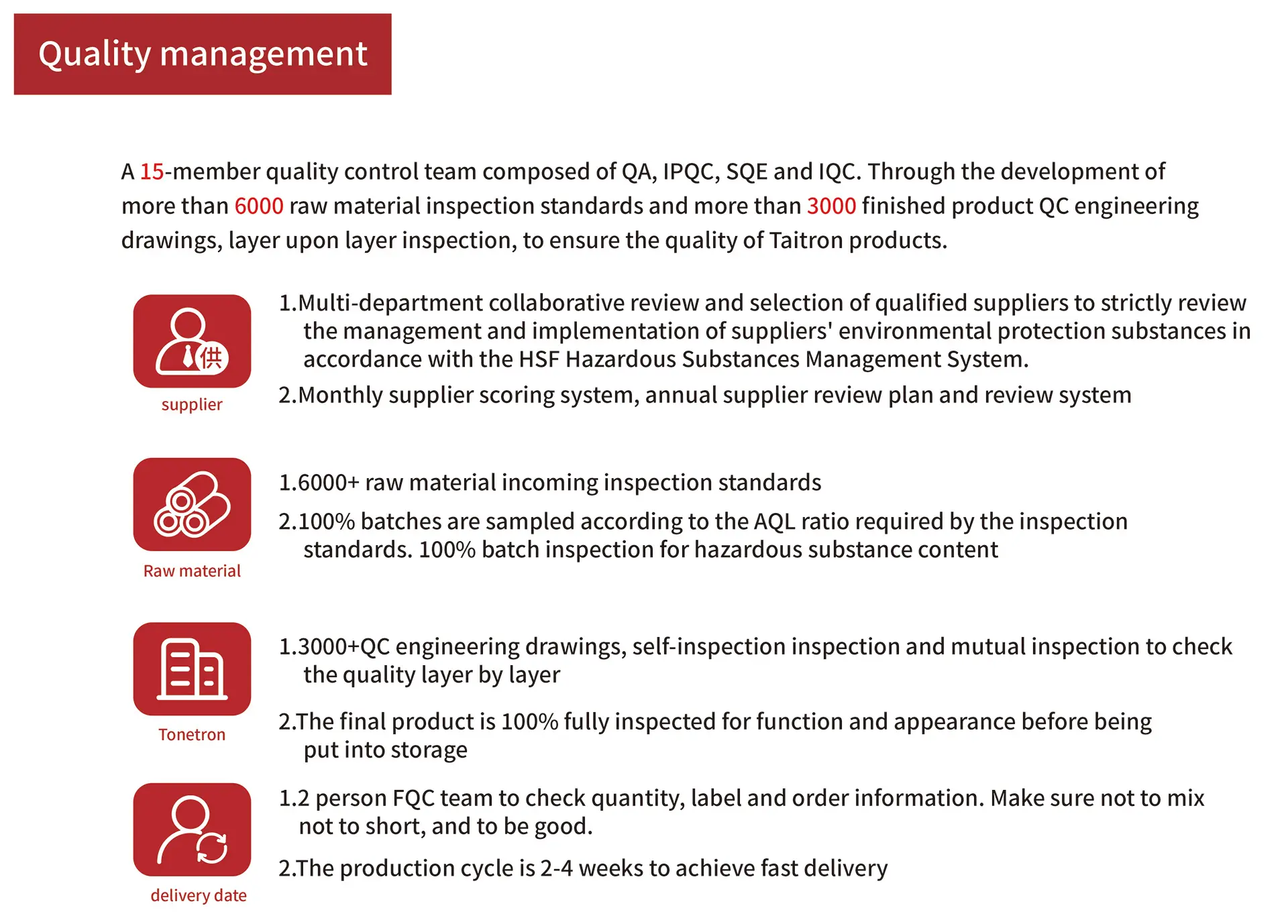

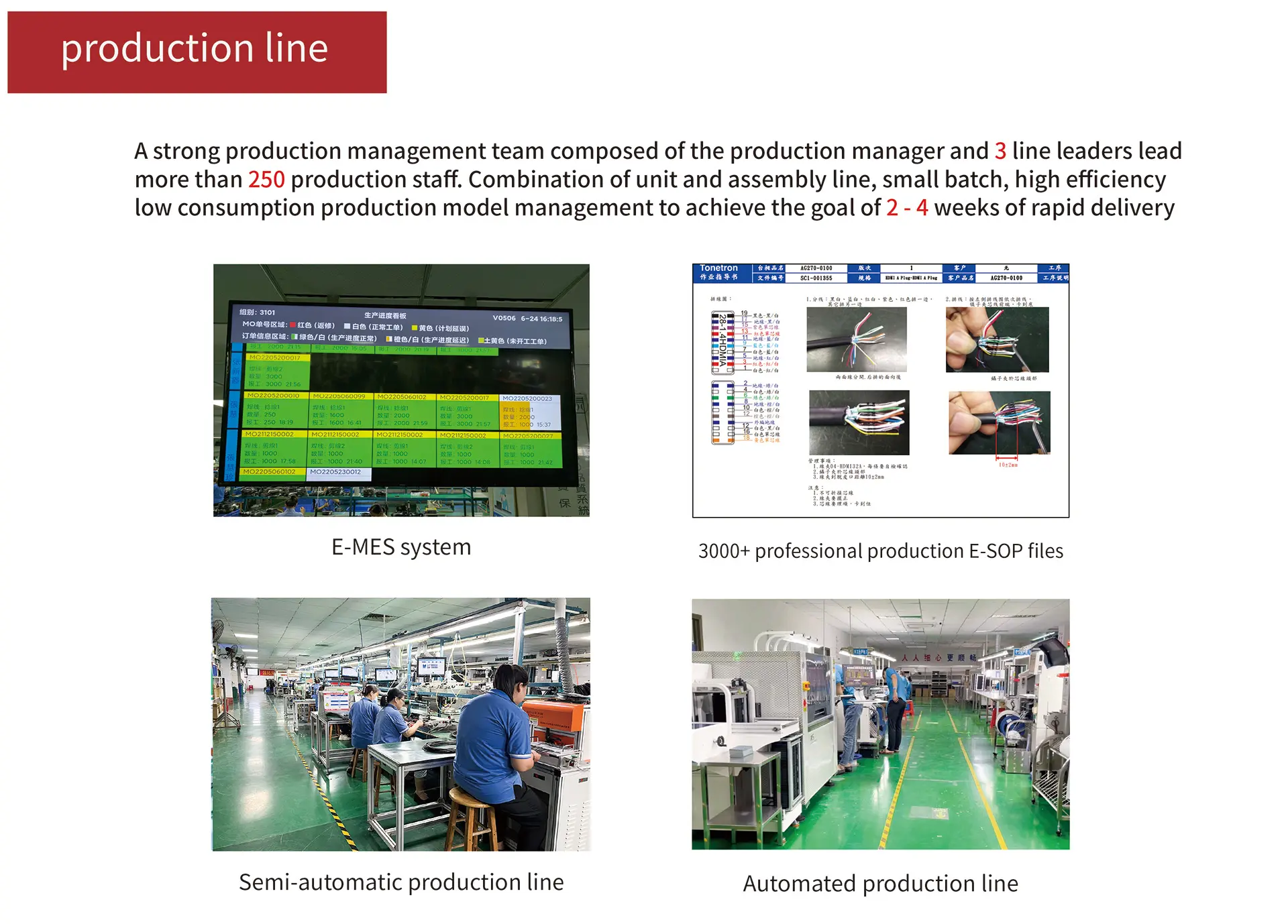
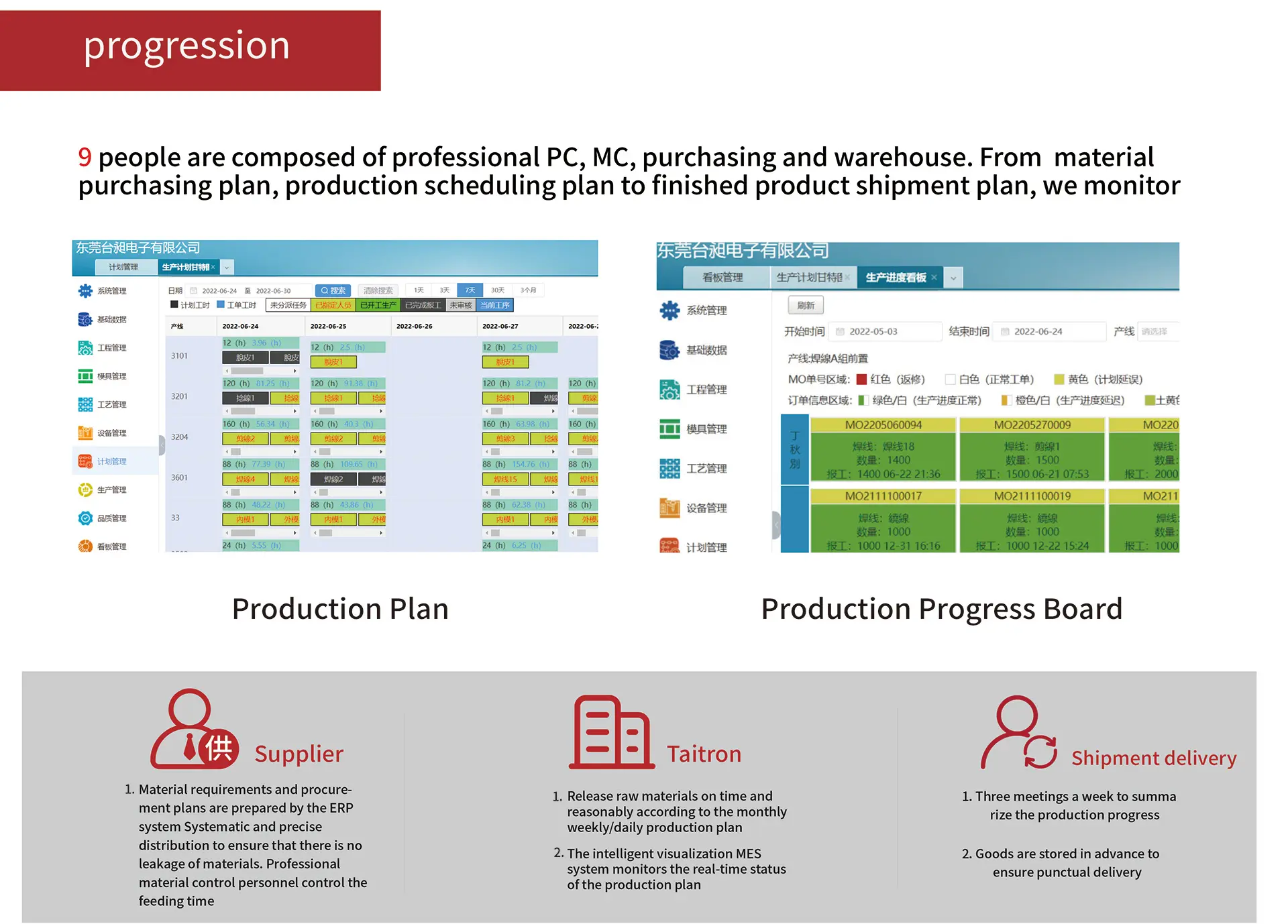
Our Dongguan manufacturing complex utilizes an advanced smart factory ecosystem. With automated surface-mount technology (SMT) lines, automated optical inspection (AOI), and precise high-frequency signal analyzers, we ensure that every docking station performs consistently.
By controlling every stage of production—from raw copper formulation and wire extrusion to PCB layer stacking and enclosure finishing—we mitigate supply chain risks. This vertical integration allows us to offer stable lead times, robust customization capabilities, and competitive OEM/ODM pricing.
For multinational enterprises, compliance is essential. Operating electrical equipment that lacks formal testing can invalidate insurance, fail corporate audits, and violate local import laws.
Certified to meet European health, safety, and environmental standards, ensuring compliance for EU imports.
Tested to protect against electrostatic discharge (ESD) and electromagnetic interference (EMI) in dense environments.
Free from hazardous chemicals, supporting corporate environmental sustainability goals.
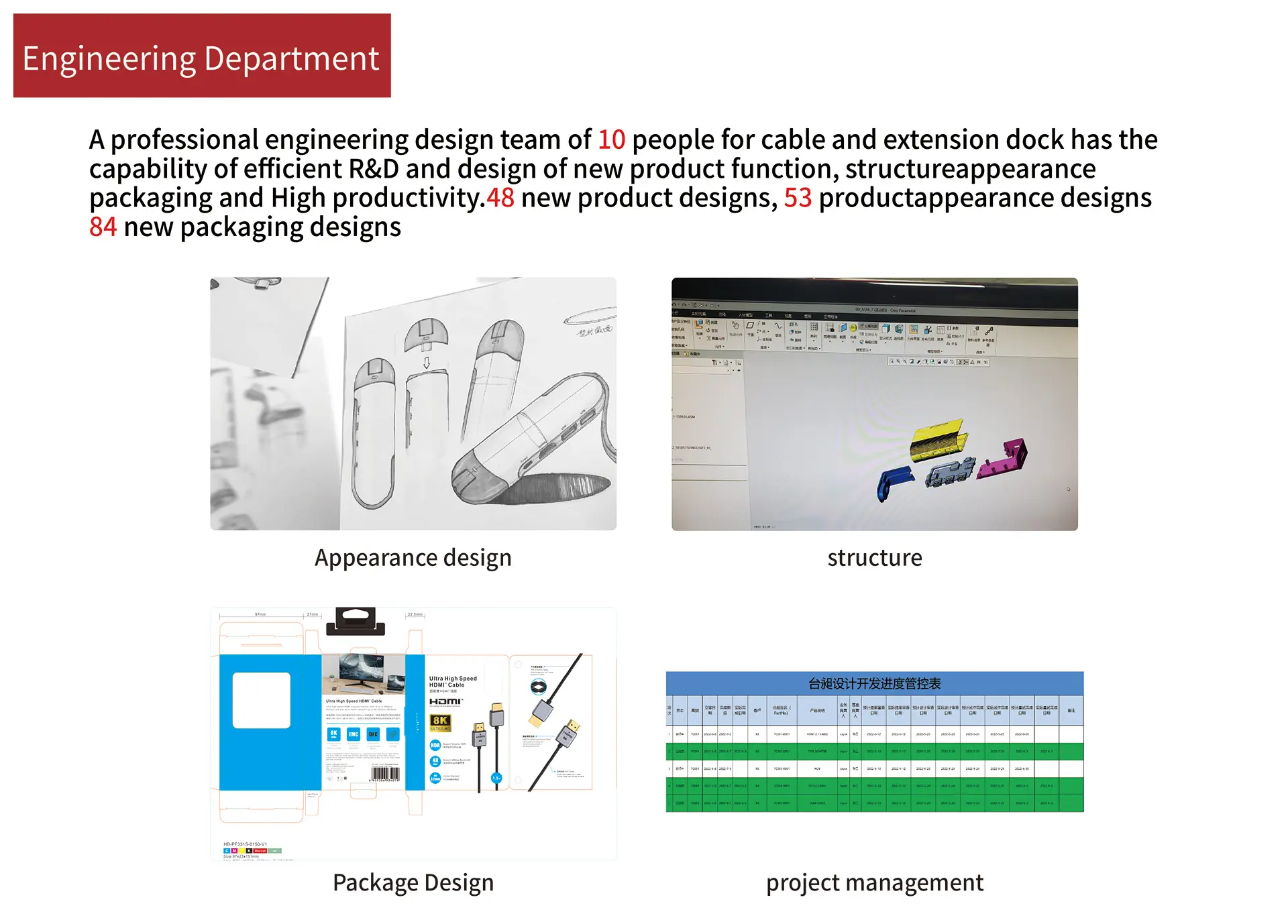
As workspaces evolve, Taitron's R&D department continues to develop new connectivity solutions. Our engineering roadmap includes:
Upgrading physical lanes to support 40Gbps and 80Gbps dynamic data routing.
Integrating Gallium Nitride components directly into dock casings for smaller sizes.
Developing Extended Power Range compatibility to power high-draw workstation laptops.
Scaling bandwidth to support 8K video output at 60Hz for ultra-high-definition displays.
For wholesale purchasers, sourcing standard retail docking stations often leads to reliability issues and high RMA rates. Taitron provides customizable B2B solutions tailored to corporate environments:
 Taichang Electronic