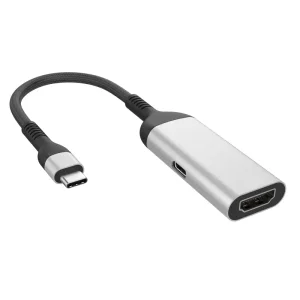
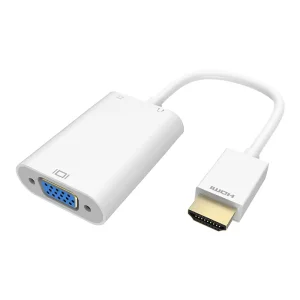
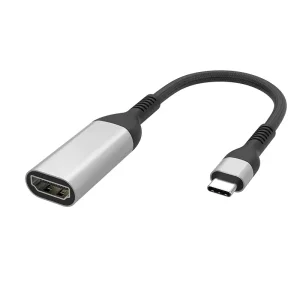
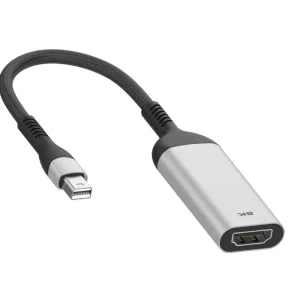
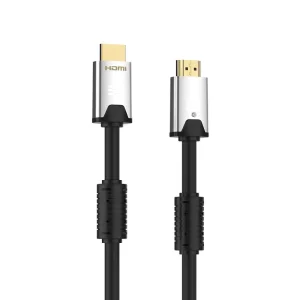
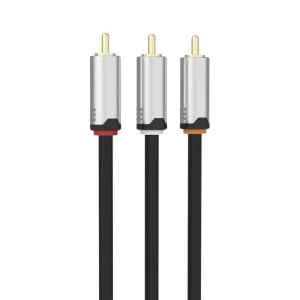
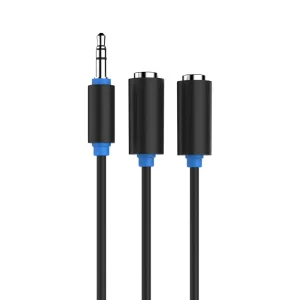
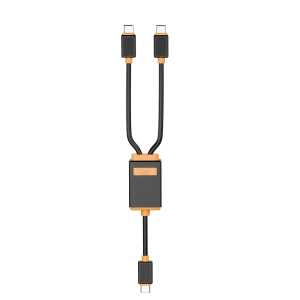
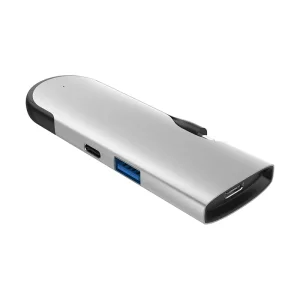
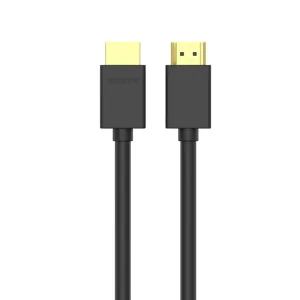
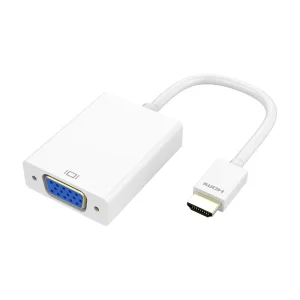
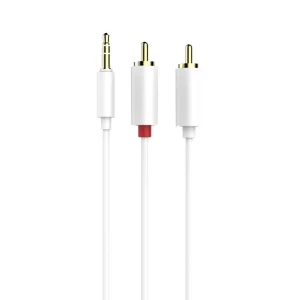
High-bandwidth digital-to-analog and cross-interface converters tailored for global enterprise markets.
Navigating the transition to VESA DisplayPort specifications and next-generation link layers.
In the modern digital ecosystems, standard display pipelines have evolved from analog transmission lines to complex, high-frequency, packet-based data highways. Today's commercial displays, workstations, and high-performance gaming rigs utilize VESA's DisplayPort (DP) protocols to transfer ultra-high-definition, uncompressed video signals, alongside audio and supplementary control lines. For hardware procurers and systems engineers, sourcing DisplayPort adapters from leading manufacturers in China is no longer merely a procurement exercise in minimizing raw unit costs—it is a critical integration project centered around signal preservation, physical layer integrity, and EMI (Electro-Magnetic Interference) compliance.
With the commercialization of DisplayPort 2.1 and the continuous deployment of DisplayPort Alternate Mode over Type-C interfaces, structural demands have shifted. Traditional copper conductors suffer from severe high-frequency attenuation when handling multi-gigabit bandwidth profiles. To address these demands, advanced Chinese manufacturing hubs incorporate highly sophisticated board routing layout strategies and active chipset integration (employing solutions from Parade Technologies, Synopsys, and Realtek) to offset line losses and ensure error-free data packet recovery (Link Training) over extended cable runs.
Deploying robust, certified adapter lines across medical, automation, and enterprise topologies.
Medical imaging systems like MRI and high-resolution digital X-rays demand absolute signal integrity. Visual artifacts or dropped frames during diagnostic interpretation are unacceptable. Our adapters utilize strict differential shielding (100% Mylar and high-density tinned copper braiding) to guarantee interference-free transmission across medical computing terminals and remote surgical displays.
In factories with massive electromagnetic fields generated by heavy machinery, adapters are vulnerable to EMI and structural vibration. We design and manufacture locked DisplayPort connectors with mechanical latches, integrated with robust, chemical-resistant PVC or halogen-free TPE outer jackets to withstand physical fatigue and high ambient temperatures.
Corporate multi-display arrangements, video walls, and conference rooms require cross-compatibility between legacy VGA/HDMI displays and DP interfaces. Active protocol conversion chipsets embedded inside our adapters facilitate flawless handshakes (EDID and HDCP key generation) to ensure plug-and-play functionality across mixed-vendor hardware fleets.
Deep engineering insights into how we build high-speed signal pathways that endure.
Converting DisplayPort packets into HDMI transitions minimized jitter. Active converters recreate clock signals internally, preventing packet loss over downstream lengths exceeding 5 meters. This is achieved via a dedicated micro-PCB layout with decoupling capacitors designed to filter power ripple.
Our signal lines use 99.99% high-purity Oxygen-Free Copper (OFC) to minimize resistance. Signal pairs are individually wrapped in aluminum foil, followed by a secondary overall braided shield of tinned copper wire, achieving shielding efficacy exceeding 90dB.
Looking ahead, VESA's Ultra High Bandwidth Rate (UHBR) targets 10, 13.5, and 20 Gbps per lane. To support these frequencies, manufacturing processes must shift toward highly automated laser welding for terminal connections, reducing capacitive loading at the solder joint.
Every adapter lot undergoes TDR (Time Domain Reflectometry) characterization to map trace impedance (targeted at 100 ohms ± 5 ohms). Rigorous eye-diagram analyses confirm that vertical and horizontal eye openings exceed minimum VESA specifications under extreme thermal loads.
Ensuring seamless import, regulatory clearances, and certified distribution across global jurisdictions.
Entering international consumer or commercial markets requires strict adherence to regional environmental and technical standards. Importing electronics into the European Union demands full CE marking compliance alongside strict conformance to RoHS (Restriction of Hazardous Substances) and REACH regulations. These frameworks ensure that heavy metals like lead, mercury, and cadmium are absent from all components, including internal solder joints and PVC jackets.
For North American deployments, components must meet FCC Class B requirements for digital devices to prevent electromagnetic interference from disrupting wireless networks. In critical infrastructures, flame-retardant jacket classifications, such as CL2, CL3, or Low-Smoke Zero-Halogen (LSZH), are specified for in-wall applications to mitigate hazardous gas discharge in the event of fire.
*We provide comprehensive compliance documentation, including Declaration of Conformity (DoC), MSDS sheets, and test reports with every shipment.
Legacy, Scale, and Production Mastery Since 1984
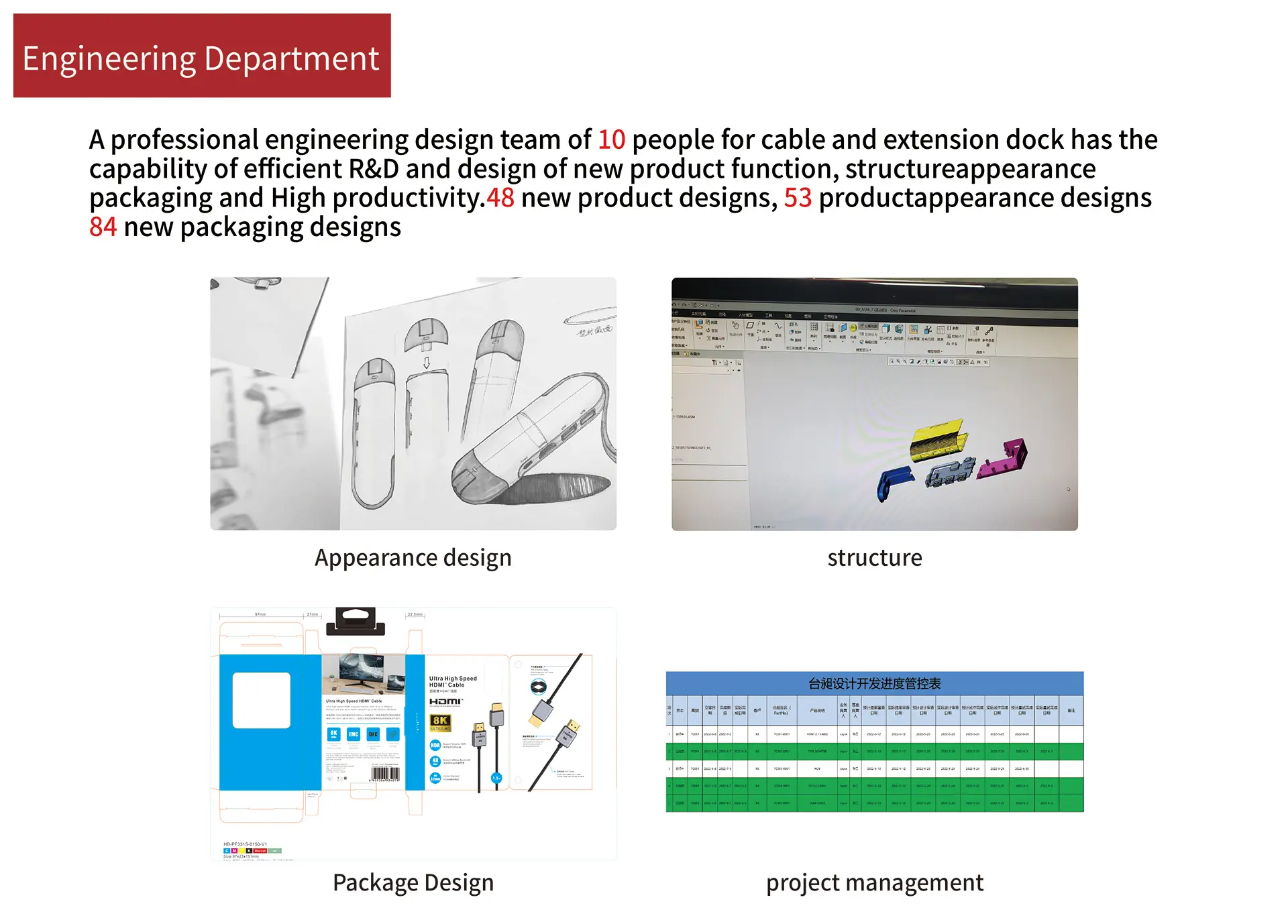
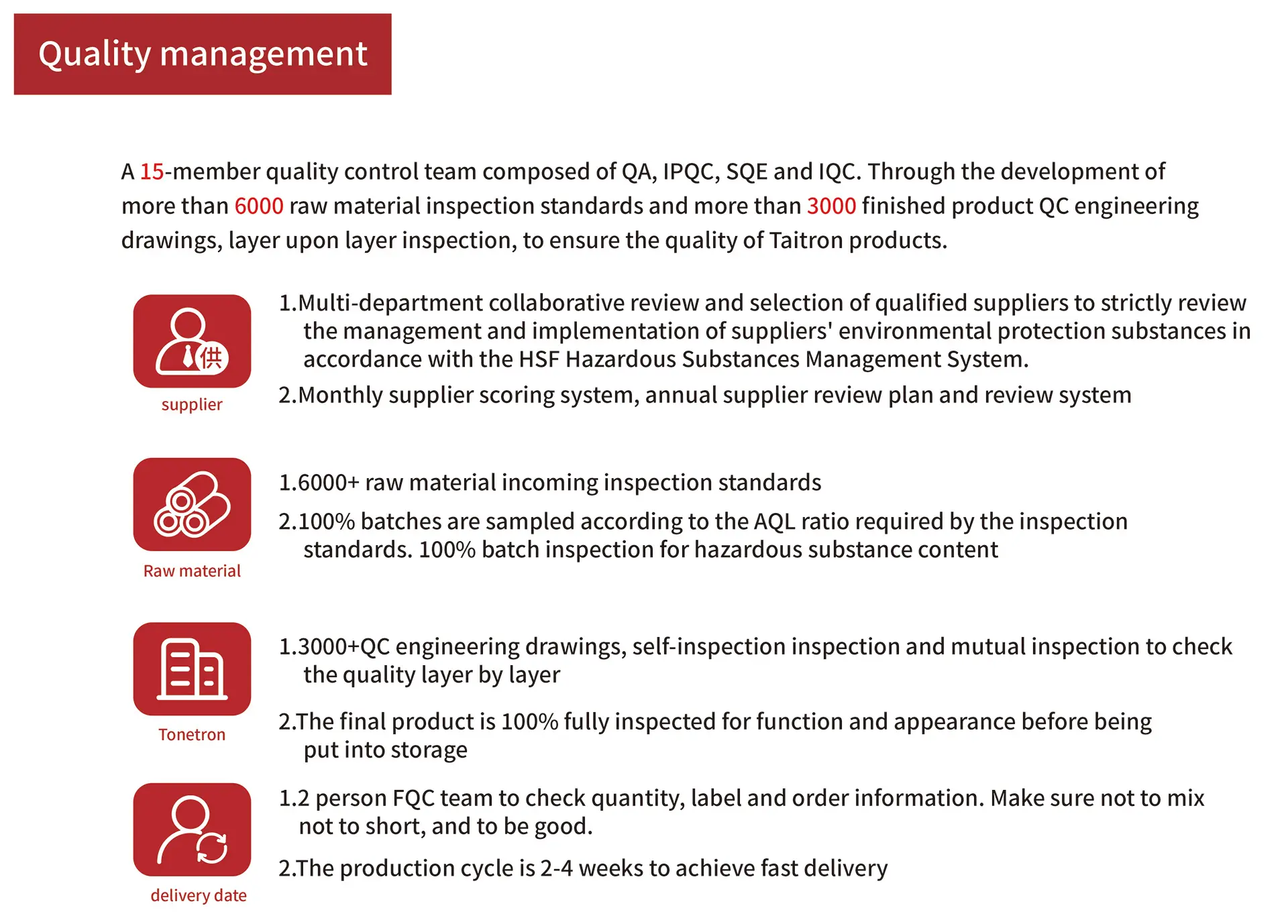
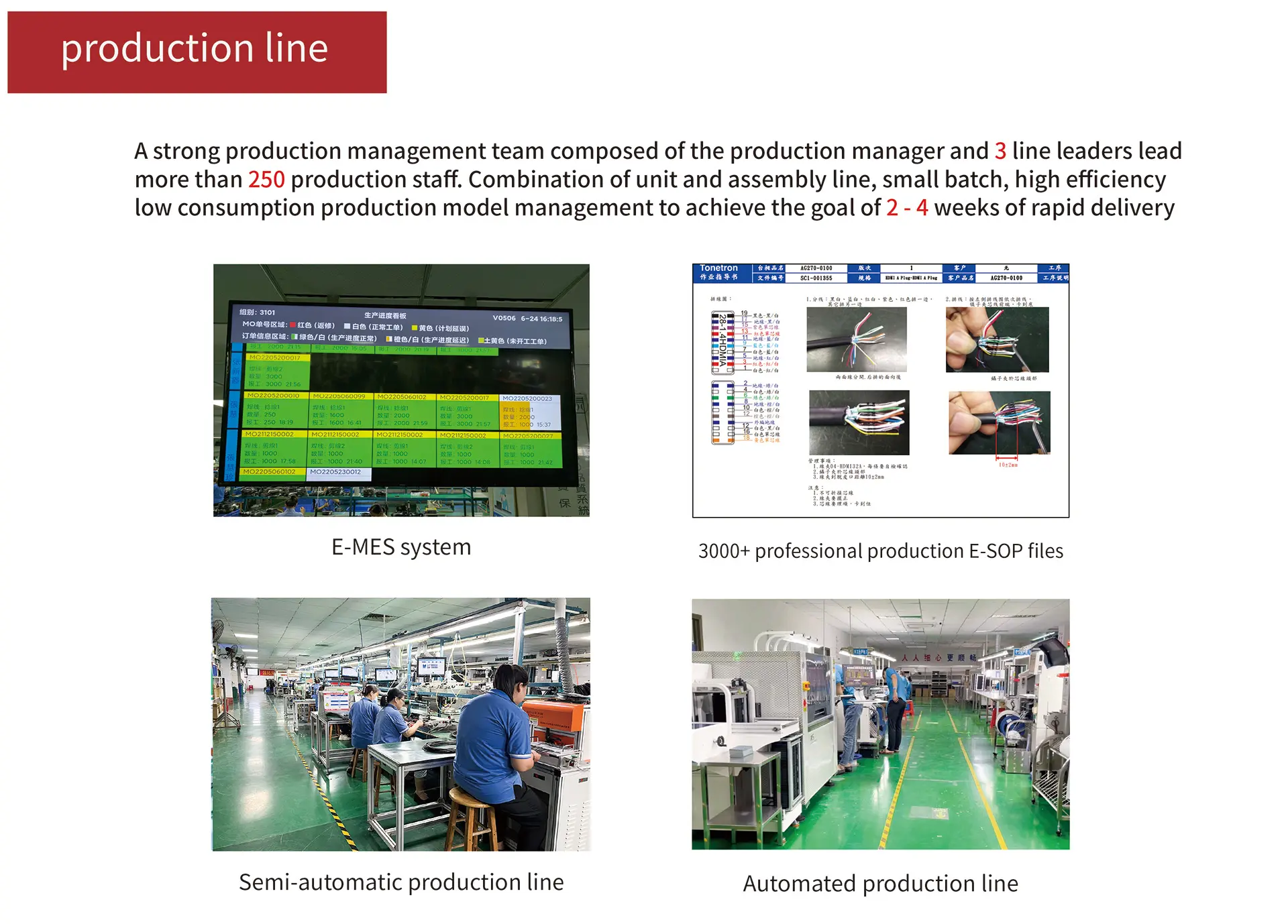
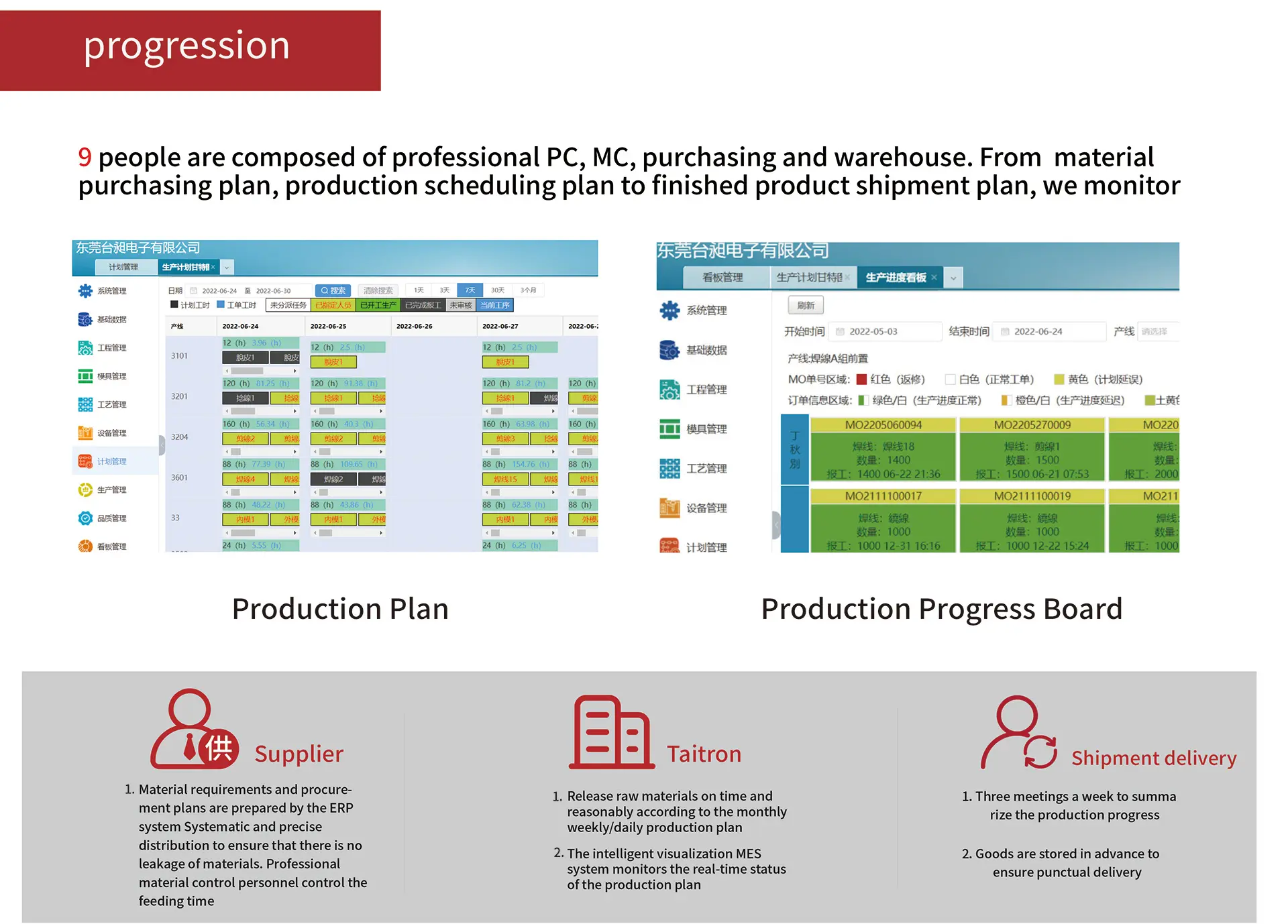
In 1984, Dongguan Taitron Electronics Limited., formerly known as Tonetron, was founded in Keelung, Taiwan. In 1993, it moved to the self-built independent production industrial park in Dalingshan Town, Dongguan City, China, and changed its name to Dongguan Taitron Electronics Limited.
38 years to pass professional video and audio peripheral equipment connection line manufacturing as the foundation, Gradually develop to the high-end audio and video cable data cable such as HDMI2.1 cable, DP2.0 cable, USB4 data cable, USB-C 3.1Gen2 data cable, high-power USB charging cable, 8K HD conversion cable, multi-functional Type-C expansion dock and other products research and development and manufacturing.

Resolving core procurement challenges and technical concerns for bulk buyers.
Enterprise connectivity solutions optimized for stability, high throughput, and prolonged duty cycles.
 Taichang Electronic