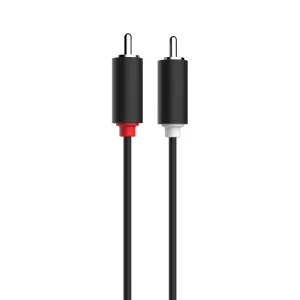
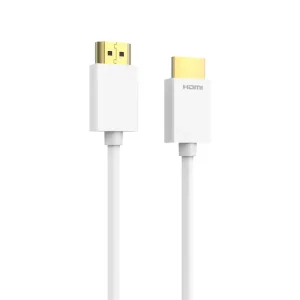
The global display interface sector is undergoing an unprecedented architectural transformation. As enterprise industries migrate toward Ultra-High-Definition (UHD) environments, demands on signal integrity, bandwidth throughput, and protocol conversion latency have escalated exponentially. High-definition multimedia signals—once limited to simple home video streaming—now drive critical applications in medical diagnostics (such as 3D endoscopes and surgical monitors), control rooms, aerospace visualization, and real-time gaming simulations. This transition requires high-frequency transmission components that maintain phase synchronization and minimize electromagnetic interference (EMI) across long distances.
Modern architectures call for native, multi-protocol interoperability. In enterprise workstations, the coexistence of HDMI (High-Definition Multimedia Interface) and DisplayPort (DP) technologies requires high-fidelity active conversion. While HDMI remains the dominant global standard for digital televisions and consumer displays, DisplayPort acts as the computing industry's primary pipeline, offering higher pixel clock rates, Multi-Stream Transport (MST) capabilities for multi-display daisy-chaining, and native Packetized Data transmission. Our role as a primary exporter and manufacturer based in China centers on addressing these interoperability hurdles through precision-engineered cables, converters, and multi-functional USB-C hubs that seamlessly bridge these standards.
In 1984, Dongguan Taitron Electronics Limited, formerly known as Tonetron, was founded in Keelung, Taiwan, establishing a footprint in precision electronic component manufacturing. Recognizing the rise of mainland China as a manufacturing hub, the company transitioned its primary base in 1993 to a self-built independent production industrial park in Dalingshan Town, Dongguan City, China, officially adopting the name Dongguan Taitron Electronics Limited.
For over 38 years, our development has been anchored in the production of high-performance video and audio peripheral equipment connection lines. We have systematically evolved our research and development competencies to align with global technological shifts. Today, our engineering focus encompasses high-speed signal cables and next-generation connectivity adapters.
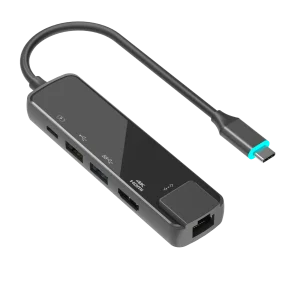
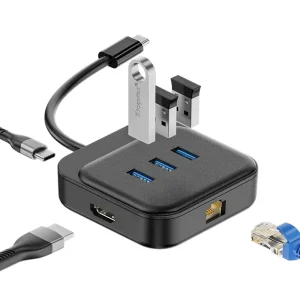
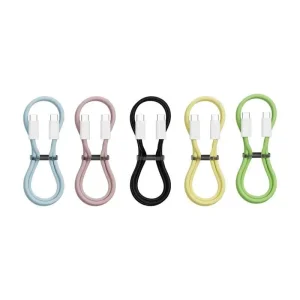
Our core portfolio features HDMI 2.1 cables, DP 2.0 / 2.1 data lines, USB4 super-speed cables, USB-C 3.1 Gen2 systems, high-power 100W USB power delivery systems, 8K Ultra-HD conversion modules, and high-density Type-C multi-functional expansion docking stations.
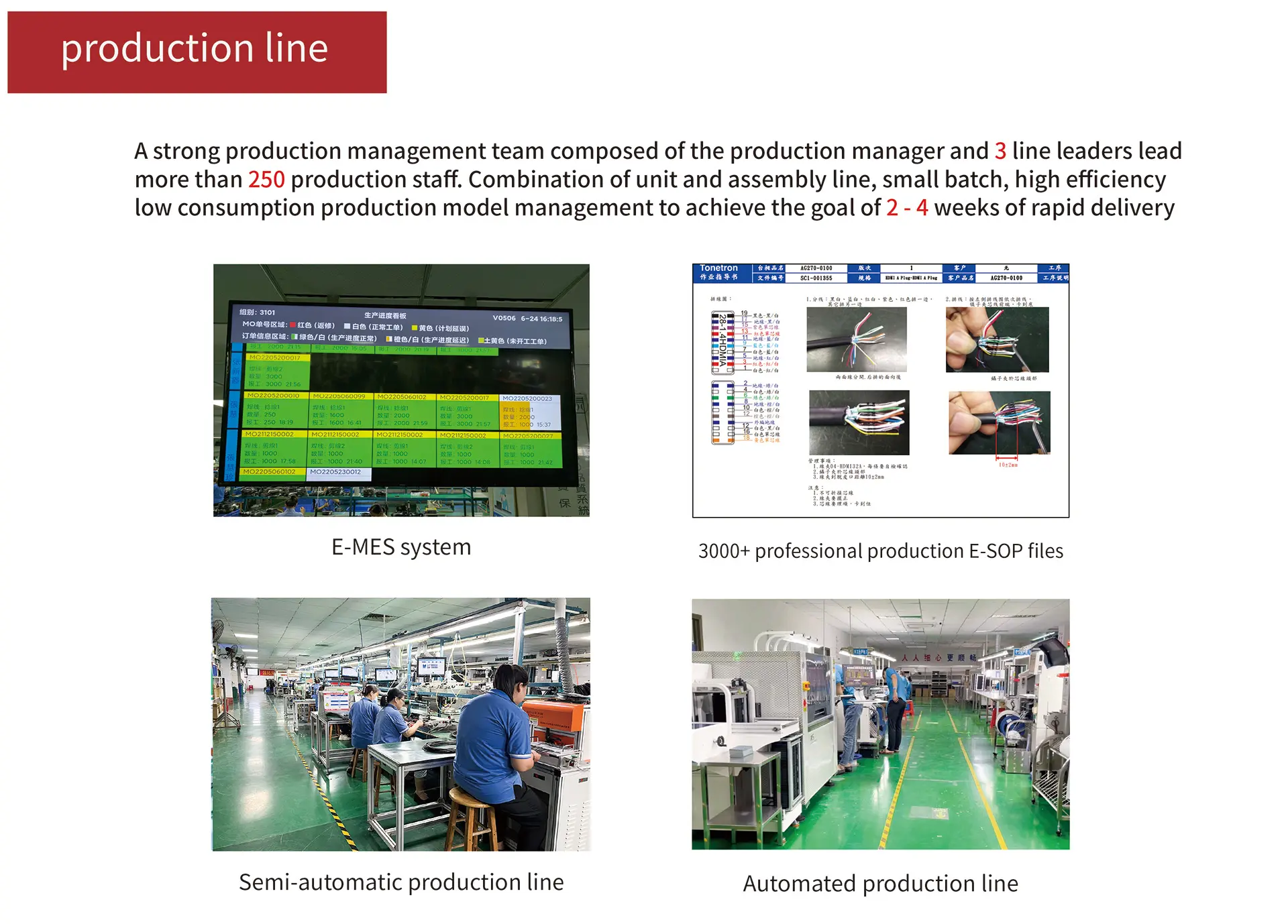
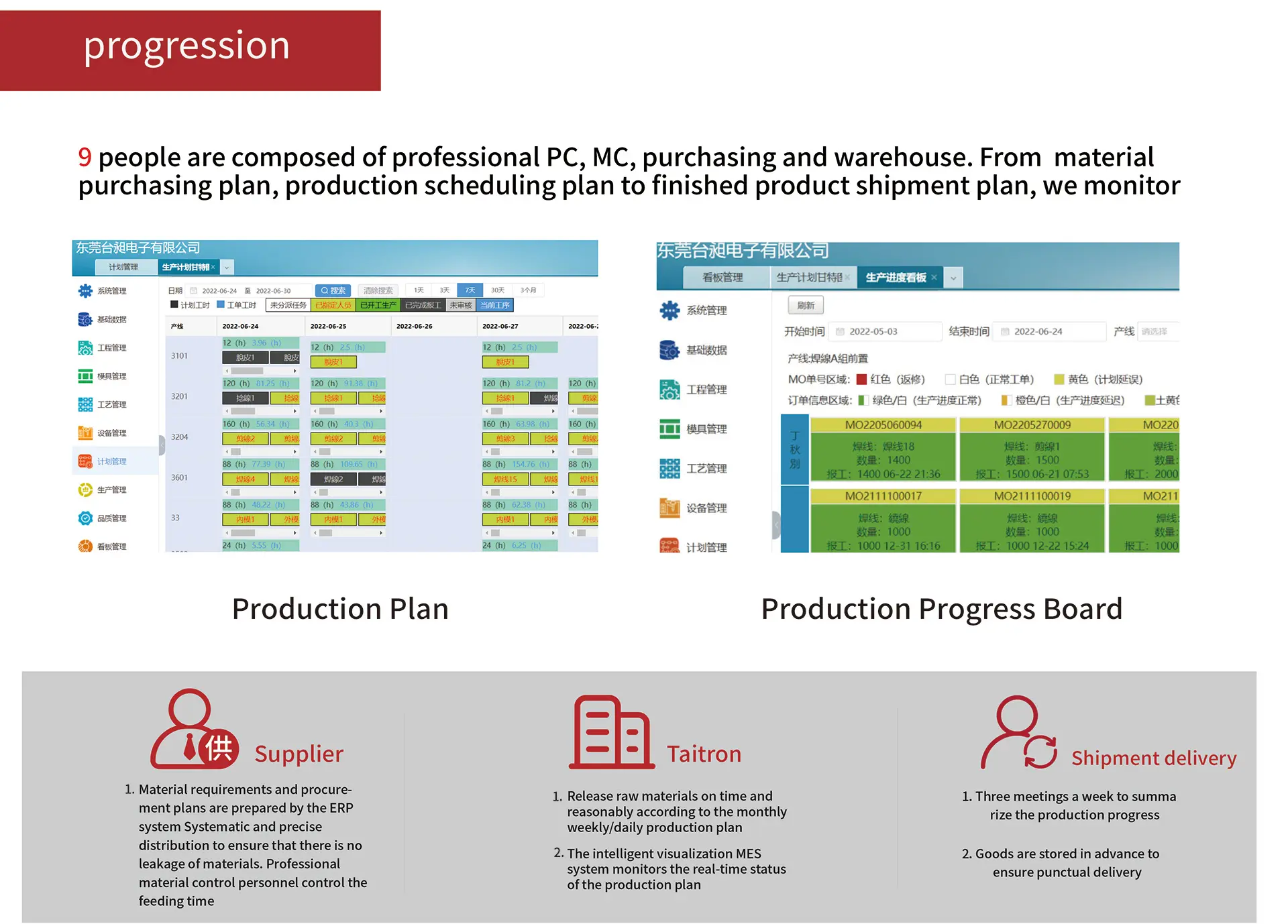
The manufacturing of high-frequency interconnect solutions requires mature supply chains, specialized tooling, and advanced mechanical engineering. Dongguan, China has established itself as the global hub for this ecosystem, consolidating raw copper refining, high-speed shielding extrusion, precision connector stampings, and automated soldering facilities. This centralized infrastructure allows Dongguan Taitron to maintain a secure supply chain, mitigate raw material cost fluctuations, and maintain rapid turnaround times for custom OEM/ODM configurations.
At a macro level, current display dynamics are characterized by two parallel requirements:
The progression of HDMI 2.0 (18 Gbps) to HDMI 2.1 (48 Gbps) and DP 1.4 (32.4 Gbps) to DP 2.0/2.1 (up to 80 Gbps) demands ultra-precise control over conductor skin effects, impedance variations, and near-end crosstalk (NEXT).
Modern commercial workspaces demand a single-cable strategy. The integration of USB Power Delivery (up to 240W EPR) alongside high-bandwidth display interfaces (such as DP Alt Mode) requires complex PCB designs and advanced thermal dissipation features.
Copper media reaches its physical limits at longer distances. The transition to Active Optical Cables (AOC) incorporating hybrid laser-driver modules allows lossless 8K transmission over spans of up to 100 meters.
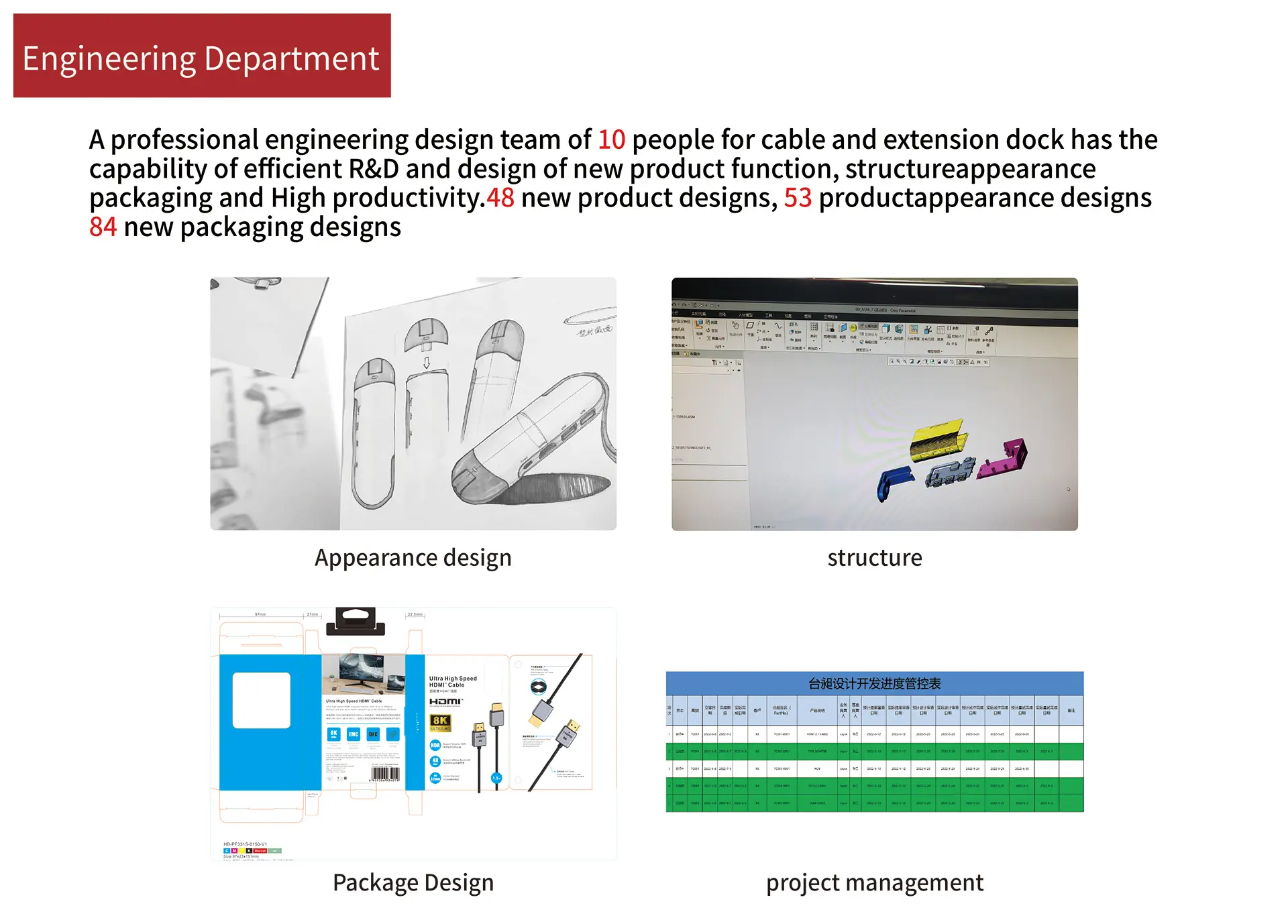
To meet these needs, Taitron integrates key phases of design and production internally. Our engineering department uses high-frequency simulation tools to model performance before cutting steel for tooling. This minimizes time-to-market, allowing industrial buyers to scale up production and stay ahead of technology transition cycles.
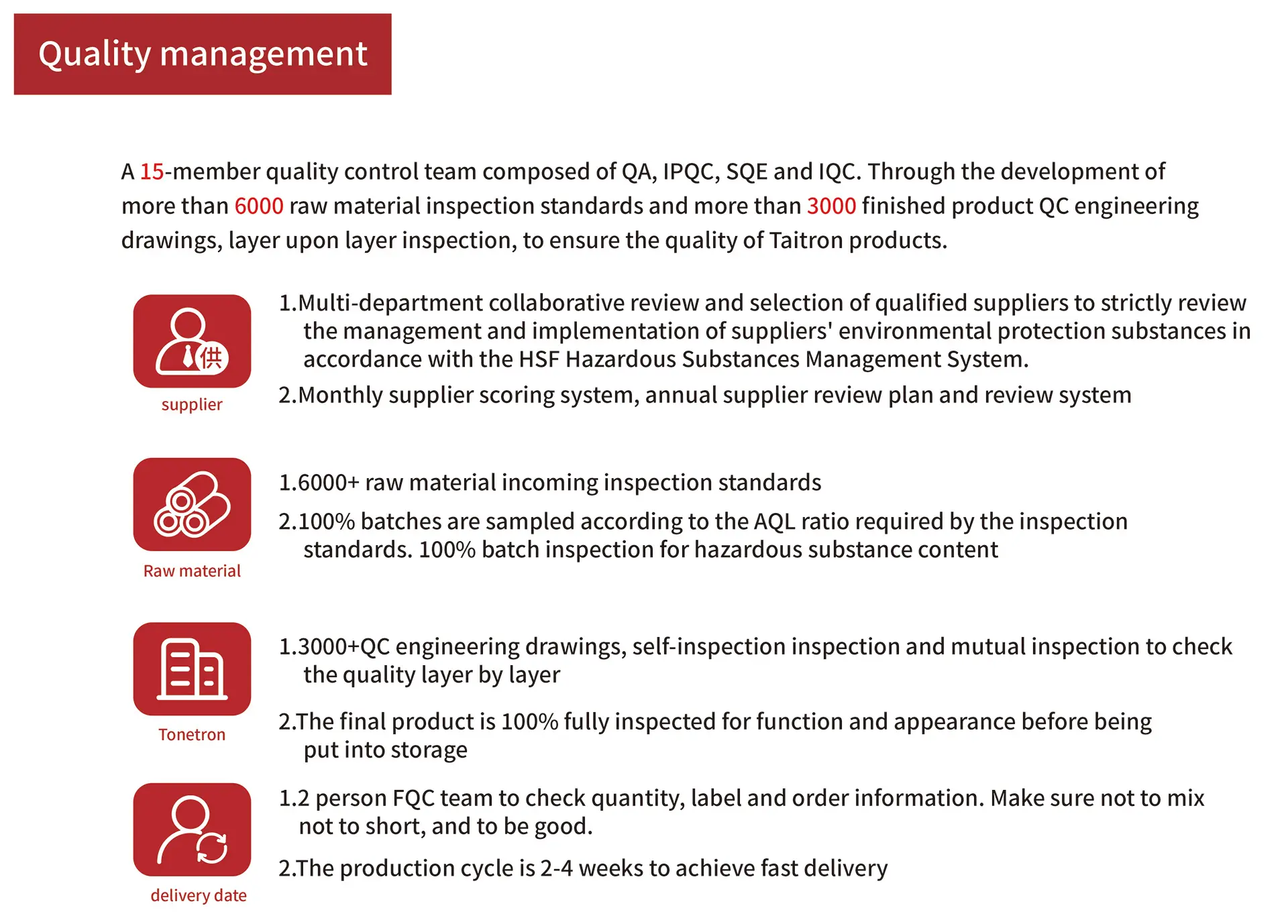
Signal degradation in high-frequency cables like HDMI 2.1 or DisplayPort 2.0 typically originates from minor deviations during manufacturing. An unshielded pair or a variable twist rate can disrupt impedance matching, causing signal reflection and jitter. Dongguan Taitron uses a multi-tier quality control architecture to ensure consistent, stable transmission.
We use oxygen-free high-conductivity (OFHC) copper conductors to prevent signal attenuation. Each differential signal pair is wrapped in an individual Al-Mylar shield with a 25% overlap, then protected by a high-density tinned copper braid (up to 95% coverage) to shield against electromagnetic interference (EMI) and radio-frequency interference (RFI).
To prevent cold solder joints and impedance spikes at the connector termination point, we utilize automated pulse-heat soldering technology. The interface transitions between the copper conductors and the gold-plated connector pins are sealed with internal structural metal shields and injection-molded strain reliefs.
Every manufacturing run undergoes automated TDR (Time-Domain Reflectometry) testing to measure differential impedance within the required 100Ω ± 5Ω range. Eye-diagram testing is conducted to verify bit error rates (BER) and confirm that margins exceed VESA and HDMI compliance requirements.
International trade dynamics require compliance with localized electrical, environmental, and intellectual property standards. Sourcing display components that lack appropriate certifications can result in customs delays, retail distribution barriers, and potential liability issues. Dongguan Taitron maintains a comprehensive compliance framework to guarantee smooth market entry across North America, the European Union, and the Asia-Pacific region.
Our manufacturing facility operates under the ISO 9001:2015 quality management standard and the ISO 14001:2015 environmental management standard. To support global distribution, our products carry certifications such as:
Different operating environments present unique engineering challenges. Sourcing off-the-shelf components without considering these factors can lead to high failure rates in the field. Taitron engineers custom products tailored to specific application requirements:
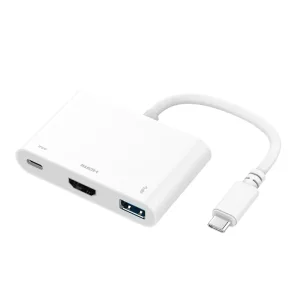
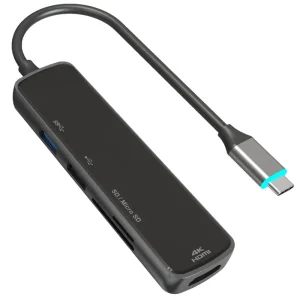
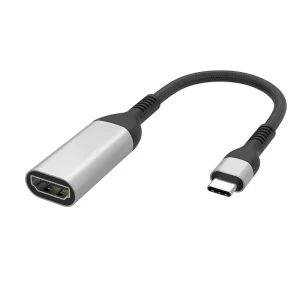
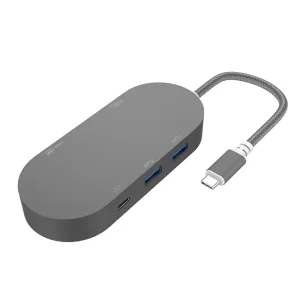
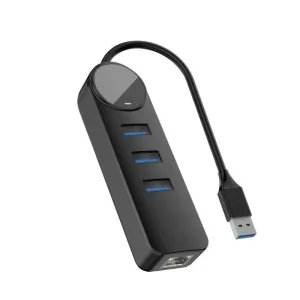
Modern workspaces use USB-C interfaces to transmit display signals, USB peripherals, and power simultaneously. In high-occupancy corporate environments, frequent plugging and unplugging can cause connector wear. Taitron's custom USB-C to HDMI adapters and 6-in-1 docking stations utilize reinforced zinc-alloy connector shells, gold-plated contacts, and integrated ESD protection to handle static discharge during hot-plugging.
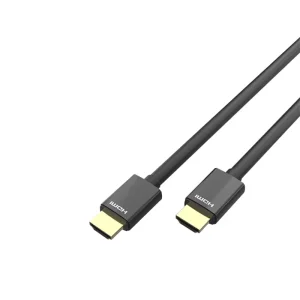
Competitive gaming requires high-frame-rate rendering, low latency, and Variable Refresh Rate (VRR) support. Display interfaces must handle HDMI 2.1 bandwidth (48Gbps) to deliver 4K resolution at 120Hz/144Hz. Taitron's high-speed HDMI cables incorporate precision-twisted pairs and dedicated structural shielding to ensure reliable, artifact-free performance during long gaming sessions.
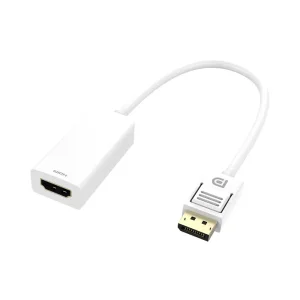
Surgical theaters require display equipment to output high-resolution feeds from diagnostic cameras without compression artifacts or delay. Active conversion from DisplayPort workstations to HDMI diagnostic monitors must be instantaneous and reliable. Taitron's active conversion cables feature high-efficiency chipsets that convert VESA packetized data into TMDS signals with minimal transition jitter.
The display interface landscape is converging. Future display pipelines will increasingly move away from dedicated video connectors, transitioning instead to high-frequency, multi-protocol pipelines. With the introduction of USB4 Version 2.0 and DisplayPort 2.1, transmission rates are projected to reach up to 80 Gbps and 120 Gbps via PAM3 (Pulse Amplitude Modulation 3-level) encoding.
Dongguan Taitron's research division is focusing on three key technology transitions:
 Taichang Electronic