Engineered for low latency, high throughput, and maximum signal integrity across critical deployment scenarios.
How physical bus speed limits, packet management, and advanced chipsets scale B2B hardware deployments.
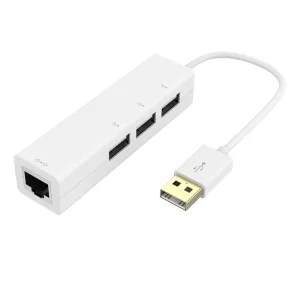
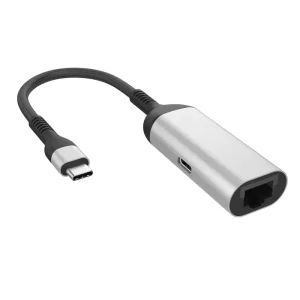
Modern commercial infrastructure demands network interfaces that are plug-and-play, low latency, and energy efficient. Standard 100/1000Base-T ports integrated into modern thin clients or custom motherboards often fail or are excluded due to structural space savings. A premium USB 3.0 to RJ45 Gigabit Ethernet adapter bridges this infrastructure gap by routing physical network layers directly through the host controller's USB SuperSpeed bus.
By Utilizing the ASIX AX88179A or Realtek RTL8153B chipsets, our adapters leverage built-in hardware engines. These engines process IPv4/IPv6 Checksum Offloads, TCP Large Send Offload (LSO), and Jumbo Frames up to 9KB. This offloading significantly reduces host CPU overhead, allowing embedded systems, medical consoles, and media servers to focus computing resources on key operational software rather than driver-level packet encapsulation.
Fully compliant with IEEE 802.3az, minimizing power draw during low data activity cycles.
Constructed with dual-layer thermal distribution interfaces to prevent chipset down-clocking.
Includes standard boot-loader support for network configuration, remote debugging, and client systems.
An evaluation of the leading chip solutions deployed within our high-performance USB 3.0 network interfaces.
When selecting a supplier for USB 3.0 Ethernet adapters, enterprise procurement teams must inspect the silicon architecture. Cheap, unbranded adapters typically run obsolete chipsets that experience thermal instability and drop connections under heavy packet pressure. Our production lines use only certified, Tier-1 integrated circuits, configured with high-performance 24MHz crystal oscillators and independent LDO (Low-Dropout) regulators.
Widely integrated for its comprehensive driver package. Highly compatible across Windows 10/11, macOS, Linux Kernel 3.x/4.x/5.x+, and ChromeOS. Ideal for general office workflows, thin-client rollouts, and desktop replication hubs. Demonstrates minimal idle power consumption.
Designed for industrial automation and telemetry. Supports comprehensive IEEE standards including IEEE 802.1Q VLAN tagging for secure network partitioning, IPv4/IPv6 packet checksum offload, and precise IEEE 1588 time protocol synchronization. Resistant to high-voltage interference environments.
Supports custom MAC address serialization burned into the onboard EEPROM, custom vendor IDs (VID) and product IDs (PID) for closed hardware loop ecosystems, and custom driver deployment scripts optimized for dedicated Linux buildroots.
Technical Insight: USB Bus Overhead vs. Real Gigabit Speeds
USB 3.0 operates at a signaling rate of 5.0 Gbps using an 8b/10b encoding scheme, which yields a raw data bandwidth of 4.0 Gbps (500 MB/s). This ample overhead guarantees that a 1 Gbps (1000 Mbps) full-duplex Ethernet packet load is easily accommodated. Unlike older USB 2.0 network interfaces—which bottleneck at a theoretical 480 Mbps and experience real-world throughput limits of ~320 Mbps—our USB 3.0 adapters consistently deliver up to 954 Mbps of TCP payload throughput without frame dropping.
Tracing our path from precise audio/video engineering to advanced digital network conversions.
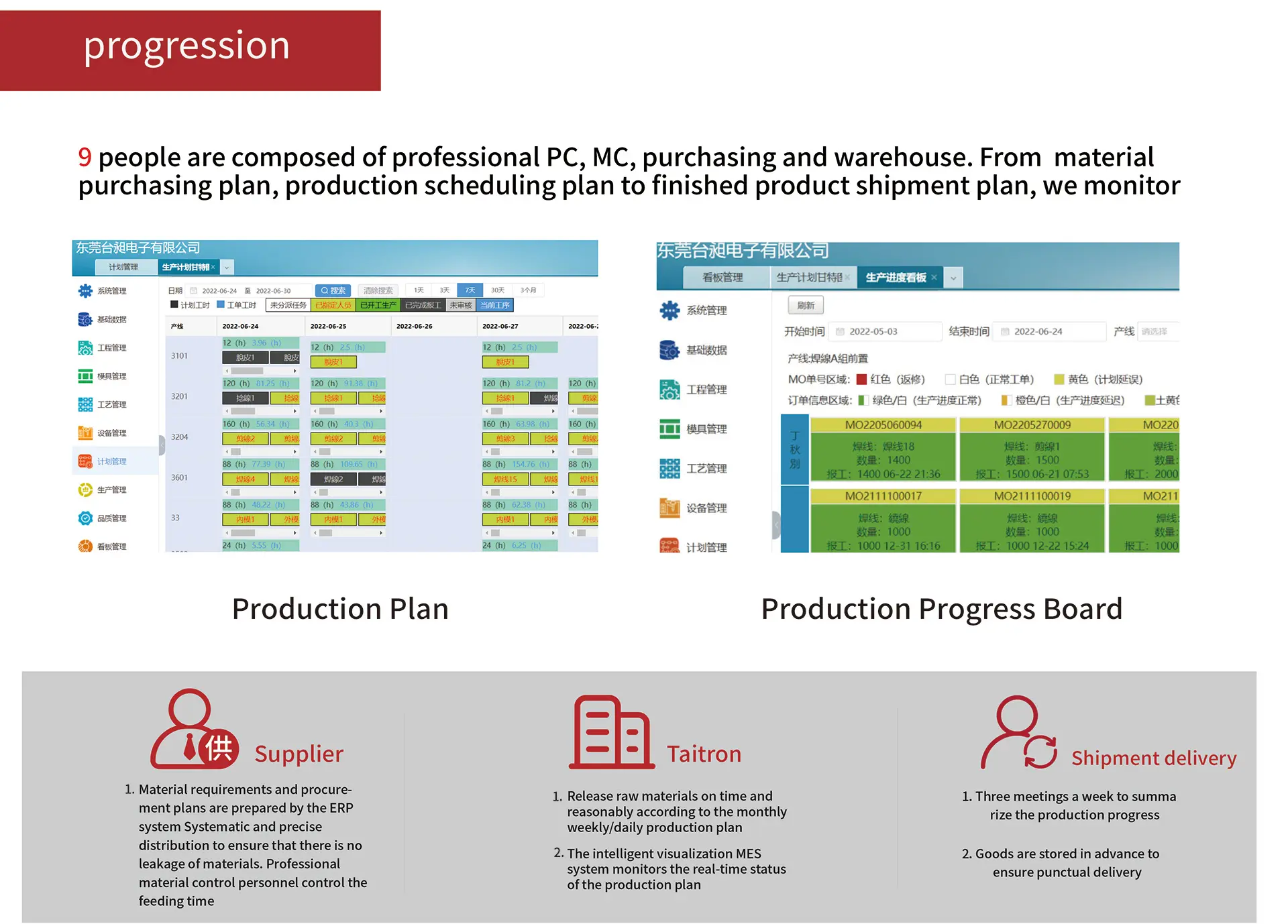
Founded in 1984 in Keelung, Taiwan, as Tonetron, we established our reputation on high-integrity signal conversion and structural cable engineering. To meet the demands of global supply chains and expand our production capacity, we relocated in 1993 to a self-built, independent production industrial park in Dalingshan Town, Dongguan City, China, changing our name to Dongguan Taitron Electronics Limited.
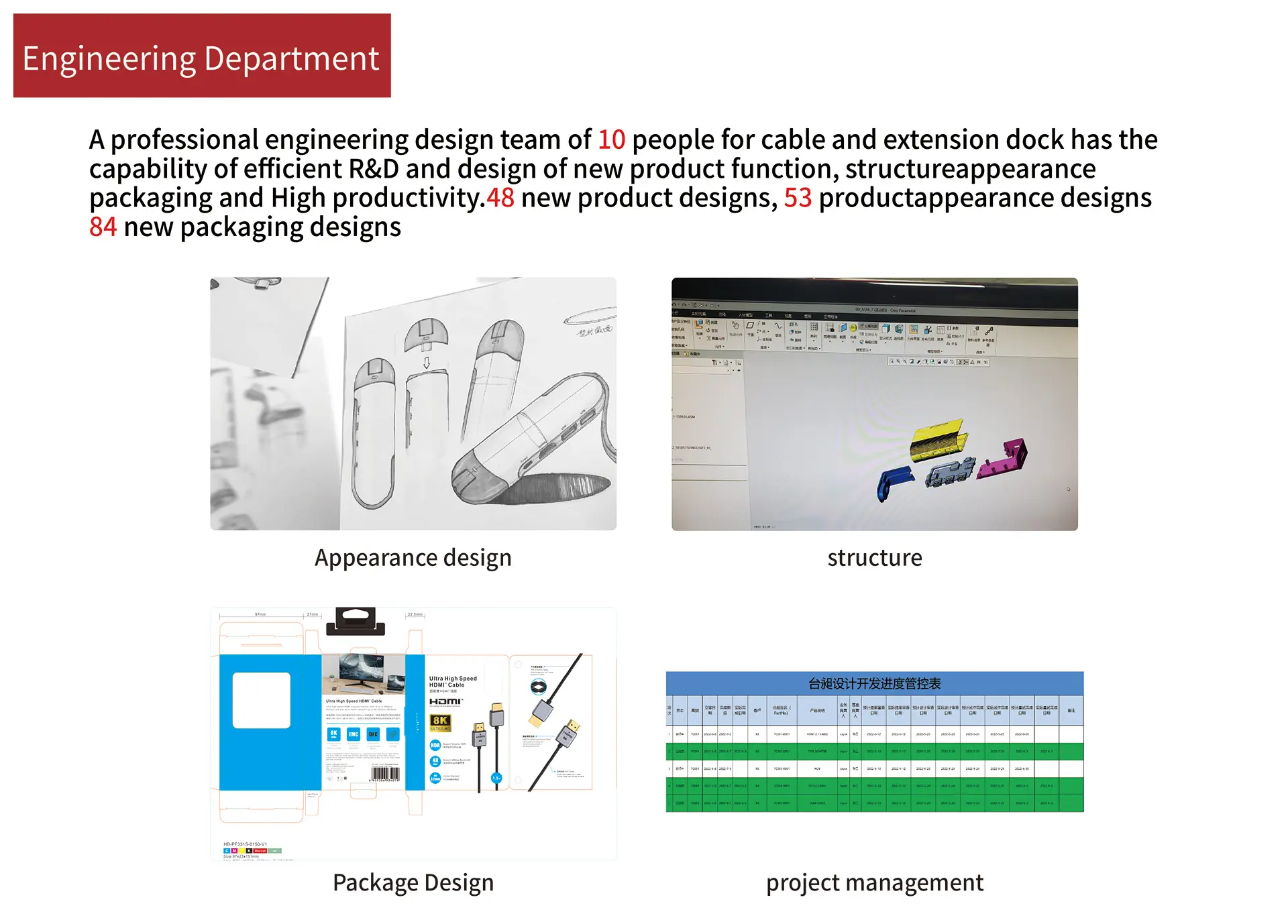
Over the past 38 years, our engineering department has expanded from traditional video and audio peripheral wiring to high-end digital communication infrastructure. Our expertise spans HDMI 2.1 cables, DP 2.0 cables, USB4 data channels, USB-C 3.1 Gen 2 transmission lines, high-wattage USB power delivery systems, and multi-functional Type-C docking stations. This deep expertise in high-frequency signal design enables us to manufacture USB 3.0 network adapters with excellent impedance control and minimal signal loss.
Founded as Tonetron in Keelung, Taiwan. Focused on high-fidelity audio/video signal transmission lines and physical interface connectivity.
Relocated manufacturing to our self-built, independent production industrial park in Dalingshan Town, Dongguan City, China, scaling OEM volume capacity.
38+ years of manufacturing experience. We manufacture high-speed USB4, HDMI 2.1, DP 2.0, and multi-functional docking stations for global brands.

Engineered to meet the regulatory, environmental, and physical challenges of modern international installations.
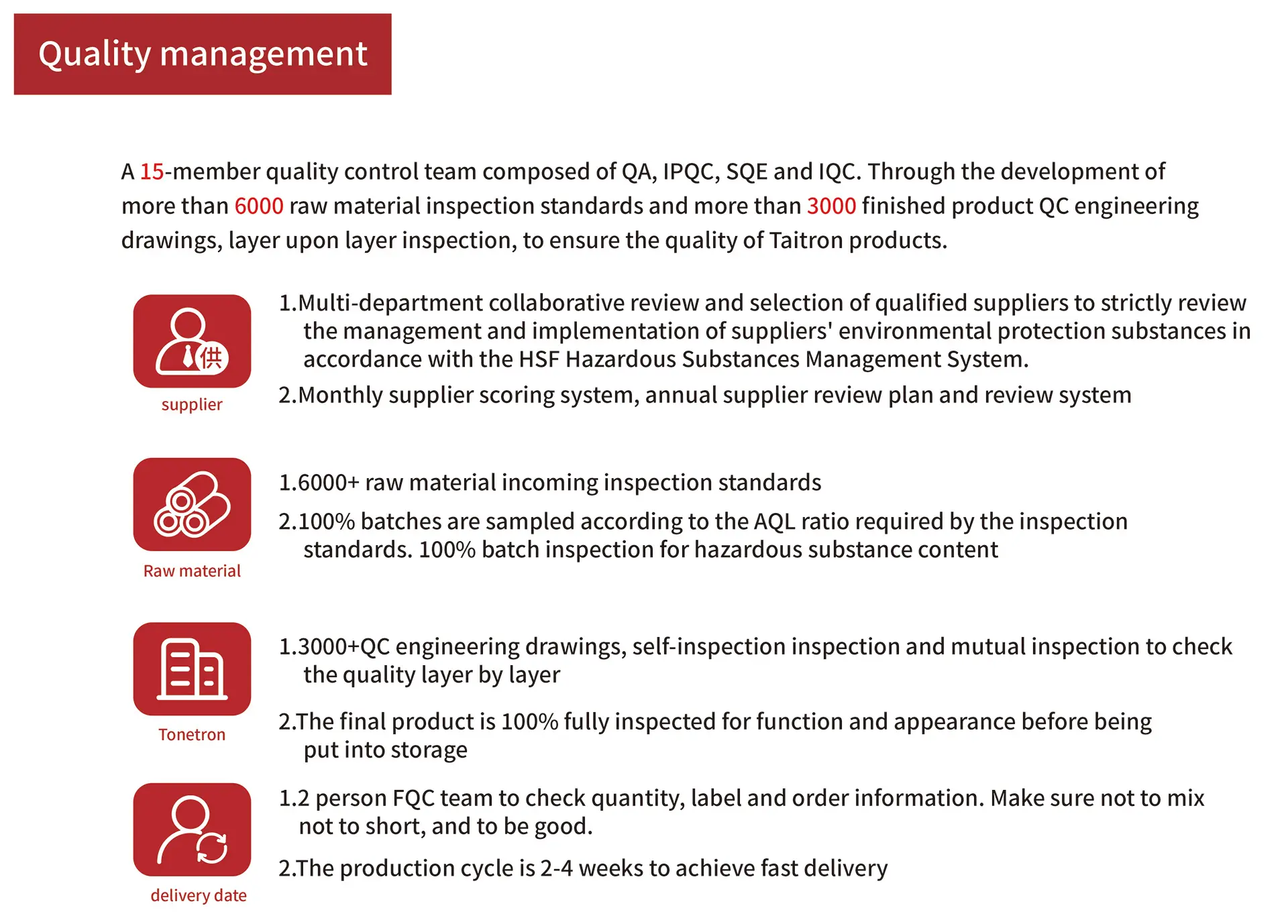
Navigating global compliance is essential for high-volume enterprise hardware procurement. Our USB 3.0 network adapters are designed, built, and certified to meet stringent international standards. We perform complete electromagnetic compatibility (EMC) testing to limit RF emission profiles, ensuring our adapters can operate alongside sensitive medical or industrial gear.
We comply with the EU RoHS Directive 2011/65/EU and its amendment (EU) 2015/863, restricting hazardous substances in electronic assemblies. Every batch undergoes CE and FCC Class B certification processes, confirming safe operation under domestic, commercial, and industrial loads. Our manufacturing processes also conform to REACH requirements, verifying that no Substances of Very High Concern (SVHC) are used in production.
Our USB 3.0 network adapters are utilized across various industries, including:
Deep dive technical answers to assist hardware developers, IT infrastructure managers, and sourcing agents.
The ASIX AX88179A is designed for industrial, embedded, and laboratory settings, offering advanced support for IEEE 1588 PTP precision timing and 802.1Q VLAN setups. The Realtek RTL8153B is widely preferred for consumer and corporate enterprise IT rollouts, where out-of-the-box driver compatibility with standard operating systems (Windows, macOS, ChromeOS) is paramount.
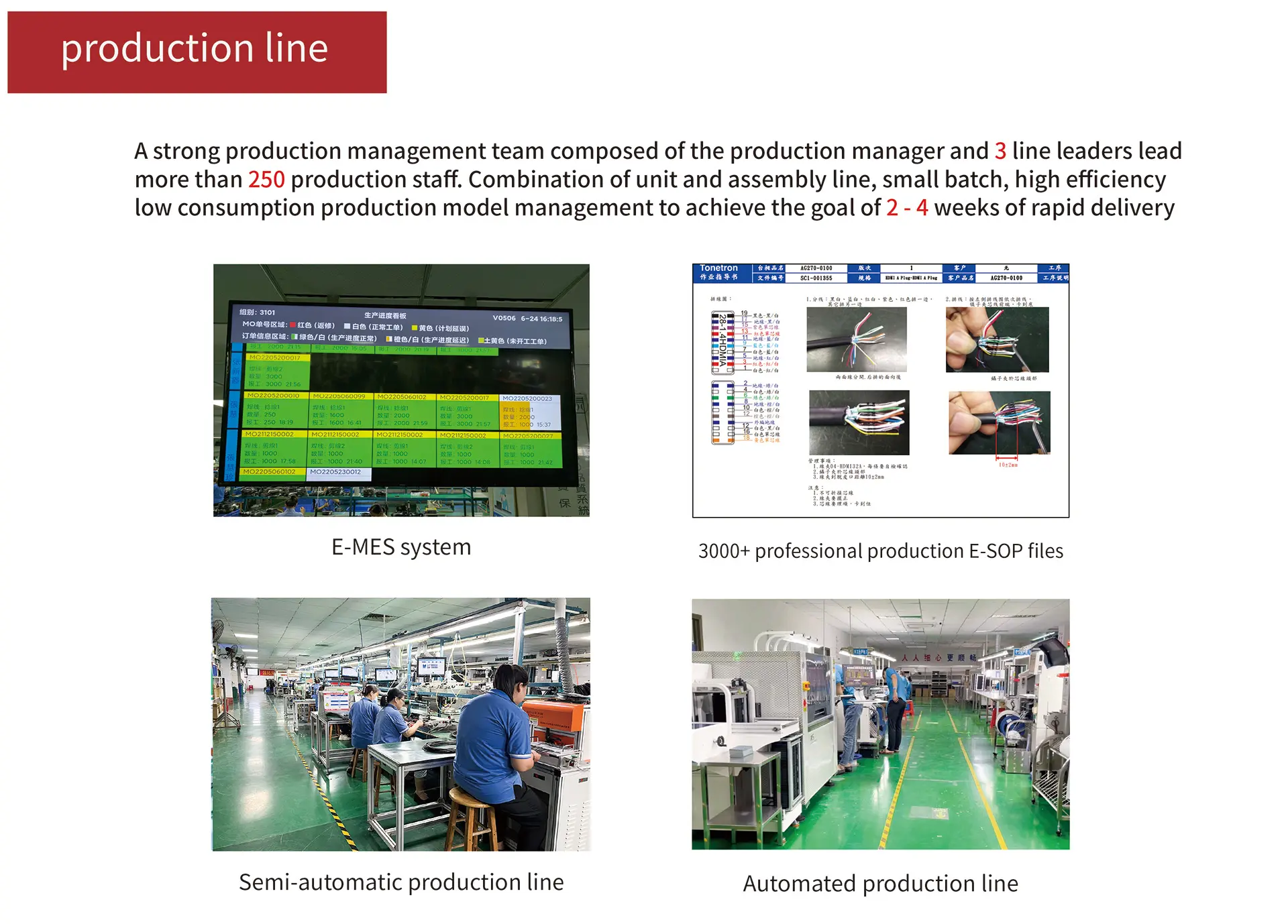
We utilize high-precision, automated SMT lines and high-frequency wave-soldering processes. Our testing facilities employ Time Domain Reflectometry (TDR) to analyze impedance mismatches, ensuring differential impedance remains at 90 ohms for USB lines and 100 ohms for the Ethernet lines. This reduces signal reflections and avoids packet loss.
Yes. Both chipsets support PXE (Preboot Execution Environment) and WoL. Implementing these features requires compatibility between the host BIOS/UEFI firmware and the specific USB network adapter driver. We work with OEM clients to test and configure the chip's internal EEPROM, ensuring compatibility with client systems.
We provide custom cable lengths, shielding modifications, customized housing (aluminum, ABS, or ruggedized TPE), and laser-etched branding. We can also pre-flash the adapter's memory with custom MAC address blocks or write specialized USB VID/PID configurations directly at our factory.
Complementary products from our Dongguan Taitron facilities designed to meet high performance standards.
 Taichang Electronic