Engineered to exceed compliance and industrial standard thresholds
Decoding the high-bandwidth AV cabling requirements across modern industrial verticals
Medical imaging display equipment requires zero-latency, high-bitrate data channels to transmit diagnostic-grade UHD imaging. OEMs must guarantee VESA standard compliance, medical isolation layout, and advanced EMI suppression to protect adjacent sensitive operating room hardware.
Multi-monitor display systems in energy sectors, surveillance centers, and broadcasting booths require durable, locking DisplayPort interconnections. Our custom manufacturing focus ensures active optical cables (AOC) support distances over 15 meters without signal amplification drop-off.
Vehicular architectures are rapidly moving towards digital cockpits. DisplayPort links between GPUs and dashboard monitors demand ruggedized physical housings, automotive grade-2 thermal tolerance, and high vibration resistance validated through strict mechanical testing.
Providing structural answers to data attenuation, crosstalk, and physical layer interference
Transitioning from DP 1.4a to DP 2.1 introduces the Ultra High Bandwidth Rate (UHBR) protocol, unlocking raw capabilities of up to 80 Gbps (UHBR 20). Designing cables for these standards demands extreme precision in physical layout:
With multi-gigabit data streams operating at high frequencies, the cable assembly can act as an unwanted antenna. Taitron designs custom multi-layer shielding to suppress interference:
Years Manufacturing Experience
Max Supported Bandwidth
TDR & Eye-Diagram Tested
Compliance Standards Met
Taitron Electronics: Bridging classic RF & AV connectivity with modern optical and digital solutions
Established originally as Tonetron in Keelung, Taiwan in 1984, we laid our foundation in manufacturing high-reliability audio and video peripherals. In 1993, to accommodate expanding manufacturing capacities and support growing global demand, we transitioned production to a self-built industrial park in Dalingshan Town, Dongguan City, China, becoming Dongguan Taitron Electronics Limited.
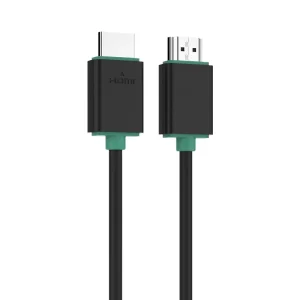
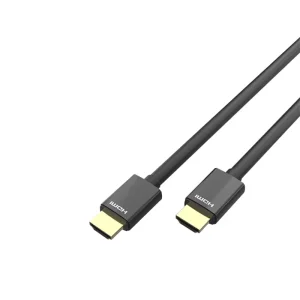
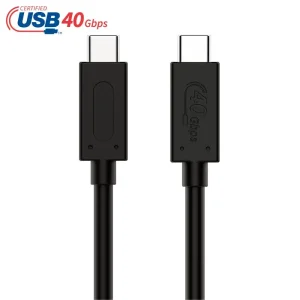
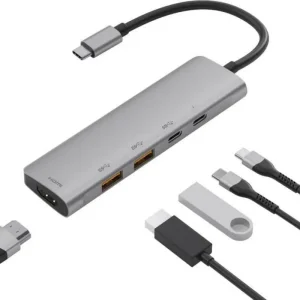
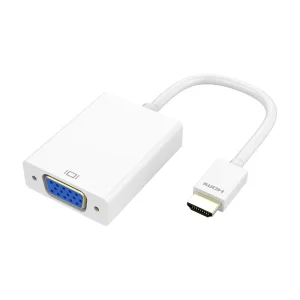
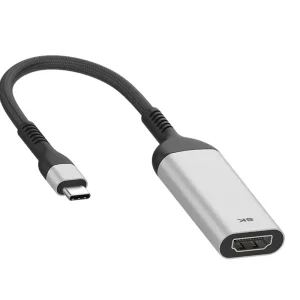
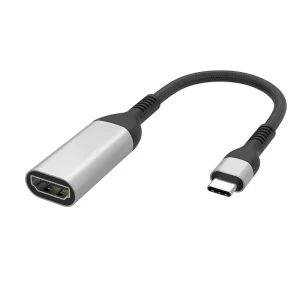
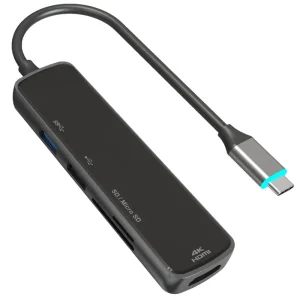
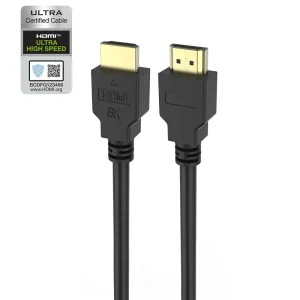
Over nearly four decades, our engineering team has integrated design, wire drawing, complex shielding extrusion, automatic soldering, and strict signal testing. Today, we specialize in high-end data interfaces, including DisplayPort 2.0/2.1 cables, HDMI 2.1 interconnects, USB4 data channels, USB-C 3.1 Gen2 cables, high-power PD charging options, 8K adapters, and multi-functional USB Type-C hubs.
We leverage our history to deliver reliable products. We run fully automated assembly lines featuring digital parameter controls to maintain consistent pitch and quality across thousands of manufacturing units.
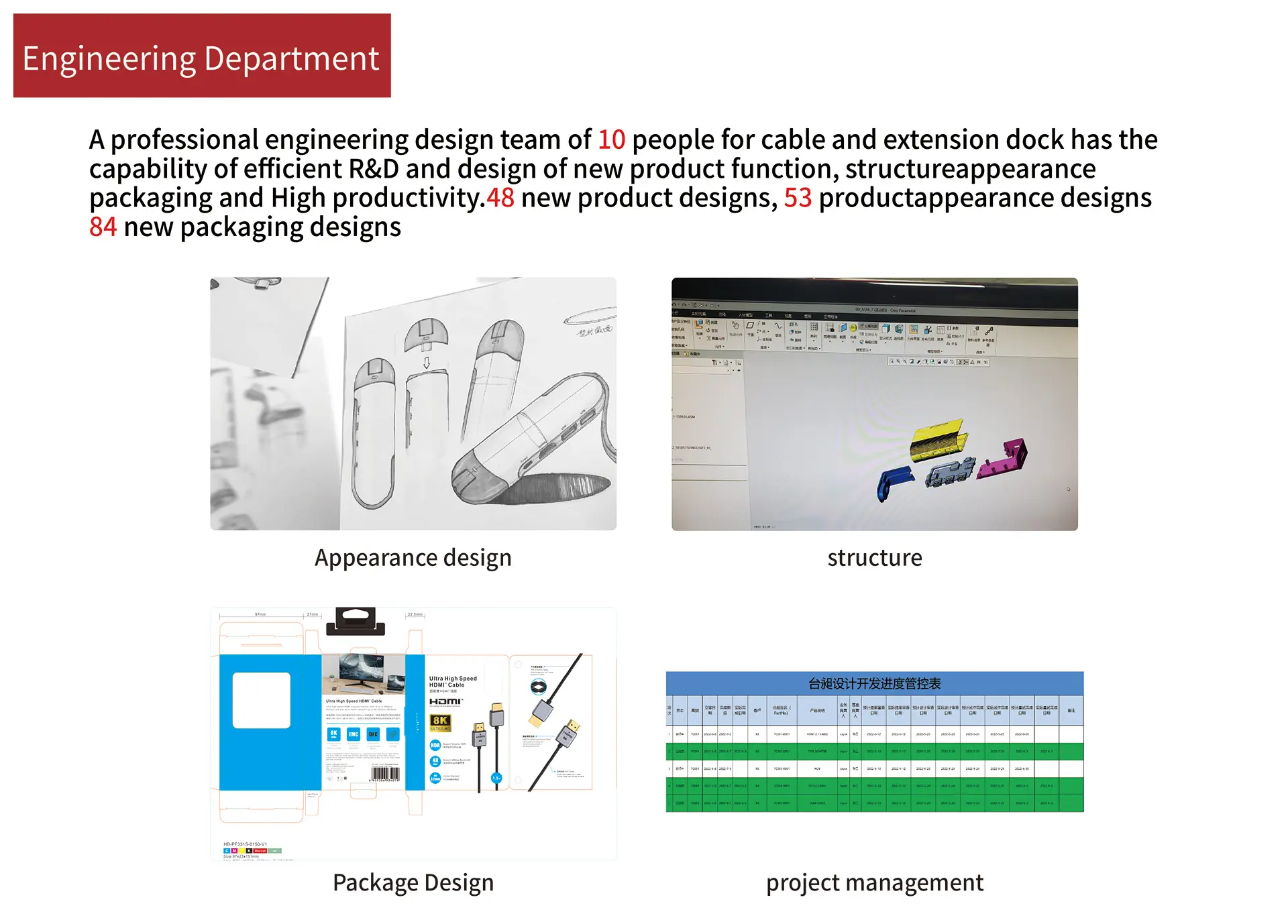
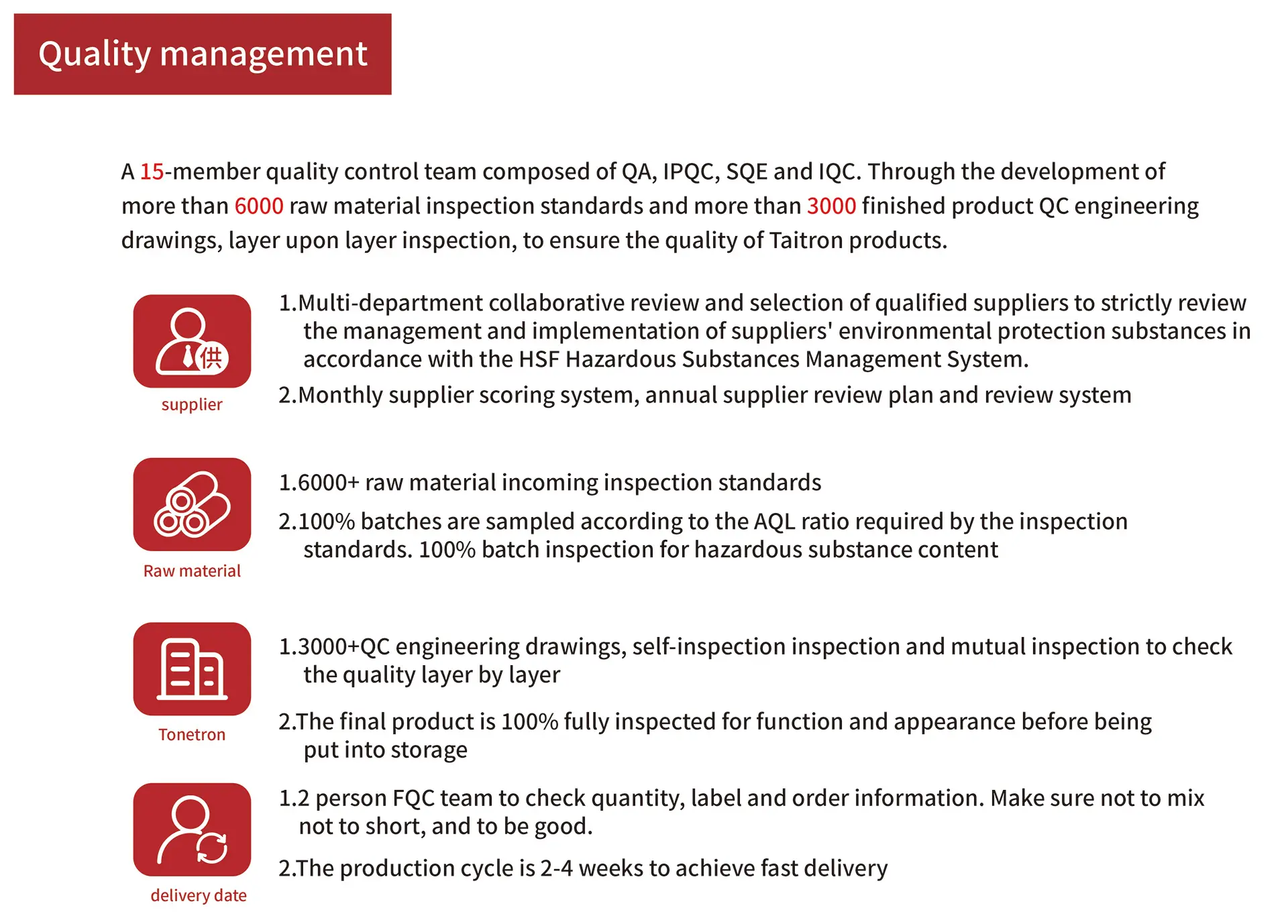

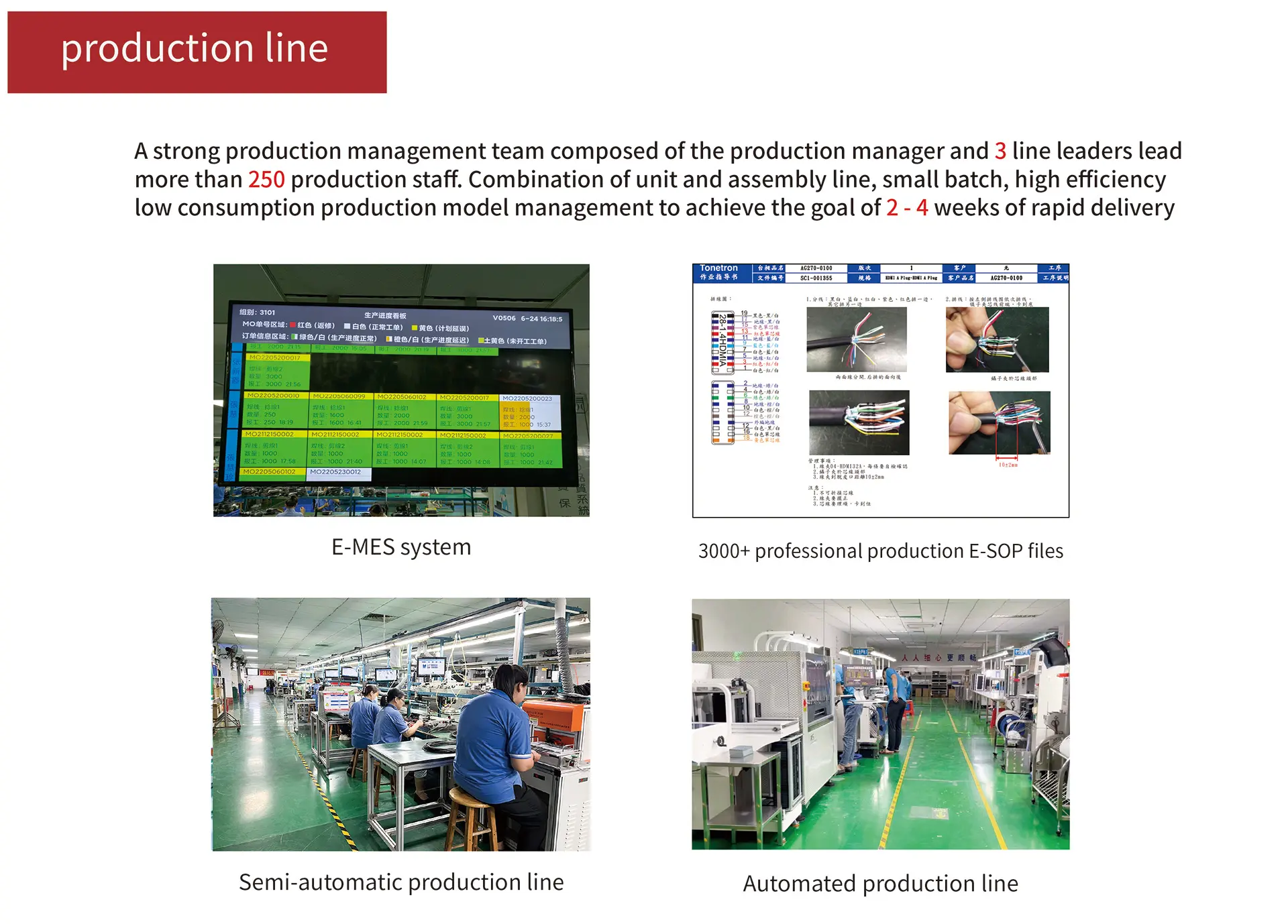
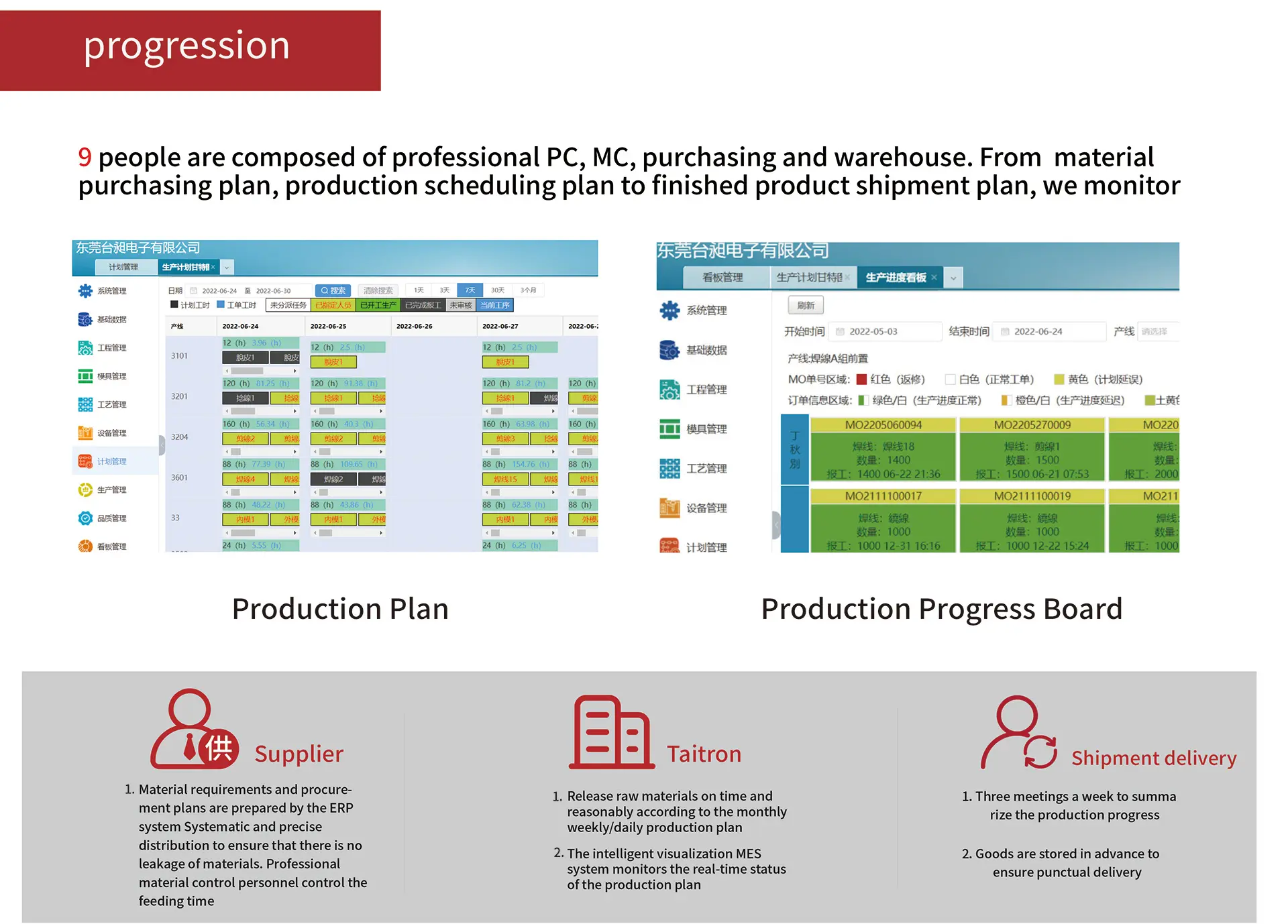
From initial functional parameter mapping to mass production validation
Our engineers align target bandwidth demands, custom cable lengths, outer jacket standards (PVC, TPE, or Nylon Braiding), and mechanical dimensions. We use high-precision modeling to design custom internal PCBA and housing solutions.
We perform 3D electromagnetic simulations to identify potential crosstalk and impedance discontinuities before tooling. Prototypes are produced utilizing selective laser sintering (SLS) and test-bench PCB configurations.
Prototypes undergo test protocols: Time-Domain Reflectometry (TDR) testing to evaluate characteristic impedance, temperature cycling (-40°C to +85°C), flex life cycle trials (exceeding 10,000 cycles at 90-degree angles), and absolute insertion-pull force evaluations.
Products are processed on our automated packaging and laser welding systems. Each display cable is checked via real-time optical sorting and high-bandwidth analyzers to confirm bandwidth standards before packaging.
Ensuring global entry and reliable operation with modern certifications
Taitron products conform to target destination standards. We hold active CE, FCC, RoHS, and REACH certifications. These standards assure customers that our cables and adapters are safe for users and environmentally compliant.
Modern displays require advanced content delivery. Our DisplayPort cable designs support VESA standards, including Display Stream Compression (DSC 1.2a), forward error correction, High Dynamic Range (HDR) video mappings, and HDCP 2.2 copy protection keys.
Our solutions undergo systematic matrix validation, testing connections between mainstream industrial GPUs (AMD Radeon Pro, NVIDIA RTX/Quadro) and critical display panels to prevent signal dropouts or synchronization delay errors.
Resolving common design, engineering, and manufacturing questions
High-frequency signal degradation is primarily driven by copper attenuation, skin effect, and dielectric loss. For longer cables, we utilize larger conductor diameters (28AWG to 26AWG), high-density physical foamed PE insulation, and silver-plated copper cores to mitigate skin effect losses. Beyond 5 meters, we recommend Active Optical Cables (AOC) that convert electrical DisplayPort signals to light, eliminating high-frequency attenuation.
We deploy precision laser welding systems to ensure reliable, robust contact joints between the wire conductors and the connector pins. Each connector is then protected by an inner zinc-alloy enclosure and molded with low-pressure polymer materials. We verify each cable assembly using automated 2D optical inspections and TDR analyzers.
Yes. Our design team creates tailored PCB layouts to redirect signaling tracks, accommodate custom power delivery configurations, or isolate specific pins to protect sensitive instrumentation. We construct physical mockups and provide detailed testing reports before proceeding to volume production.
A typical custom project takes 2 to 3 weeks for CAD rendering and mechanical modeling. Once approved, tooling and sample prototyping requires 25 to 30 days. Final reliability validation and mass production scale-up takes 3 to 4 weeks depending on batch requirements.
Explore our extended catalog of adapters, audio/video links, and hubs
 Taichang Electronic