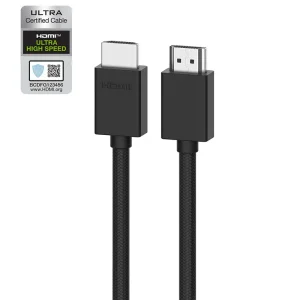
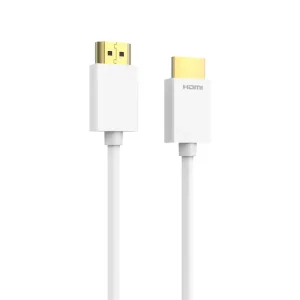
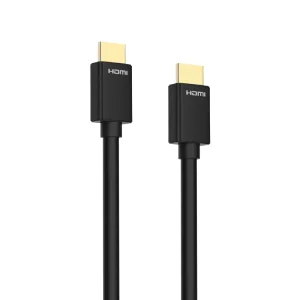
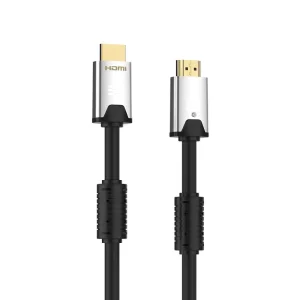
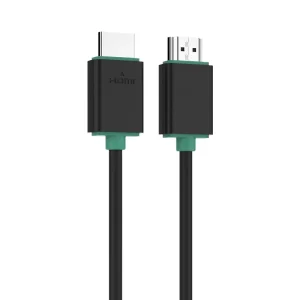
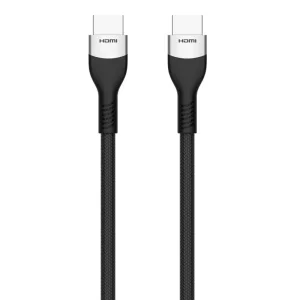
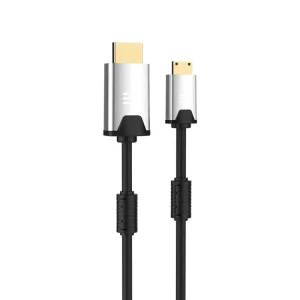
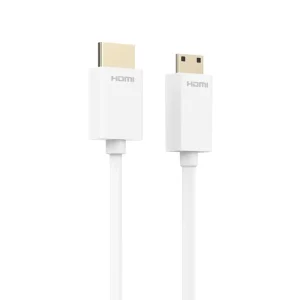
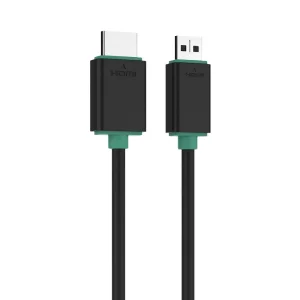
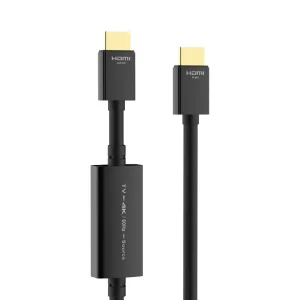
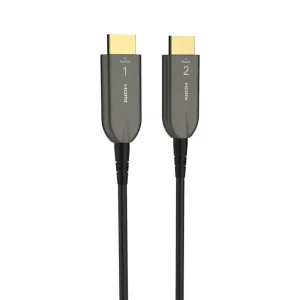
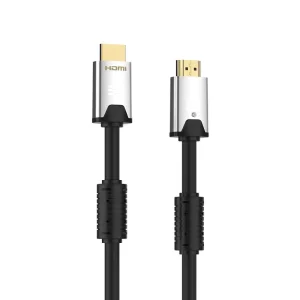
Optimized high-frequency performance interfaces engineered for tech laboratories, professional workstation infrastructures, and enterprise display hubs across the Bay Area.
The San Francisco Bay Area and Silicon Valley serve as the global nexus for artificial intelligence engineering, software deployment, cloud data architectures, and advanced visual display technology. From deep learning labs in South of Market (SoMA) to mission-critical command centers in the East Bay, the requirement for flawless digital signal transmission is absolute. The local tech ecosystem relies heavily on high-bandwidth architectures like DisplayPort 1.4 (DP1.4) and HDMI 2.1 to power high-refresh-rate multi-monitor displays, high-performance computing (HPC) nodes, and virtual/augmented reality (VR/AR) staging grounds.
Within this hyper-competitive market, commercial AV systems, scientific research networks, and workspace workstations require uncompromising transmission systems. A single packet loss, electromagnetic interference (EMI) trace, or frame drop can disrupt computational rendering pipelines or broadcast streams. Our specialized engineering pipeline addresses this need directly by exporting custom, high-bandwidth DP 1.4 adaptors, certified Ultra High Speed HDMI cabling, and hybrid active optical interfaces that satisfy the strict requirements of Northern California's technical ecosystem.
Understanding how bandwidth standards evolve to support high-density visual calculations, multi-display daisy-chain architectures, and low-latency workflows.
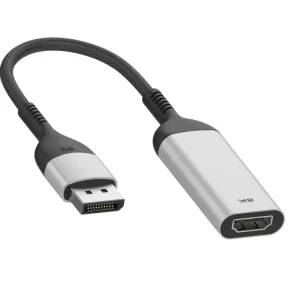
Utilizing High Bit Rate 3 (HBR3) to push 32.4 Gbps total bandwidth. Supports Display Stream Compression (DSC 1.2) for visually lossless output, Multi-Stream Transport (MST) daisy chaining, and Forward Error Correction to eliminate data transmission loss.
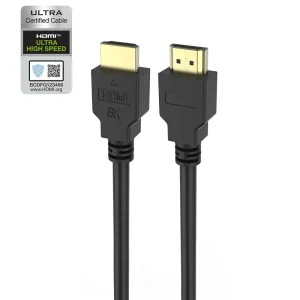
Our Category 3 Certified Ultra High Speed HDMI solutions support 48 Gbps bandwidth, delivering uncompressed 8K at 60Hz and 4K at 120Hz. Enhanced Audio Return Channel (eARC) and Dynamic HDR guarantee synchronization in production environments.
For installations exceeding 15 meters, our AOC technology combines glass fibers with copper wires to eliminate attenuation and electromagnetic interference, providing dependable signal transmission across large server facilities.
| Interface Standard | Maximum Raw Bandwidth | Maximum Resolution (No Compression) | HDR Dynamic Capabilities | Target Local Application |
|---|---|---|---|---|
| DisplayPort 1.4 (HBR3) | 32.4 Gbps | 4K @ 120Hz / 8K @ 30Hz | HDR10, Static metadata | Tech Workstations, Medical Display Arrays |
| HDMI 2.1 (Ultra High Speed) | 48.0 Gbps | 4K @ 120Hz / 8K @ 60Hz | Dynamic HDR, Dolby Vision | AV Studio Master Consoles, Corporate Boardrooms |
| HDMI 2.0 (Premium High Speed) | 18.0 Gbps | 4K @ 60Hz | Static HDR | Legacy Office Interconnects, Digital Signage |
| USB4 / Type-C Alt Mode | 40.0 Gbps | 8K @ 60Hz (DSC) | Adaptive Sync, High HDR | Mobile Developer Hot-Desks, Portable Enclosures |
Addressing the operational realities and quality control benchmarks required by enterprise purchasers in the United States.
We eliminate these issues through structural quality assurance. Our manufacturing facility uses 100% Oxygen-Free Copper (OFC) cores, double-layer aluminum mylar shielding, and high-density copper braiding.
Every production batch undergoes comprehensive Time Domain Reflectometry (TDR) analysis and eye-pattern characterization tests to guarantee constant impedance. This systematic testing ensures that all shipped components meet or exceed local compliance regulations.
Over 38 Years of Audio-Visual Engineering Innovation and High-End Wire Harness Manufacturing.
In 1984, Dongguan Taitron Electronics Limited, formerly known as Tonetron, was founded in Keelung, Taiwan. In 1993, the company moved to its self-built independent production industrial park in Dalingshan Town, Dongguan City, China, and officially changed its name to Dongguan Taitron Electronics Limited.
For nearly four decades, our foundational focus has been high-performance professional video and audio peripheral connection line manufacturing. We have steadily expanded our research, development, and high-precision production to include high-end digital audio-visual interfaces. Today, our product ecosystem includes HDMI 2.1 cables, DP 2.0/1.4 components, USB4 data lines, USB-C 3.1 Gen 2 systems, high-power USB charging assemblies, 8K ultra-HD conversion adapters, and multi-functional Type-C docking stations.
By integrating strict quality management protocols with scalable production lines, we support global distributors, system integrators, and OEM/ODM clients with reliable interconnect hardware.
As compute platforms target higher frame rates and dynamic color gamuts, standard physical layers face challenging physics limitations. Our engineering roadmap addresses these trends by transitioning toward next-generation display architectures:
DisplayPort 2.1 increases bandwidth capacity to 80 Gbps using Ultra-High Bit Rate (UHBR) transmission lines. This enables uncompressed 8K outputs at 120Hz or dual-display arrays at 4K/240Hz, catering directly to complex AI modeling and design studios.
Integrating data, power, and display signals into single-cable designs. Our USB4 interface options provide clean DisplayPort Alternate Mode mapping alongside 100W Power Delivery (PD3.0) and high-speed data transfers.
We are replacing standard PVC jacket options with Low-Smoke Zero-Halogen (LSZH) and TPE alternatives, aligning with environmental specifications set by California agencies and multinational corporate initiatives.
High-performance interfaces, adapter cables, and optical solutions designed for commercial environments, control rooms, and server systems.
All DisplayPort and HDMI cables manufactured for export to California comply with FCC Title 47 Part 15 Subpart B specifications, preventing signal leakage and radio frequency interference.
We trace and control chemical compositions, using lead-free solder processes and phthalate-free outer jackets to comply with California Proposition 65 regulations.
Our logistics pathways support direct sea shipping routes into the Port of Oakland or air cargo forwarding directly to San Francisco International Airport (SFO).
Answers to technical, regulatory, and logistics queries for hardware buyers and product designers in the Bay Area.
Request a quotation, schedule a factory audit, or ask for engineering samples designed for the San Francisco enterprise market.
 Taichang Electronic