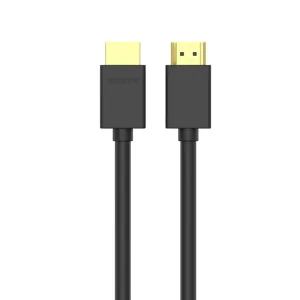
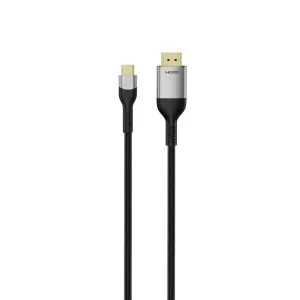
Explore our core line of OEM-certified HDMI transmission lines, active USB Type-C hubs, and specialized audio interface adapters.
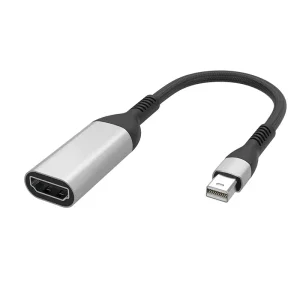
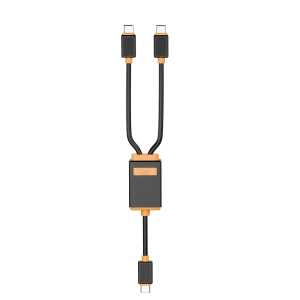
In the modern consumer electronics and professional AV procurement landscape, the phrase "a cable is just a cable" no longer holds true. As data rates have transitioned from the megabit scale to 48Gbps under HDMI 2.1, the physical properties of HDMI cables dictate system performance, reliability, and interoperability.
The major differences between HDMI cables boil down to bandwidth, shielding efficiency, conductor gauge, structural integrity, and electronic identification. Older HDMI 1.4 and HDMI 2.0 standards utilize TMDS (Transition Minimized Differential Signaling) encoding, capped at 10.2Gbps and 18Gbps respectively. In contrast, HDMI 2.1 introduces FRL (Fixed Rate Link) technology, which operates up to 48Gbps across four differential lanes.
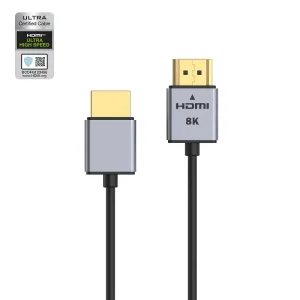
This astronomical jump in data transmission requires precise engineering. Standard HDMI copper assemblies suffer from high-frequency attenuation. Premium assemblies overcome this using ultra-slim profile cables featuring 36AWG micro-conductors (with outer diameters as small as 3.2mm) while incorporating triple shielding layers (Al-Mylar foil combined with highly dense copper braiding) to mitigate Electromagnetic Interference (EMI) and radio frequency cross-talk.
| HDMI Specification | Max Bandwidth | Max Resolution & Refresh Rate | Signaling Technology | eARC Support |
|---|---|---|---|---|
| HDMI 1.4 | 10.2 Gbps | 4K @ 30Hz | TMDS (3 Lanes) | No |
| HDMI 2.0 | 18.0 Gbps | 4K @ 60Hz | TMDS (3 Lanes) | ARC Only |
| HDMI 2.1 | 48.0 Gbps | 8K @ 60Hz / 4K @ 120Hz | FRL (4 Lanes) | Yes (High-Res) |
To understand the physical quality of high-performance cables, one must examine the production line. Originally founded in 1984 under the name Tonetron in Keelung, Taiwan, our enterprise established deep roots in consumer AV signal integrity. In 1993, scaling with the explosion of global IT hardware manufacturing, the company transitioned to a self-built, independent production industrial park in Dalingshan Town, Dongguan City, China, changing its name to Dongguan Taitron Electronics Limited.
With over 38 years of professional video and audio peripheral equipment manufacturing experience as our foundation, we have systematically engineered a transition from basic analog connection lines to complex, high-power high-frequency digital components. Our R&D and automated factory floors are optimized for:
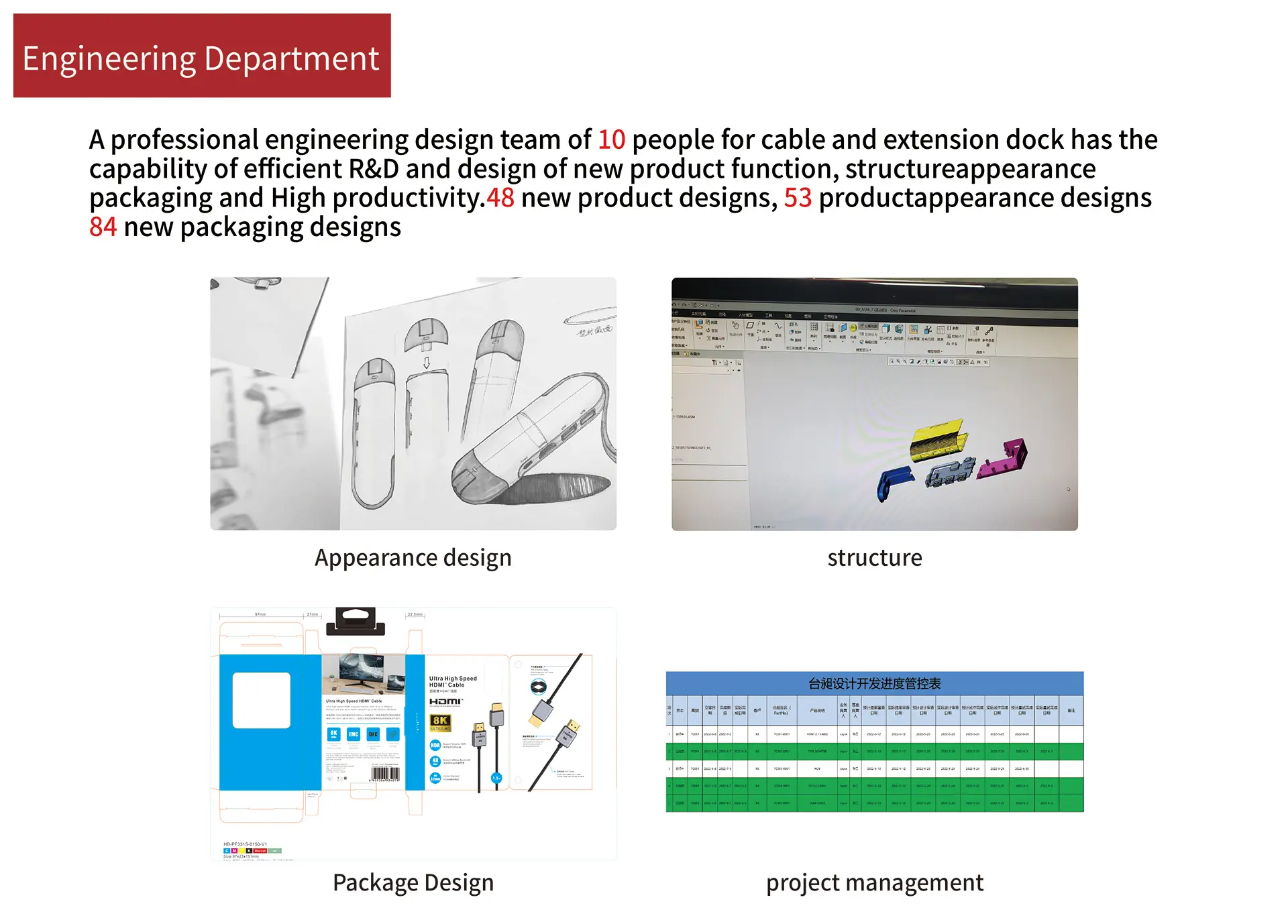
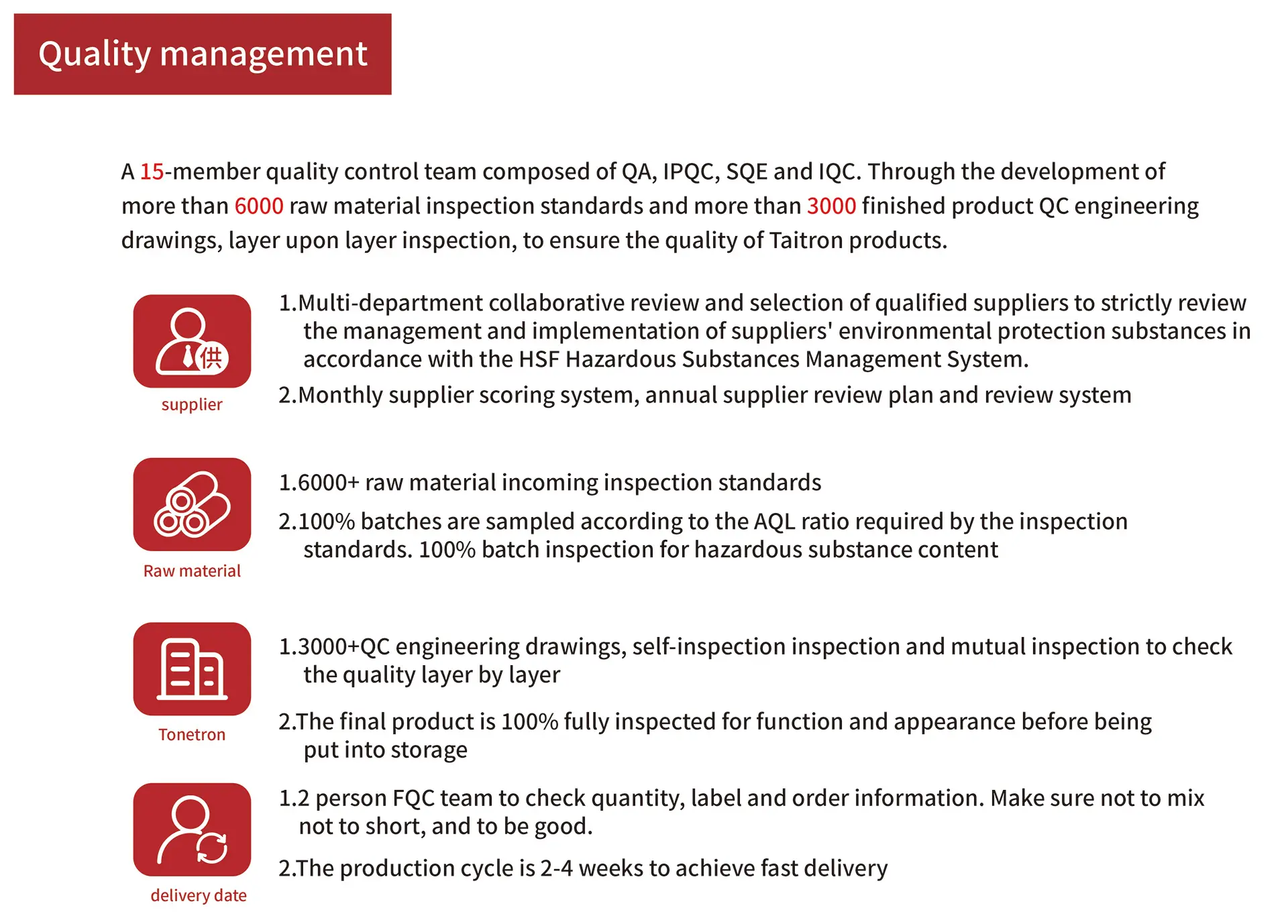

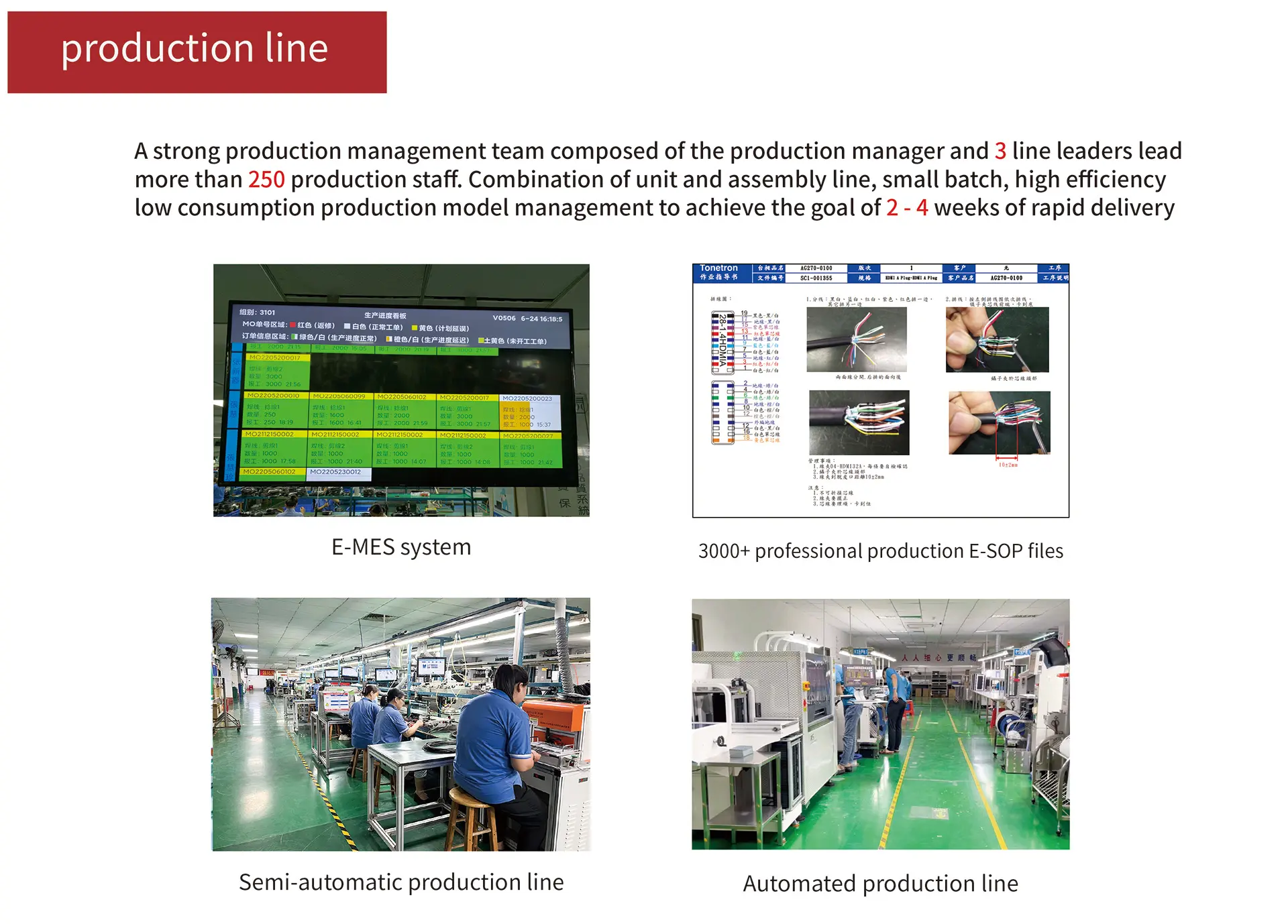
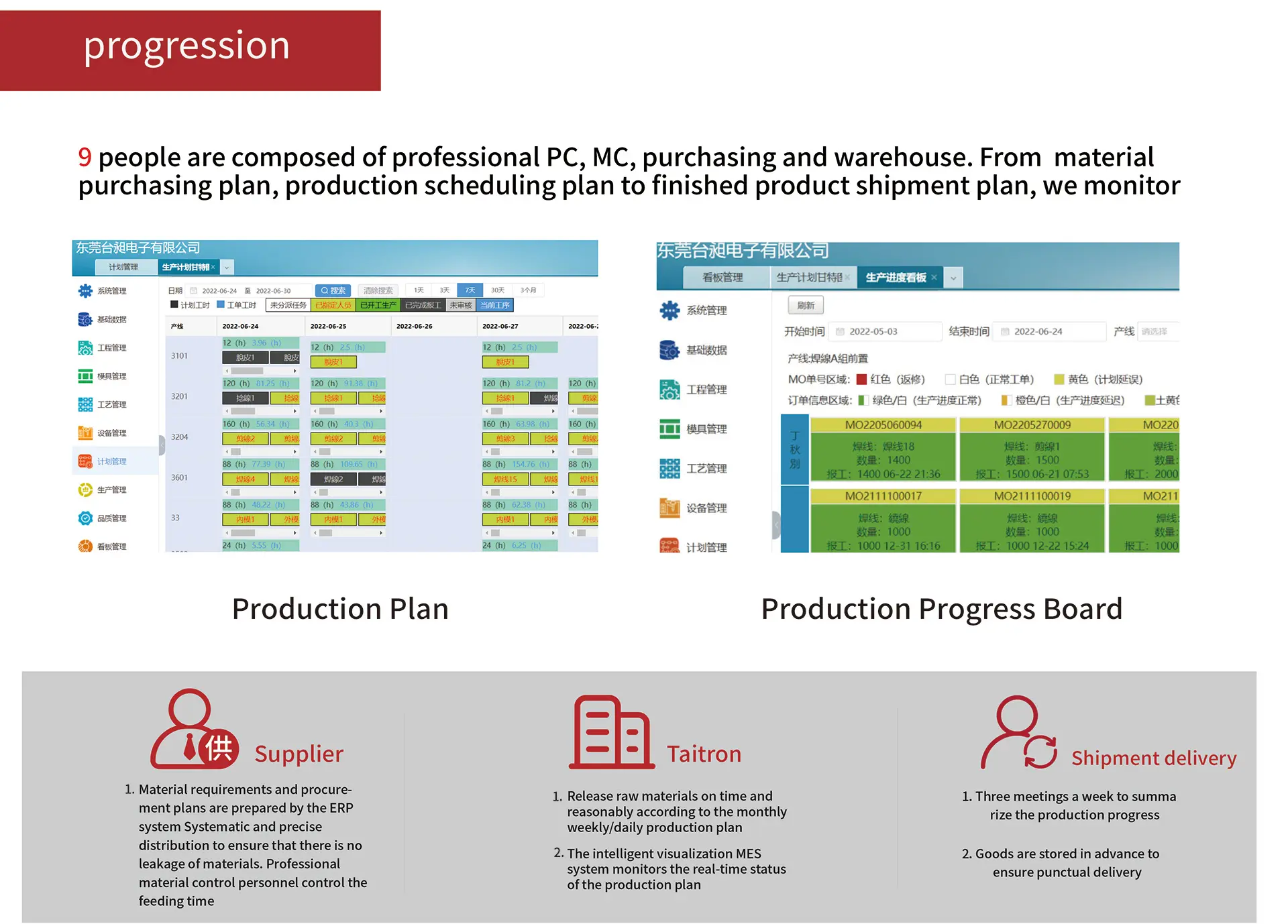
Why the world's leading brands choose Dongguan-based factories for high-frequency interconnect architectures.
Within Dalingshan and the broader Dongguan ecosystem, we source high-grade raw copper, specialized PVC/TPE compounds, and high-frequency connectors with zero supply lag, lowering structural costs.
We deploy high-speed extrusion machinery, automatic laser-welding machines, and automated multi-pin soldering jigs that humanize quality output while maintaining high throughput capacity.
Taitron operates in-house labs equipped with Network Analyzers, Time Domain Reflectometer (TDR) test sets, and environmental salt-spray chambers to ensure ATC compliance before dispatch.
Global buyers, system integrators, and distributors face complex import guidelines. Sourcing high-speed cables goes beyond unit price. Enterprises must prioritize technical parameters to ensure low RMA rates and system interoperability.
High-performance cabling systems act as the primary lifelines in various digital infrastructure operations. Dongguan Taitron Electronics develops application-specific solutions to match critical industrial environments.
Surgical monitors require zero latency and perfect color depth for endoscopic cameras. Our 4K/8K solutions with 36AWG ultra-slim wiring deliver reliable, uncompressed video feeds without restricting mechanical arm movement.
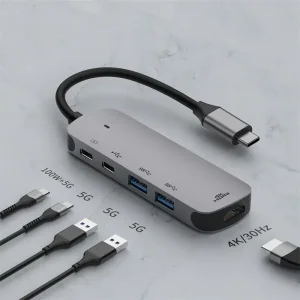
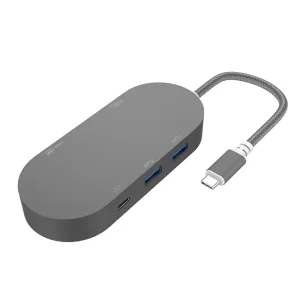
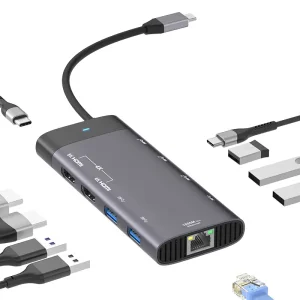
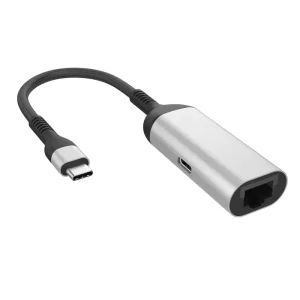
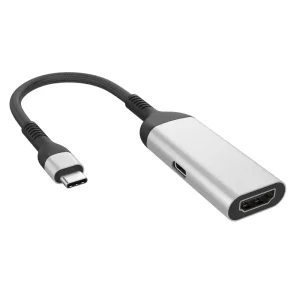
Modern meeting spaces rely on active USB-C 5-in-1 docking stations and multi-functional hubs to route signals. Taitron multi-charging and MST hub platforms provide seamless hot-plugging reliability for mixed BYOD environments.
Gamers and broadcast engineers demand steady 144Hz/240Hz refresh rates with VRR (Variable Refresh Rate) and ALLM (Auto Low Latency Mode). Our HDMI 2.1 assemblies eliminate display lag and frame tearing.
The convergence of DisplayPort 2.0 (UHBR Link Rates) and HDMI 2.1 FRL indicates that future devices will default to cross-platform compatibility, using Type-C connectors carrying alternate-mode display signals.
Bulky cabling is fading out. Commercial installers demand ultra-slim 36AWG HDMI cables for clean cable runs behind thin displays and tight cabinet configurations.
For cable runs exceeding 7 meters, passive copper faces signal loss. The industry is rapidly adopting Active Optical Cables (AOC) that integrate optical engines inside the connector shells.
Looking to the next decade, the convergence of multiple transmission protocols is accelerating. USB4, DisplayPort 2.0, and HDMI 2.1 are merging at the physical layer, primarily utilizing the USB-C form factor. Dongguan Taitron Electronics is at the forefront of this evolution, investing heavily in research and testing equipment.
Additionally, environmental sustainability is reshaping manufacturing requirements. Global distributors are seeking green alternatives, such as bio-based TPE jacketing materials and halogen-free compounds, along with 100% recyclable paper packaging. Our facility is adapted to meet these eco-conscious requirements.
Critical answers to common technical queries from procurement officers and system engineers.
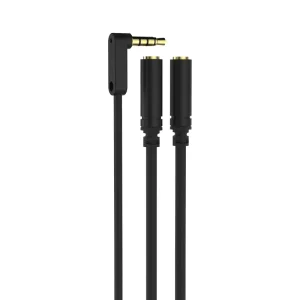
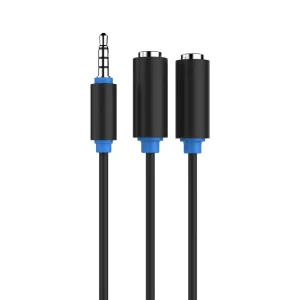
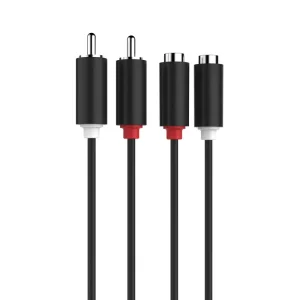
Explore our diverse range of analog interfaces, 8K adapters, and high-performance audio extension accessories.
 Taichang Electronic