 Taichang Electronic
1. Global Market Landscape & Industrial Growth Drivers
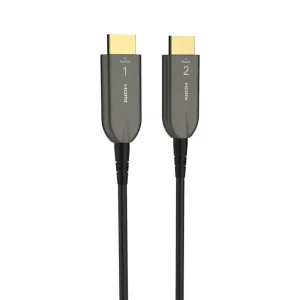
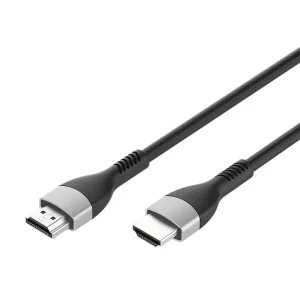
The global ultra-high-definition audio-visual industry is undergoing a monumental phase shift. As ultra-high-definition television (UHDTV), interactive media, spatial computing, and VR architectures mature, the foundational highway carrying this massive amount of data requires ever-larger pathways. HDMI cables stand as the standard digital pipeline for sending uncompressed HD video and multi-channel audio data across various commercial, consumer, and industrial systems.
From an international trade perspective, the global HDMI and data transmission cable market has moved beyond simple bulk component sourcing. Contemporary procurement demands prioritize rigorous adherence to strict technical standards, electromagnetic compatibility (EMC), environmental directives (like RoHS and REACH), and long-term signal durability. As a leading manufacturer, our production paradigms align with these evolving global markets. We support high-growth regions including North America, Western Europe, and key APAC hubs with reliable infrastructure that maintains signal stability over long distances.
2. Technical Deep-Dive: Understanding Transmission Mechanics & Impedance Integrity
At the center of high-fidelity signal propagation is high-frequency transmission line theory. With the transition from TMDS (Transition Minimized Differential Signaling) in HDMI 2.0 to FRL (Fixed Rate Link) in HDMI 2.1, the bandwidth requirement jumped from 18 Gbps to 48 Gbps. To process this amount of data, cabling architecture must be built with precise structural dimensions and material integrity.
- Fixed Rate Link (FRL): Unlike TMDS, which uses three data channels and a dedicated clock channel, FRL uses up to four lanes for data, embedding the clock signal into the data lanes. This design improves throughput and allows resolutions up to 10K at 120Hz when paired with Display Stream Compression (DSC).
- Oxygen-Free Copper (OFC) vs. Silver-Plated Copper: High-frequency signals travel mostly on the outer surface of conductors due to the skin effect. We use premium OFC conductors and selective silver-plating configurations to reduce high-frequency resistance and signal loss.
- Shielding & Crosstalk (NEXT/FEXT): Our modern production designs use multi-layered shielding: individual aluminum-mylar foil wraps for each twisted pair, surrounded by a high-density tinned-copper braided shield. This layer protects the signals from external electromagnetic interference (EMI) and prevents internal crosstalk.
| Parameter Specifications | HDMI 1.4 (High Speed) | HDMI 2.0 (Premium High Speed) | HDMI 2.1 (Ultra High Speed) |
|---|---|---|---|
| Maximum Bandwidth Limit | 10.2 Gbps | 18.0 Gbps | 48.0 Gbps |
| Maximum Frame Rate / Resolution | 4K @ 30Hz | 4K @ 60Hz | 8K @ 60Hz / 4K @ 120Hz |
| Coding & Link Protocol | TMDS (8b/10b) | TMDS (8b/10b) | FRL (16b/18b) |
| Deep Color & HDR Capabilities | Static metadata support | Static HDR, Rec. 2020 Color | Dynamic HDR (Dolby Vision, HDR10+) |
| Audio Return Channel Support | Standard ARC (1 Mbps) | Standard ARC (1 Mbps) | Enhanced eARC (37 Mbps) |