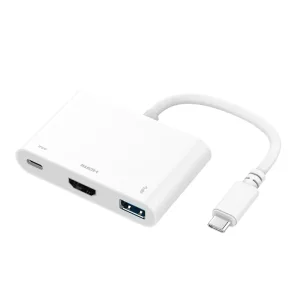
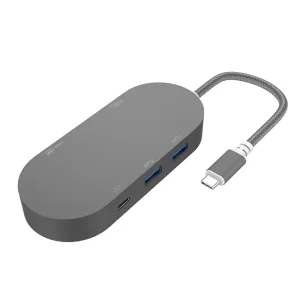
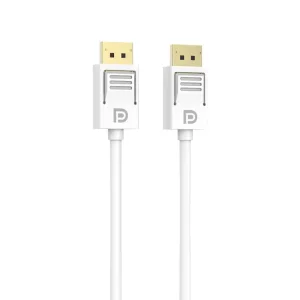
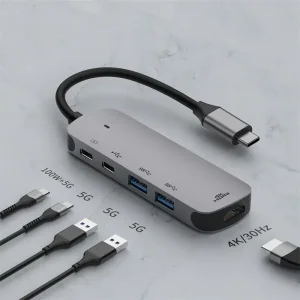
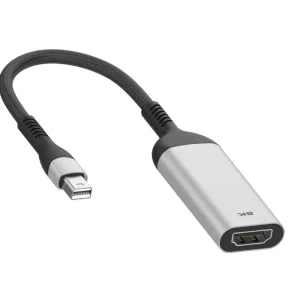
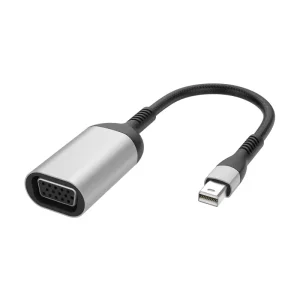
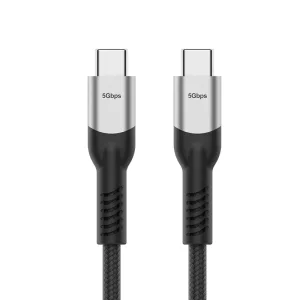
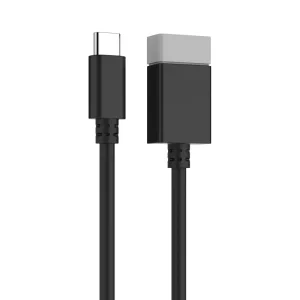
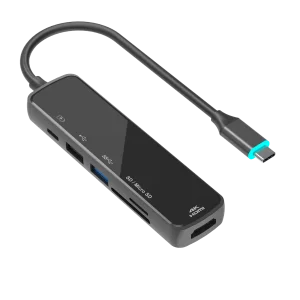
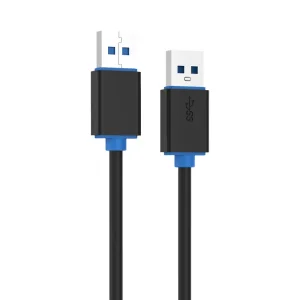
Engineered for high data-throughput integrity, EMI shielding, and multi-protocol compatibility.
Unpacking the hardware layout, transceiver logic, and physical layer performance of enterprise Ethernet-to-USB-C adapters.
Modern Ethernet-to-USB-C adapters rely heavily on high-integration controller ICs. The Realtek RTL8153 series and the ASIX AX88179A represent the industry benchmarks. These silicon solutions support USB SuperSpeed 5Gbps interface protocols and provide a direct path to physical layer (PHY) Gigabit Ethernet.
The RTL8153 features built-in low-dropout (LDO) regulators and switching regulators, drastically reducing external component count and thermal density. For 2.5G capabilities, we implement the RTL8156B controller, enabling support for IEEE 802.3bz multi-gigabit protocols over legacy Cat5e/Cat6 copper infrastructure.
Enterprise deployment environments demand deep BIOS-level controls. Our adapter PCBA architectures integrate SPI flash memory to support custom PXE (Preboot Execution Environment) network booting. This allows large-scale remote operating system installations and system recoveries.
Additionally, advanced power management features such as Wake-on-LAN (WoL), Link Down Power Saving, and IEEE 802.3az Energy-Efficient Ethernet (EEE) are natively supported. This maintains a balance between connectivity readiness and strict B2B power consumption limits.
| Technical Parameter | USB-C to Gigabit Ethernet (1G) | USB-C to Multi-Gigabit Ethernet (2.5G) | Compliance / Standards |
|---|---|---|---|
| Primary Controller IC | Realtek RTL8153B / ASIX AX88179A | Realtek RTL8156B | Lead-Free / RoHS Compliant |
| USB Interface | USB 3.2 Gen 1 (Up to 5 Gbps) | USB 3.2 Gen 2 (Up to 10 Gbps) | USB Type-C Cable & Connector Spec 2.0 |
| Ethernet Standards | IEEE 802.3, 802.3u, 802.3ab (10Base-T/100Base-TX/1000Base-T) | IEEE 802.3bz (2.5GBASE-T), 802.3ab (1000Base-T) | IEEE 802.3az (Energy Efficient Ethernet) |
| Power Delivery (PD) Pass-through | Optional up to 100W (PD 3.0) | Optional up to 100W (PD 3.0) | IEC 62368-1 Safety Standards |
| EMI/RFI Shielding | Integrated Aluminum-Alloy Shell + Tinplate Box | Full Metal Internal Housing + Shielded RJ45 | CE EN 55032 Class B / FCC Part 15 |
How high-performance wired adapters act as infrastructure backbone across multiple professional sectors.
Modern thin laptops lack integrated RJ45 ports. Our CE-certified adapters ensure seamless plug-and-play local area network connection. They are fully compatible with Windows, macOS, and ChromeOS, allowing corporate IT teams to enforce standardized security protocols and MAC Address Pass-Through policies.
On the factory floor, wireless networks are highly prone to electromagnetic interference (EMI) from heavy machinery. Our USB-C Ethernet adapters provide a physical, shielded point-to-point connection for diagnostics equipment, PLC programming terminals, and rugged field tablets, guaranteeing zero packet loss.
Hospital systems and Point-of-Sale (POS) systems require absolute network reliability for handling sensitive billing data and real-time medical imaging transfers. The isolated differential design on our adapter RJ45 ports protects host motherboards from electrical surges, complying with medical-grade equipment isolation safety protocols.
Why certified electrical hardware is non-negotiable for target market entry and supply chain integrity.
To sell legally in the European Economic Area (EEA), exporters must guarantee that adapters bear the CE Marking. This involves satisfying two core directives: Electromagnetic Compatibility (EMC) Directive 2014/30/EU and RoHS Directive 2011/65/EU.
Under the EMC directive, adapters must pass EN 55032 (emission limits) and EN 55035 (immunity requirements). This ensures that high-frequency clock signals (commonly 125MHz for Gigabit Ethernet) do not radiate excessive EMI that could disrupt other electronic systems, and that the adapter remains functional when subjected to electrostatic discharge (ESD) events up to 8kV.
Beyond electrical compliance, CE certification is tied to mechanical material toxicity. B2B importers face severe penalties if lead, cadmium, mercury, or polybrominated biphenyls (PBB) exceed threshold limits. Our factory implements strictly audited, halogen-free raw materials for cable sheaths (TPE/Nylon braided) and internal PCB soldering.
Our products undergo regular testing by certified third-party labs such as SGS and TUV. We provide comprehensive CE Declaration of Conformity (DoC), RoHS reports, and REACH SVHC declarations to our global distribution partners for hassle-free customs clearance.
Decades of manufacturing precision, transitioning from classic tooling to advanced automatic data cable production lines.
In 1984, Dongguan Taitron Electronics Limited, formerly known as Tonetron, was founded in Keelung, Taiwan. In 1993, recognizing the potential of global manufacturing hubs, we relocated to a self-built independent production industrial park in Dalingshan Town, Dongguan City, China, scaling up operations as Dongguan Taitron Electronics Limited.
With 38 years of professional video and audio peripheral equipment connection line manufacturing experience as our foundation, we have continually advanced. We now specialize in high-end audio and video cables and data cables, including HDMI 2.1 cables, DP 2.0 cables, USB4 data cables, USB-C 3.1 Gen2 data cables, high-power USB charging cables, 8K HD conversion cables, and multi-functional Type-C expansion docks.
Our facility is ISO 9001:2015 and BSCI certified. We control the complete production cycle, from internal copper wire extrusion to high-precision SMT (Surface Mount Technology) component placement, followed by automatic ultrasonic shell welding and multi-stage testing.
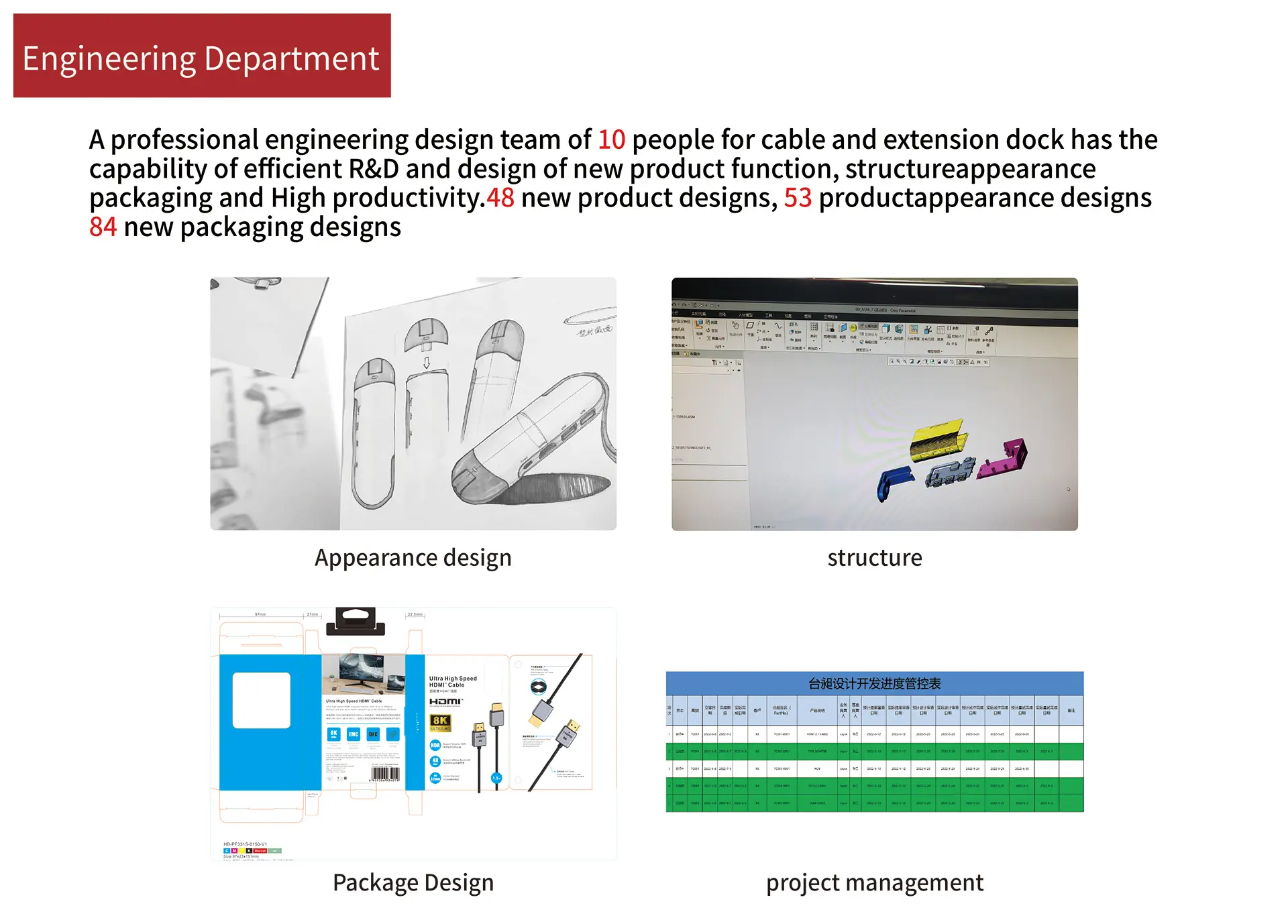
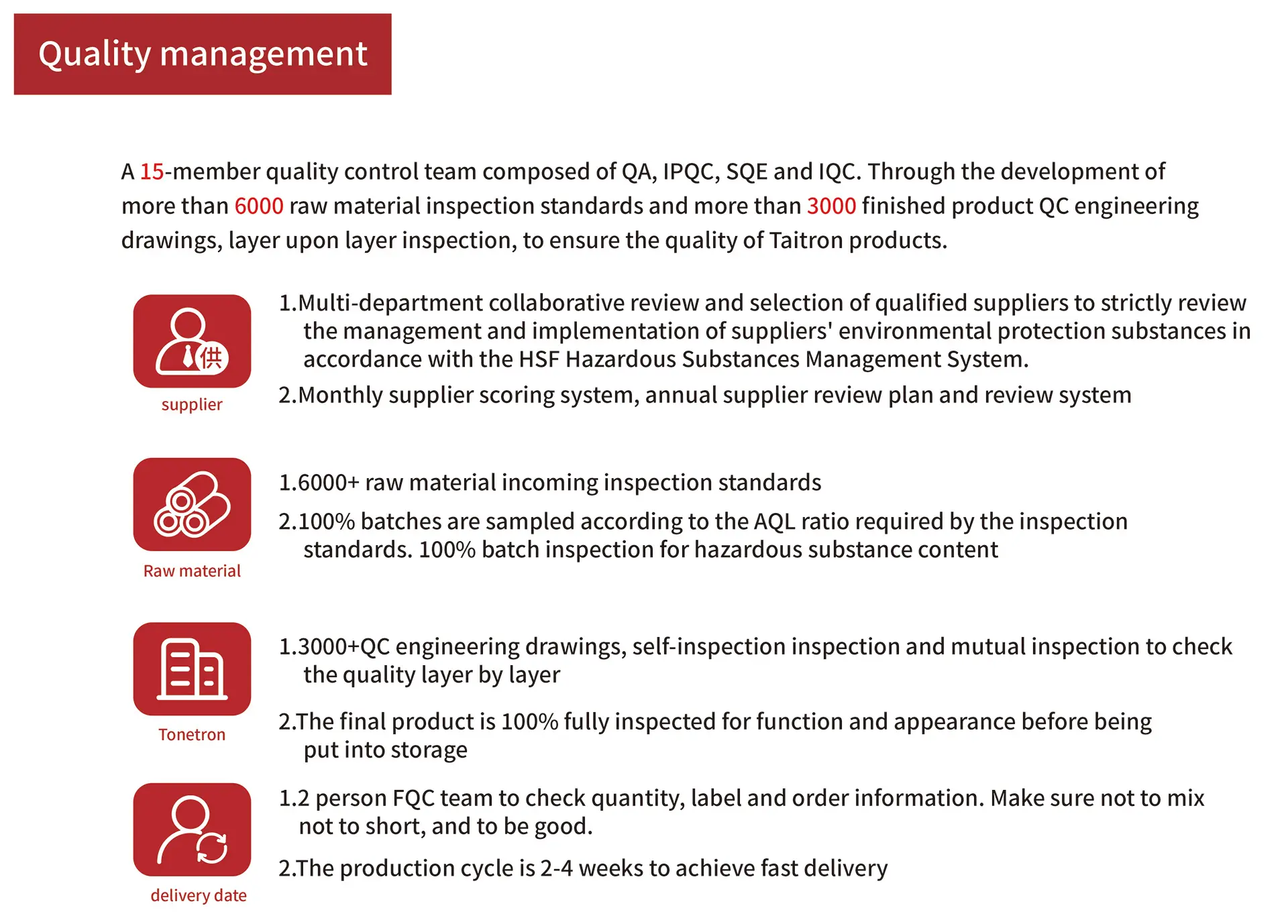

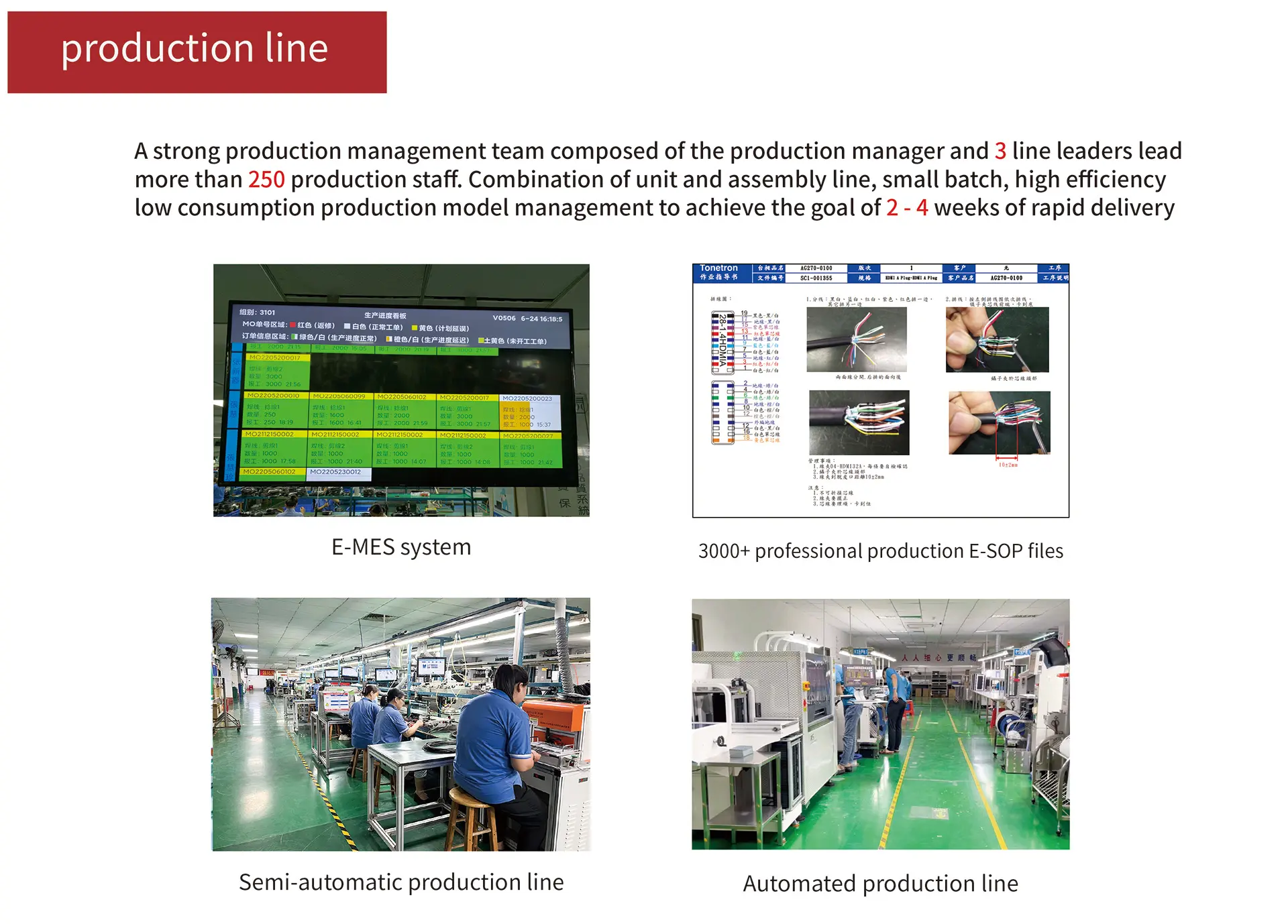
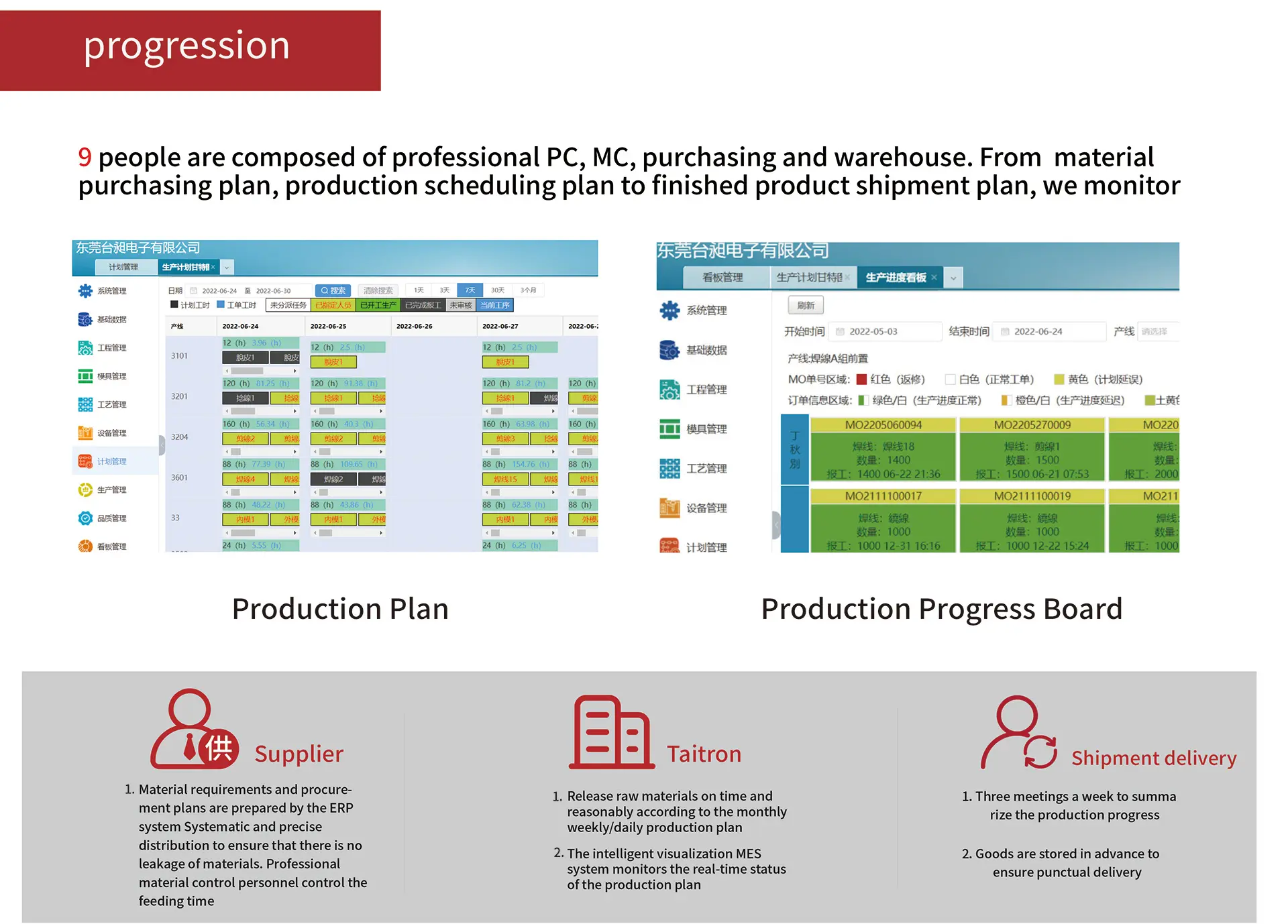
The convergence of next-generation physical interfaces and multi-gigabit copper cable infrastructures.
As USB4 and Thunderbolt 5 standards redefine data bandwidth limits (up to 80Gbps and 120Gbps), network converters will evolve. Future network adapters will support 5Gbps and 10Gbps Ethernet controllers without thermal throttling, made possible by native PCI Express tunneling over USB4 links.
B2B procurement is shifting toward bi-directional power configurations. Our engineering team is currently prototyping USB-C PD adapters that convert PoE/PoE+ input signals from the network switch directly into 15W/30W USB Power Delivery profiles. This allows single-cable deployments that power tablets and smart displays while connecting them to secure wired networks.
Aligning with global net-zero corporate initiatives, our product pipeline incorporates PCR (Post-Consumer Recycled) aluminum enclosures and ocean-bound plastics for outer cord braiding. This transition occurs without compromising tensile strength, flexing cycle lifespan, or high-temperature structural integrity.
How we transform client specifications into market-ready physical hardware.
Different operating environments dictate specific material configurations. For premium consumer and commercial environments, we offer bead-blasted anodized aluminum shells. Aluminum ensures maximum structural protection and functions as a passive heat sink to dissipate thermal loads generated by high-speed transceivers.
For high-vibration automotive or marine installations, we recommend ABS/PC co-molded enclosures with reinforced internal strain relief collars. This prevents internal solder point fractures caused by repetitive flexing. Our customization options also include braided nylon sleeves, custom cable lengths (ranging from 10cm pigtails to 3m host links), and high-contrast pad-printed brand logos.
We subject every product batch to a strict testing regime to maintain zero-defect standards:
Importers are welcome to request custom firmware configurations, including unique USB Vendor ID (VID) and Product ID (PID) mappings for proprietary device networks.
Technical and logistics questions answered directly by our engineering and export departments.
CE certification guarantees that the product complies with EU health, safety, and environmental standards. For active electronics like adapters, it requires testing under the EMC Directive (2014/30/EU) to prevent electromagnetic interference with other electronics and to ensure resistance against electrostatic discharge. Importing non-compliant hardware risks customs seizures and heavy fines.
Yes. Our Ethernet-to-USB-C adapters utilize Realtek or ASIX ICs that support UEFI PXE Boot and MAC Address Pass-Through (MAPT). This feature allows IT managers to identify and manage laptops on corporate networks using their unique host system MAC address rather than the adapter’s MAC address.
High data rates (like 2.5Gbps) increase IC temperatures. We address this by using premium aluminum-alloy housings and placing high-thermal-conductivity silicone pads directly over the controller chip. This design conducts heat out to the metal shell, maintaining operating temperatures within safe limits under continuous heavy workloads.
Our standard MOQ for OEM packaging or custom housing finishes starts at 1,000 units per production run. Once engineering drawings are approved, production lead times range from 25 to 35 days, depending on materials. For completely custom PCBA tooling designs, development takes approximately 45 to 60 days.
Yes. Dongguan Taitron Electronics Limited is audited under ISO 9001:2015 for quality management and holds BSCI certification for ethical and social compliance. Importers can request our audit documentation to satisfy corporate responsibility requirements.
Complete your B2B sourcing portfolio with our comprehensive transmission solutions.
 Taichang Electronic