Explore our production-grade adapter configurations engineered for cross-protocol reliability, certified compliance, and low-latency deployments.
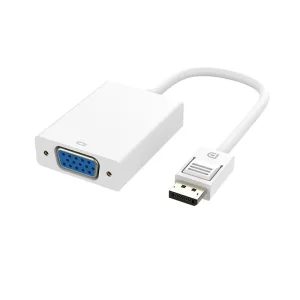
The transition from legacy video standards to ultra-high-definition displays requires complex, active protocol conversion. A Mini DisplayPort to HDMI 8K adapter serves as a crucial link bridging two distinct signal architectures: DisplayPort’s packet-based architecture and HDMI’s character-based transition-minimized differential signaling (TMDS) or Fixed Rate Link (FRL).
For an adapter to deliver a native 8K output (7680 × 4320 pixels at 60Hz or 4K at 120Hz), it must support the DisplayPort 1.4a standard on the input side, which delivers a maximum bandwidth of 32.4 Gbps. The adapter's internal integrated circuit (IC) actively converts this data stream into HDMI 2.1 signals, which demand up to 48 Gbps to sustain uncompressed 8K video. This bandwidth delta is bridged via Display Stream Compression (DSC 1.2a)—a visually lossless compression algorithm that enables high-resolution feeds to transit interfaces without sacrificing color fidelity or latency.
As corporate IT environments upgrade to high-density workstations, the demand for compact, cost-effective converters has surged. Although USB-C and Thunderbolt™ 4 are becoming more common in new laptops, Mini DisplayPort remains widely used in industrial computers, medical imaging systems, server cabinets, and legacy workstation laptops (such as older Apple MacBook Pros, Microsoft Surface devices, and ThinkPads).
The roadmap for Mini DP to HDMI adapters points toward integrating smarter chipsets with lower power consumption and better thermal dissipation. Early active 8K adapters generated significant heat due to the high-frequency protocol transcoding. However, modern chip design allows manufacturers to shrink the internal PCBA (Printed Circuit Board Assembly) and housing. This reduction in size lowers power draw down to sub-1.5W ranges, ensuring continuous operation without thermal throttling.
How global enterprises leverage high-performance adapter solutions to bridge legacy infrastructure and ultra-high-definition displays.
In radiology and pathology department setups, doctors rely on high-resolution displays to detect micro-calcifications and subtle tissue changes. Our adapters allow systems with Mini DP interfaces to connect seamlessly to new 8K medical displays, maintaining accurate grayscale rendering and ensuring latency-free signal transmission.
Financial trading desks require multi-monitor arrays to display complex charts and data feeds. Our active Mini DP to HDMI 8K adapters help scale display networks, allowing older workstation rigs to output multi-channel UHD feeds without screen flickering or signal drops.
Control rooms and high-end retail displays use high-resolution screens for clear, detailed viewing. By converting Mini DP feeds to HDMI 2.1, display operators can run dynamic 8K visual loops across large screens without needing to upgrade their entire control hardware setup.
Founded in Keelung, Taiwan in 1984 as Tonetron, our company moved to an independent, self-built production park in Dalingshan Town, Dongguan City, China in 1993, changing its name to Dongguan Taitron Electronics Limited.
Over the past 38 years, we have built our business on manufacturing high-quality audio and video connection lines. Today, we have expanded into researching, developing, and manufacturing high-end data cables and adapters. Our product range includes HDMI 2.1, DP 2.0, USB4, USB-C 3.1 Gen 2, high-power USB charging cables, 8K HD conversion cables, and multi-functional Type-C docking stations.
Our Factory 4.0 initiative uses advanced automation for wire drawing, soldering, assembly, and testing. This vertical integration allows us to keep production costs low ("cheap") while maintaining high manufacturing standards, giving global procurement teams a distinct competitive advantage.
Our production facilities feature advanced cleanrooms, high-frequency signal testing equipment, and automated optical inspection systems to ensure excellent signal performance across our product lines.
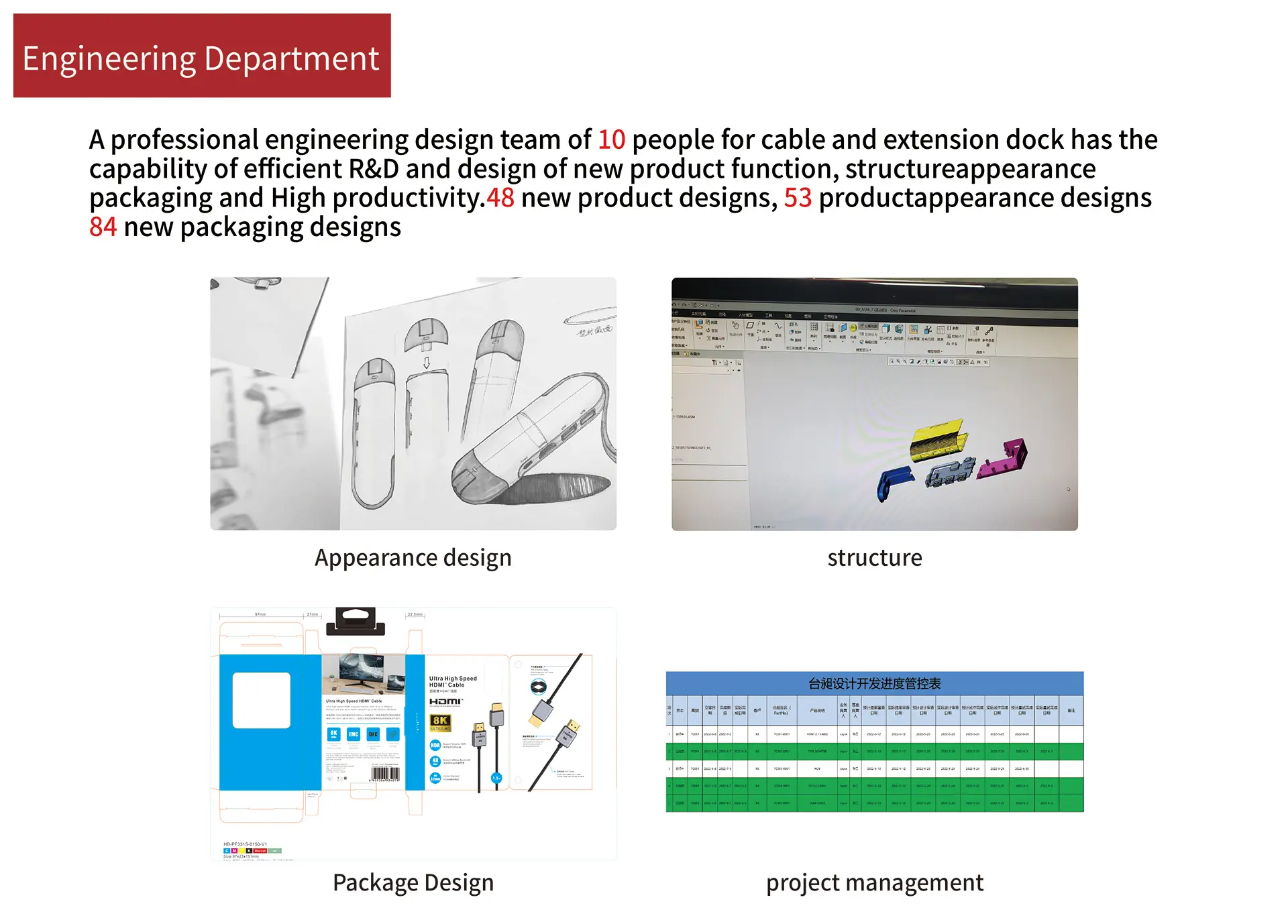
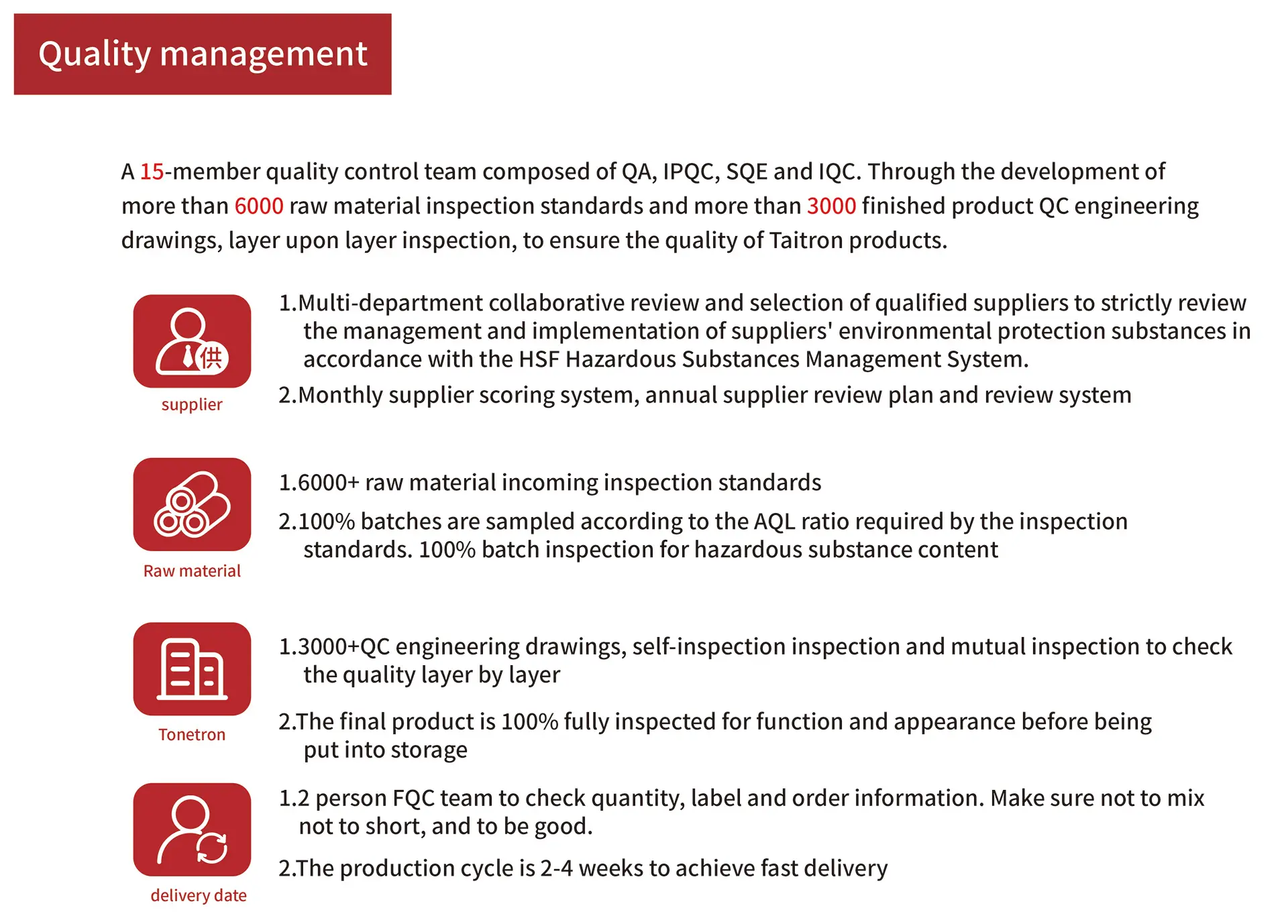

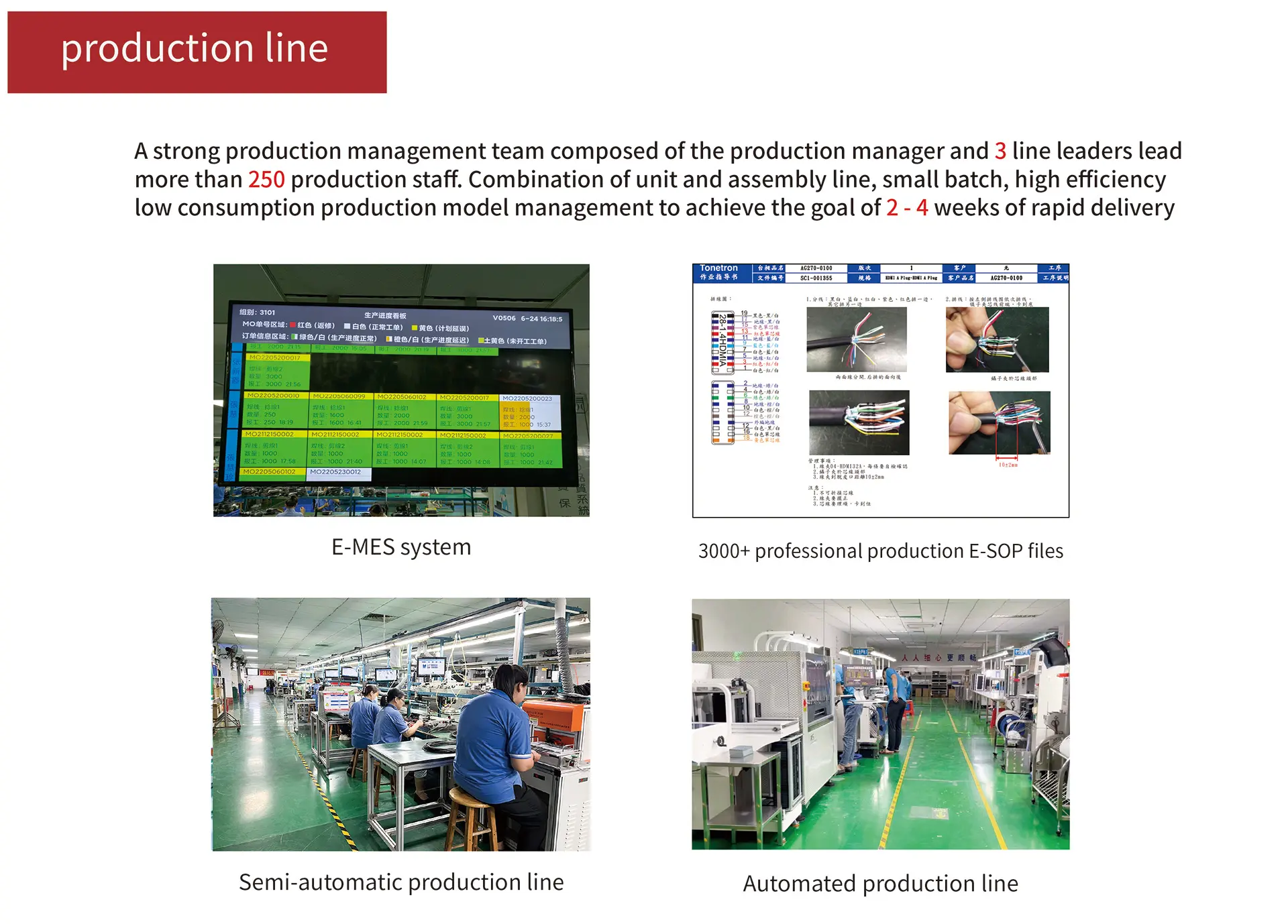
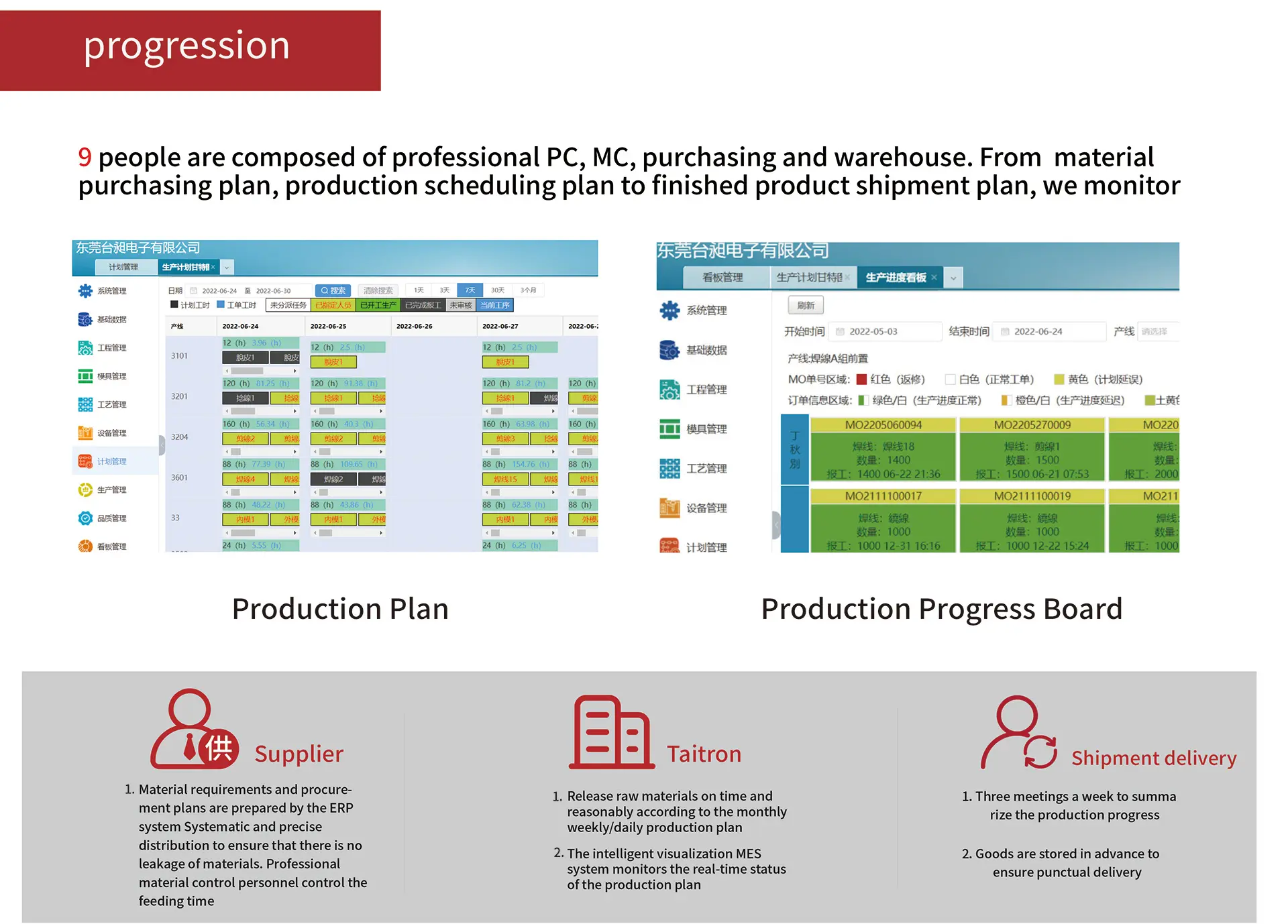
Our manufacturing capacity and strict quality control standards ensure reliable long-term supply for global B2B distributors and enterprise buyers.
For B2B buyers and electronics distributors, sourcing cost-effective Mini DisplayPort to HDMI 8K adapters requires balancing low pricing with reliable quality. Since we run a fully integrated supply chain, we control costs at every stage—from drawing raw copper wire to packaging the final product. This allows us to offer wholesale pricing without sacrificing quality.
Every batch of our adapters undergoes strict quality checks. We run high-frequency network analysis to verify eye-pattern performance, signal attenuation levels, and EM shielding. This ensures our adapters comply with FCC and CE standards, preventing interference issues in dense industrial setups.
Importing electronic hardware requires meeting strict local regulations. Dongguan Taitron guarantees full compliance across major international markets. Our adapters undergo certified testing to ensure they can be imported and sold in different regions without regulatory delays.
We work closely with global testing labs like SGS, TUV, and Intertek. This partnership allows us to provide complete technical documentation, CE certificates, and FCC test reports, helping our B2B customers clear customs smoothly.
Get answers to common technical, shipping, and customization questions about our adapters.
Passive adapters rely on the source device's graphics card to output a compatible HDMI signal using DP++ (DisplayPort Dual-Mode). Passive adapters typically cannot support high resolutions like 8K or high refresh rates.
Active adapters, such as our 8K models, use an internal chipset to convert the DP signal to HDMI. This allows them to support high resolutions (8K@60Hz or 4K@120Hz) even if the source device does not support DP++.
Yes, our active adapters are designed to convert the full HDMI 2.1 feature set. This includes VRR, ALLM, and Quick Frame Transport (QFT), making them ideal for high-end workstations and gaming setups.
We keep our prices competitive by handling most production steps in-house at our Dongguan factory. By doing our own wire extrusion, automatic SMT mounting, and assembly, we eliminate middleman costs and offer direct factory pricing to our customers.
We offer full customization options, including laser-engraved logos, custom colors for aluminum shells, cable length adjustments, and customized retail packaging (such as eco-friendly boxes or blister packs).
We use automated testing systems to check signal integrity, Return Loss, and Crosstalk. Each adapter is tested to ensure it can stable handle 8K resolutions and remains shielded against electromagnetic interference (EMI).
For standard models, production takes about 25 to 30 days once the deposit is confirmed. OEM orders with custom tooling or custom packaging typically require 35 to 45 days, depending on the specifications.
Browse more of our wholesale products, built to meet the same high manufacturing and testing standards as our flagship converters.
 Taichang Electronic