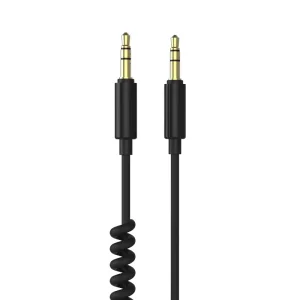
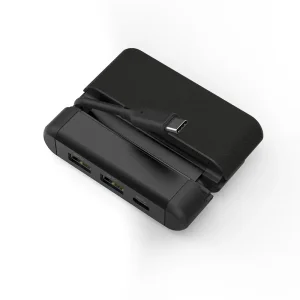
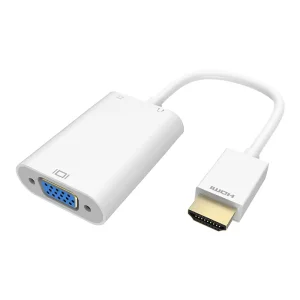
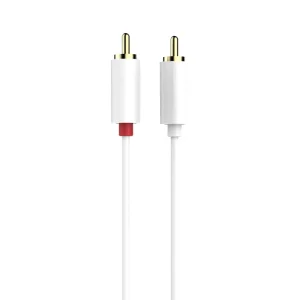
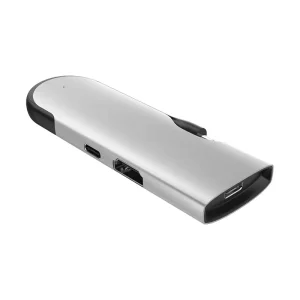
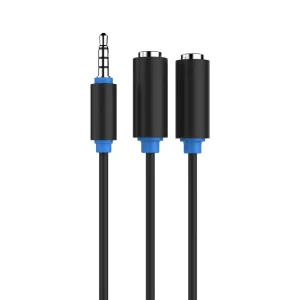
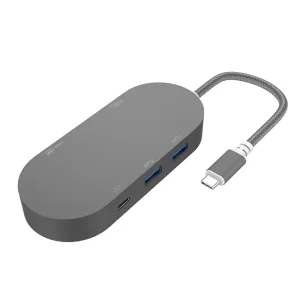
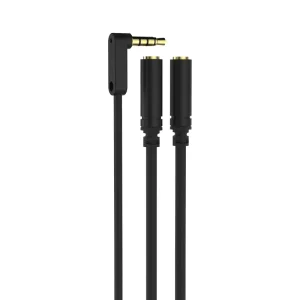
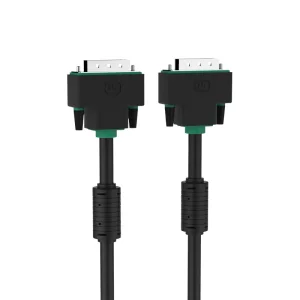
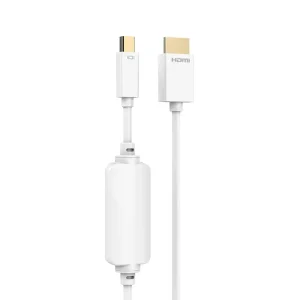
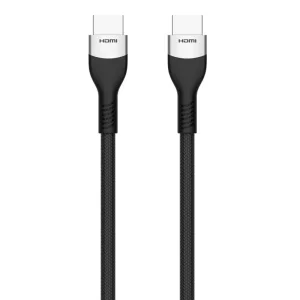
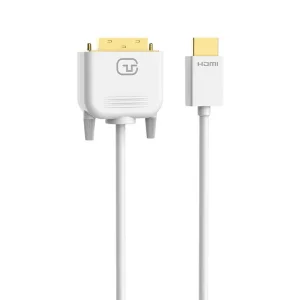
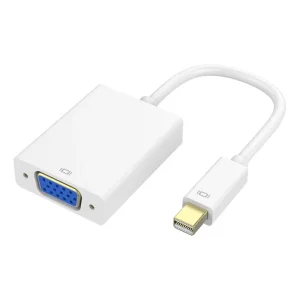
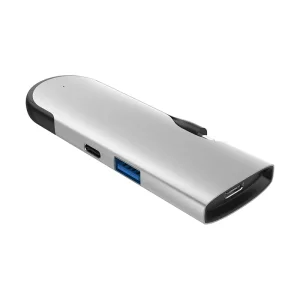
Explore our flagship industrial, custom, and legacy interconnect products built for high bandwidth, shielded signal transmission, and long durability.
In modern visual infrastructures, digital display interfaces form the vital communication bridge between processors and displays. Mini DisplayPort (MiniDP), introduced by Apple in late 2008 and standardized by VESA, remains an indispensable hardware interface across critical industrial applications.
While consumer devices have shifted extensively toward USB-C (Thunderbolt 3/4), the industrial, medical, and aerospace industries continue to rely heavily on MiniDP. Its mechanical stability, native DisplayPort protocol handling, and dedicated display lanes provide significant operational advantages over multi-purpose Type-C ports, which often introduce signal negotiation delays or physical connection fragility.
For B2B buyers, sourcing MiniDP adapters requires careful consideration of structural reliability, chip integration, and electrical testing standards. Let us look at why MiniDP remains critical in specific sectors:
Medical imaging systems, like high-resolution MRI, CT, and X-ray display stations, use MiniDP interfaces for consistent, uncompressed image transmission to diagnostic monitors. Our adapters prevent packet loss to meet medical image clarity standards.
Rugged panel PCs, human-machine interfaces (HMIs), and PLC controller screens rely on MiniDP for its compact size and secure physical retention. Our locking configurations prevent disconnection from machinery vibrations.
Production studios and live broadcast vans utilize multi-monitor display cards (such as AMD FirePro or NVIDIA Quadro) configured with multiple MiniDP outputs. Having stable active adapters is crucial for error-free multi-screen setups.
Learn about our history from our roots in 1984 to our modern production facility in Dalingshan Town, Dongguan City, China.
Original Profile Context: Founded in Keelung, Taiwan in 1984 under the name Tonetron, the company relocated in 1993 to a self-built independent production industrial park in Dalingshan Town, Dongguan City, China, changing its name to Dongguan Taitron Electronics Limited. With over 38 years of experience, we have evolved from a basic audio/video peripheral connection line factory into an advanced R&D and manufacturing hub specializing in high-speed digital transmission solutions.
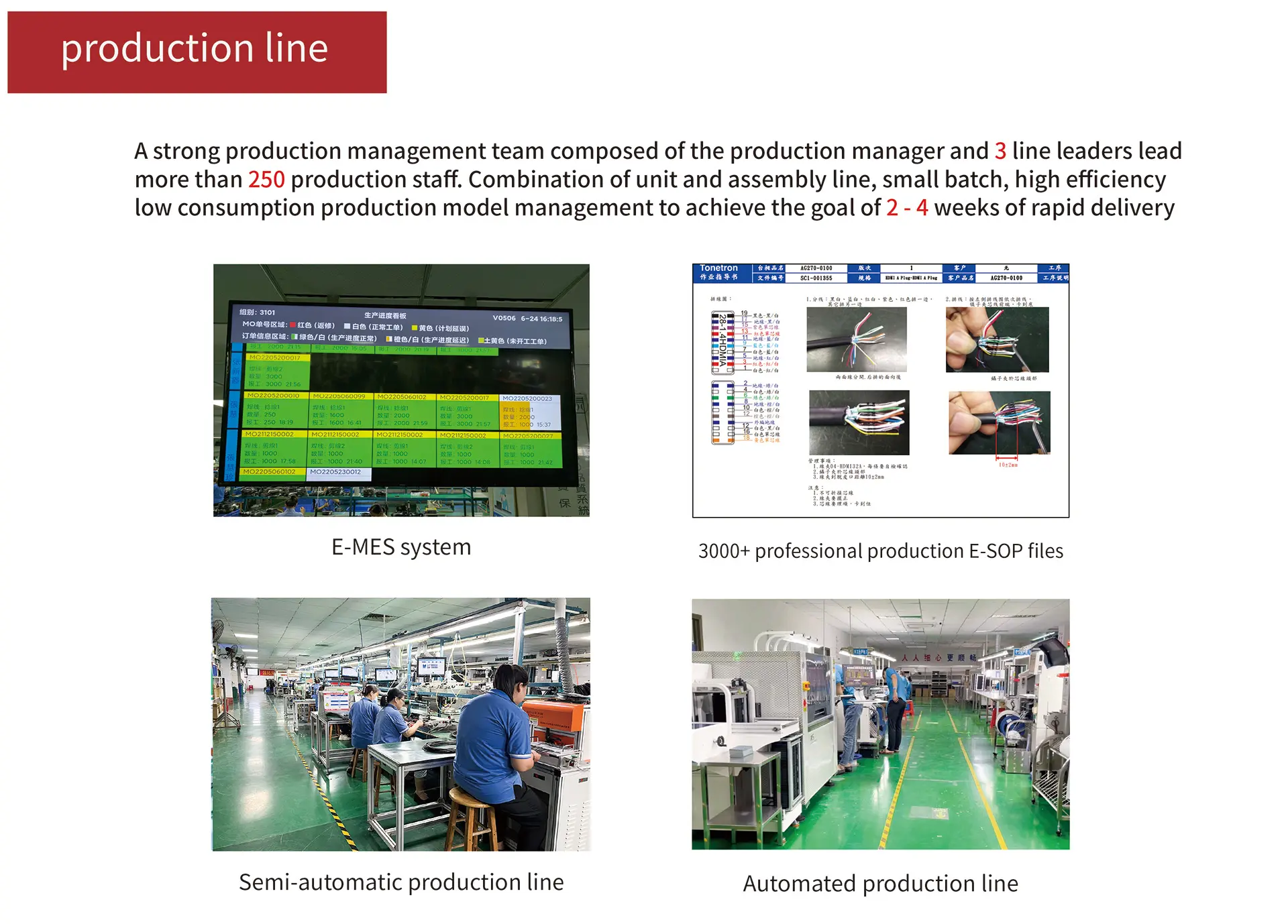
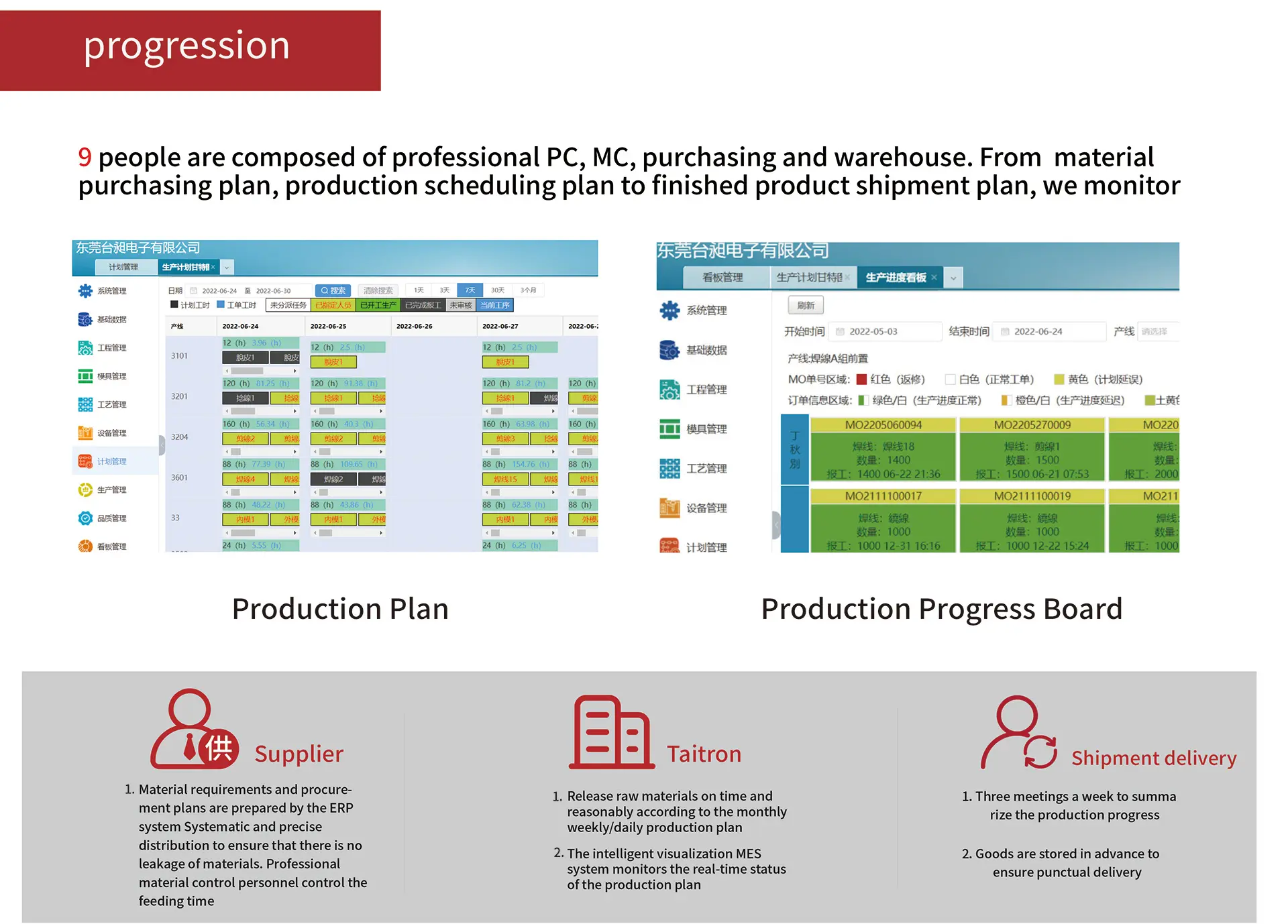
Our product portfolio covers high-speed data standards, including HDMI 2.1 cables, DP 2.0 cables, USB4 data cables, USB-C 3.1 Gen2 data cables, high-power USB charging cables, 8K HD conversion cables, and multi-functional Type-C expansion docks. Our facility features modern wire extrusion machinery, automated soldering equipment, clean room assembly lines, and high-frequency laboratories. This setup allows us to manage the entire manufacturing cycle from copper raw drawing to final casing design, helping us meet strict global quality standards.

Understanding signal types and internal components is key to selecting the correct adapter for your application.
A frequent failure point in large-scale system deployments is selecting passive adapters when active ones are required. DisplayPort and Mini DisplayPort send data using low-voltage, AC-coupled differential signaling. HDMI and VGA use different voltage standards (DC-coupled TMDS for HDMI, analog RGB for VGA). Bridging these standards requires specific electrical conversion:
| Feature Spec | Passive MiniDP Adapter | Active MiniDP Adapter |
|---|---|---|
| Signal Conversion Logic | Relies on host device to detect and output HDMI/DVI signals via DP++ (Dual-Mode DisplayPort). | Performs on-board protocol translation using internal chipsets (such as Parade, Parade Technologies, or Analogix). |
| Multi-Monitor Limits | Generally limited to a maximum of 2 active screens, depending on the graphics card's internal clock generators. | Supports 3 or more displays (e.g., AMD Eyefinity / NVIDIA Surround configurations) by acting as native DP receivers. |
| Maximum Cable Lengths | Limited to shorter distances (typically under 3 meters) before signal attenuation occurs. | Supports longer cable runs (up to 15 meters) through signal restoration and clean active amplification. |
| Compatibility Index | Requires DP++ compatible source ports; will not function on standard native DP-only interfaces. | Compatible with all MiniDP ports, graphics cards, docking stations, and industrial controllers. |
At Taitron, our engineering department designs both passive and active adapters. We use Parade PS176, PS171, or high-performance Realtek chipsets to ensure accurate active conversions up to 4K @ 60Hz and 8K @ 30Hz. Our designs include independent internal shielding to minimize electromagnetic interference (EMI) with neighboring wireless modules.
High-frequency cables demand precise manufacturing. Standard assembly lines cannot prevent signal loss or interference at high bandwidths.
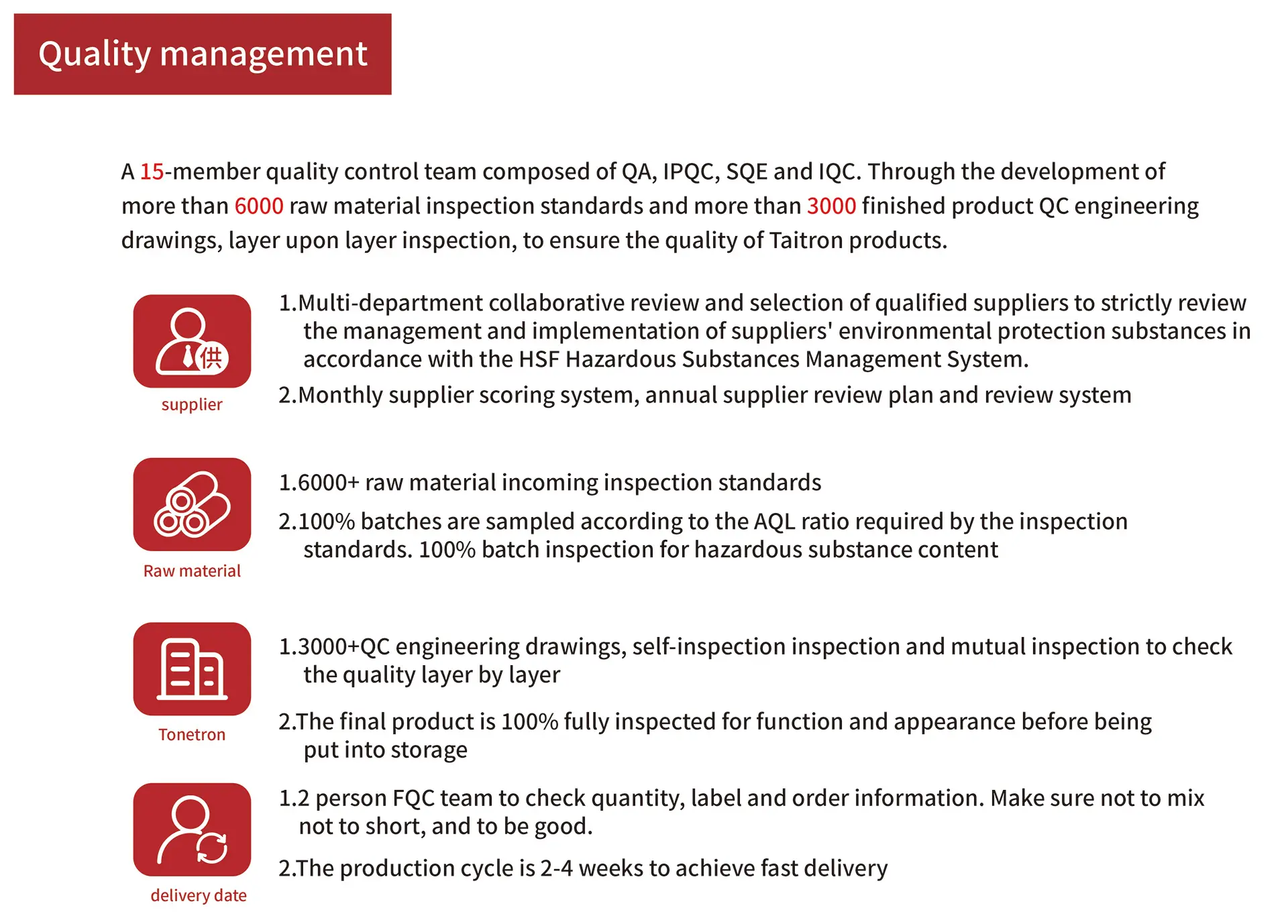
To support high-bandwidth standards like DisplayPort 1.2/1.4, our manufacturing team pays close attention to physical cable design. Every MiniDP adapter and cable we produce follows strict construction steps:
Our quality management division tests every batch using Time Domain Reflectometry (TDR) and high-frequency network analyzers to verify signal integrity. We test under simulated thermal conditions from -20°C to +80°C to ensure reliability in demanding environments like factories and outdoor kiosks.
How procurement managers and systems integrators use our tailored connectivity products to support reliable display setups.
We work with hardware manufacturers to customize cable length, casing materials, printing, and pinouts to match specific enclosure requirements.
We help businesses connect legacy MiniDP systems to modern HDMI 2.0/2.1 or USB-C inputs, saving the cost of upgrading expensive mainboards.
We provide stable supply and lead times for high-volume distributors and system builders, backed by our 38 years of manufacturing experience.
Get professional answers to common questions about Mini DisplayPort adapters, signal conversion, and high-resolution video transmission.
This issue is typically caused by signal attenuation or clock jitter. Passive adapters rely on the host GPU's dual-mode (DP++) capabilities to output HDMI TMDS signals. If the voltage level or impedance match of the passive adapter is slightly off, the signal integrity can degrade, causing visual artifacts or disconnects. Switching to an active MiniDP adapter with an integrated chip (e.g., Parade PS176) stabilizes the signal conversion on the adapter itself, fixing most flickering issues.
Mini DisplayPort has supported multi-channel digital audio since VESA v1.1a. Our MiniDP to HDMI/DP adapters pass uncompressed audio (like LPCM) and compressed surround formats (including Dolby Digital and DTS) to compatible displays. Keep in mind that older host devices from before 2010 may only support video output over MiniDP.
Yes, if you use a DisplayPort Multi-Stream Transport (MST) hub or monitors that support MST daisy-chaining. The source system's MiniDP port must support DisplayPort 1.2 or higher. Note that macOS does not natively support MST daisy-chaining and will mirror the desktop unless separate video ports are used.
They share the same physical shape and connector. Electrically, a MiniDP adapter can plug into a Thunderbolt 1 or 2 port and output standard DisplayPort video and audio. However, a Thunderbolt-specific peripheral (like a RAID storage enclosure) will not work if plugged into a standard MiniDP output, as MiniDP lacks the PCIe data transport protocol.
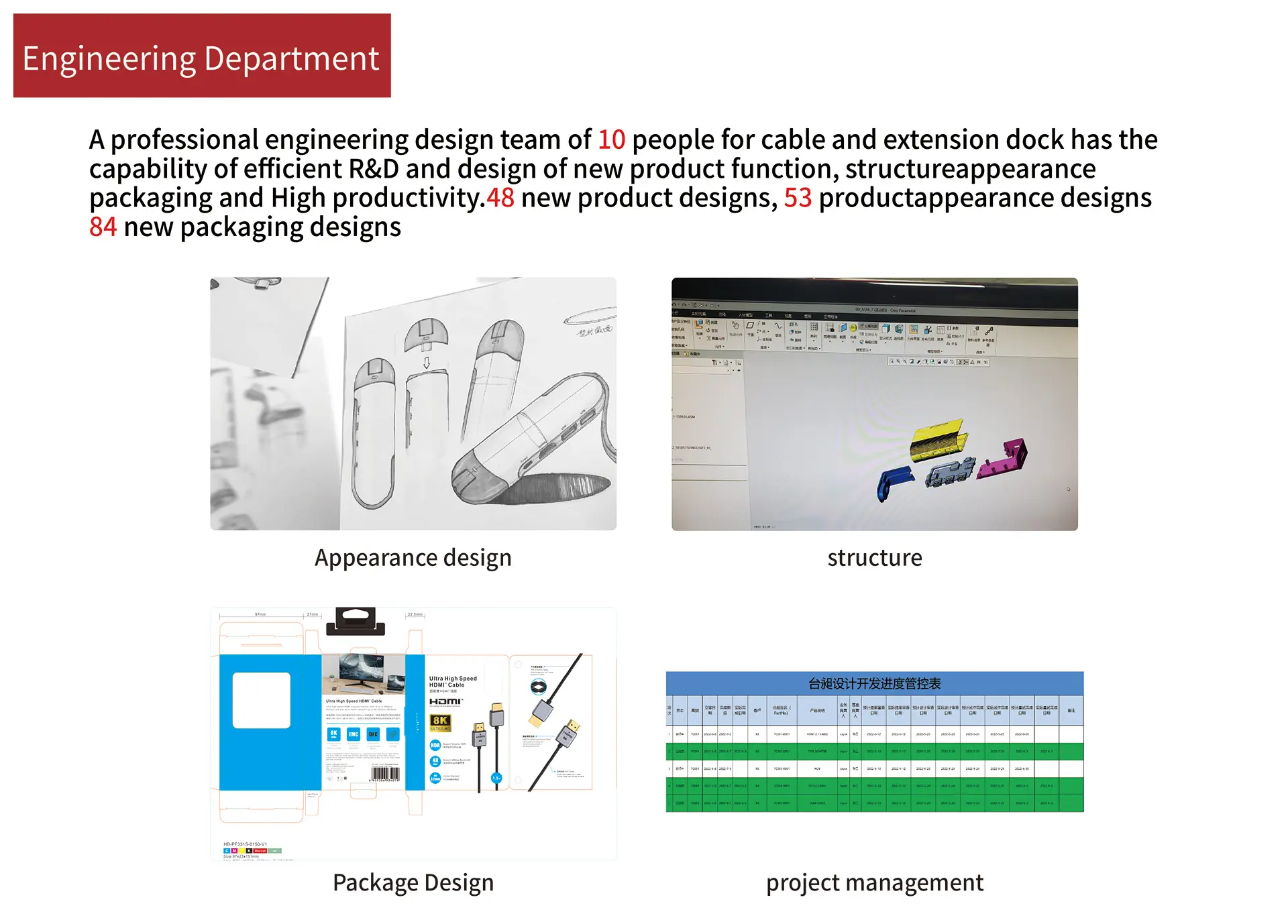
Our engineering department designs custom wire extrusions, shielding configurations, and connector moldings. We assist with custom length requirements, mechanical locking screws, right-angle connectors, and specialized jackets (like plenum-rated or halogen-free). Contact our sales team with your project requirements to receive a detailed quote.
Explore more of our wholesale and custom adapters, including MiniDP, HDMI, and multi-functional USB-C expansion hubs.
 Taichang Electronic