Premium OEM/ODM engineering customized for display technology infrastructures, high-frequency transmission, and critical industrial installations.
Decoding the physics of signal propagation, structural shielding, and cost-efficient manufacturing in modern VESA interfaces.
In the era of high-speed digital communications, DisplayPort (DP) interconnect systems serve as the structural backbone of ultra-high-definition ecosystems. Achieving visual clarity at resolutions of 8K at 60Hz or 16K with Display Stream Compression (DSC) 1.2a requires cables that maintain precise electrical properties. As global system integrators and distributors search for the ideal balance between performance and cost-effectiveness, the role of a specialized Chinese exporter becomes clear.
Integrating high-speed digital lanes within a DisplayPort to DisplayPort cable assembly is a complex engineering challenge. High-frequency electrical lines are highly vulnerable to physical anomalies, trace impedance variations, and electromagnetic interference (EMI). A premium factory must control the physical characteristics of these lines through advanced production techniques, ensuring that Insertion Loss (IL), Return Loss (RL), and Crosstalk conform to standard testing masks. By implementing automated processes, we deliver cost-effective DisplayPort assemblies that exceed these performance benchmarks.
A comprehensive projection of electrical performance and throughput capacities across successive VESA standards.
The development of the VESA DisplayPort interface highlights a steady focus on increasing bandwidth and improving protocol efficiency. As high-definition panels move beyond 4K into the realms of 8K and 16K, data rates have grown from HBR3 (High Bit Rate 3) at 32.4 Gbps to the latest UHBR20 (Ultra High Bandwidth Rate) standard, which achieves a raw physical throughput of 80 Gbps.
| DisplayPort Standard | Maximum Data Rate | Link Training Specification | Pixel Clock Capacity | Ideal Application Use-Case |
|---|---|---|---|---|
| DisplayPort 1.2 | 21.6 Gbps | HBR2 (High Bit Rate 2) | 540 MHz | Standard Enterprise Computing & FHD Displays |
| DisplayPort 1.4a | 32.4 Gbps | HBR3 (High Bit Rate 3) | 810 MHz | 4K 120Hz E-Sports Gaming & HDR Production Studio Setup |
| DisplayPort 2.0 / 2.1 | 80.0 Gbps | UHBR20 (Ultra High Bandwidth) | Up to 2.0 GHz | 16K Digital Signage, Automotive HUDs, Medical AR Systems |
This technical evolution requires advanced physical layer engineering. At UHBR20 frequencies, the wavelength of the digital signal shrinks to a point where even minor structural imperfections in the copper core can cause signal degradation. As an experienced exporter, our manufacturing processes utilize physical foaming polyethylene insulation and multi-layered shielding designs. These innovations prevent signal loss and ensure high reliability across all production runs.
Tracing our path from Taiwan in 1984 to establishing a smart industrial manufacturing campus in Dalingshan Town, Dongguan.
The history of Dongguan Taitron Electronics Limited (formerly known as Tonetron) shows our continuous commitment to industrial innovation. Founded in Keelung, Taiwan in 1984, the company was built on a dedication to high-quality audio and video connection technologies. In 1993, to meet growing global demand and scale up production, we relocated to our self-built independent manufacturing industrial park in Dalingshan Town, Dongguan City, mainland China.
For more than 38 years, our development has relied on robust mechanical designs and advanced research in high-frequency video and audio peripherals. Over this time, we have expanded our portfolio to include high-end data and AV connections, such as HDMI 2.1, DP 2.0/2.1, USB4, USB-C 3.1 Gen 2, high-power PD charging cables, 8K active conversion assemblies, and multi-functional USB-C docking stations.
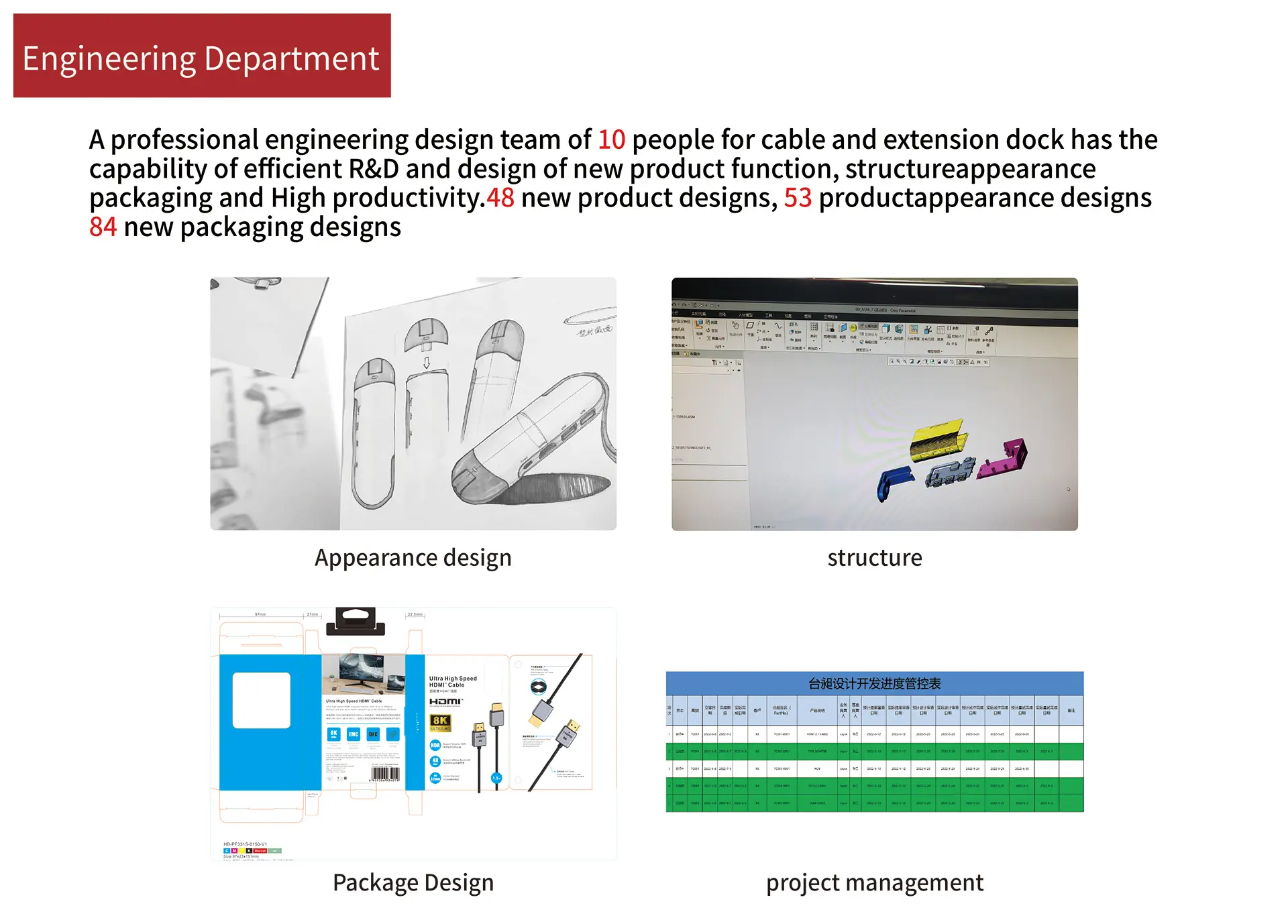
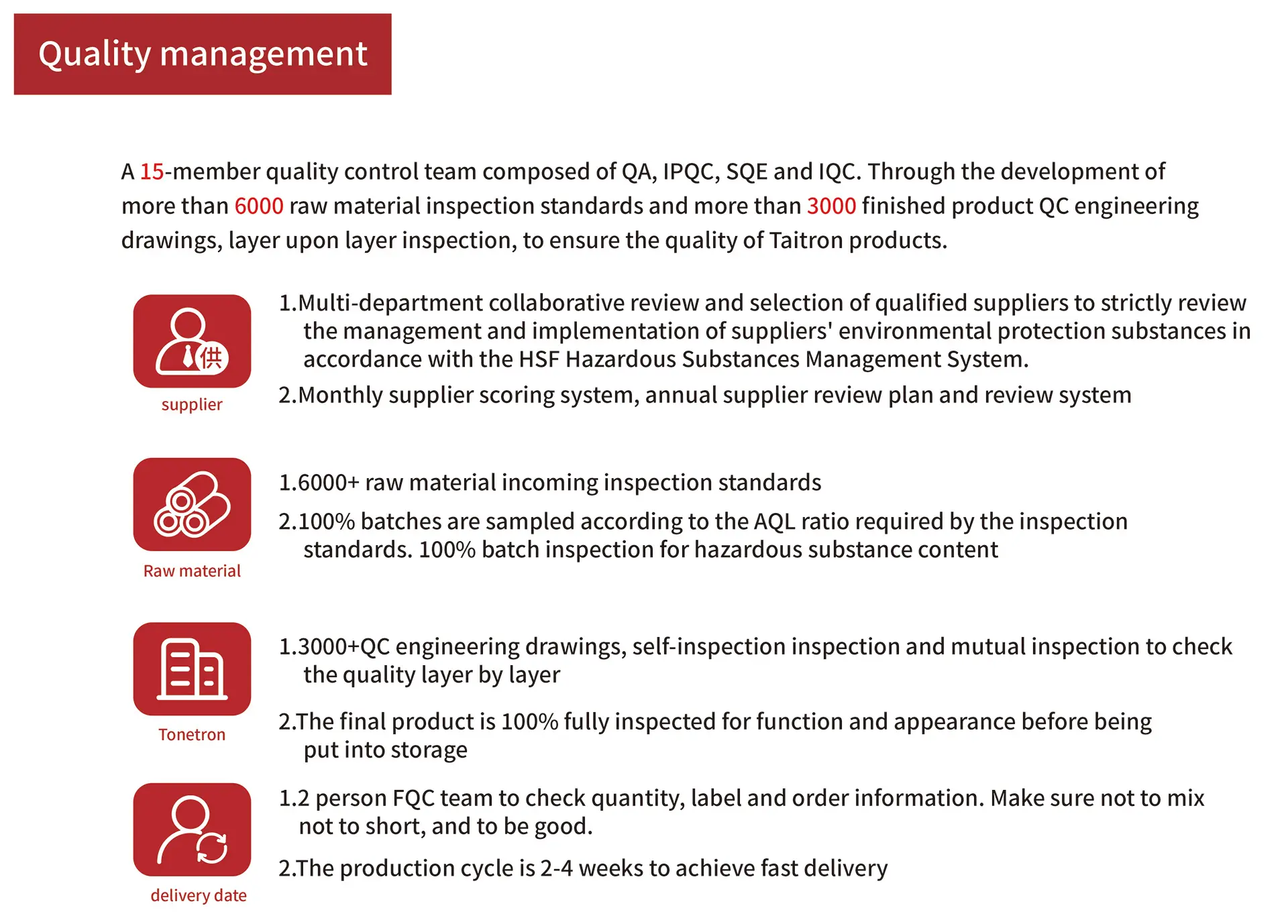

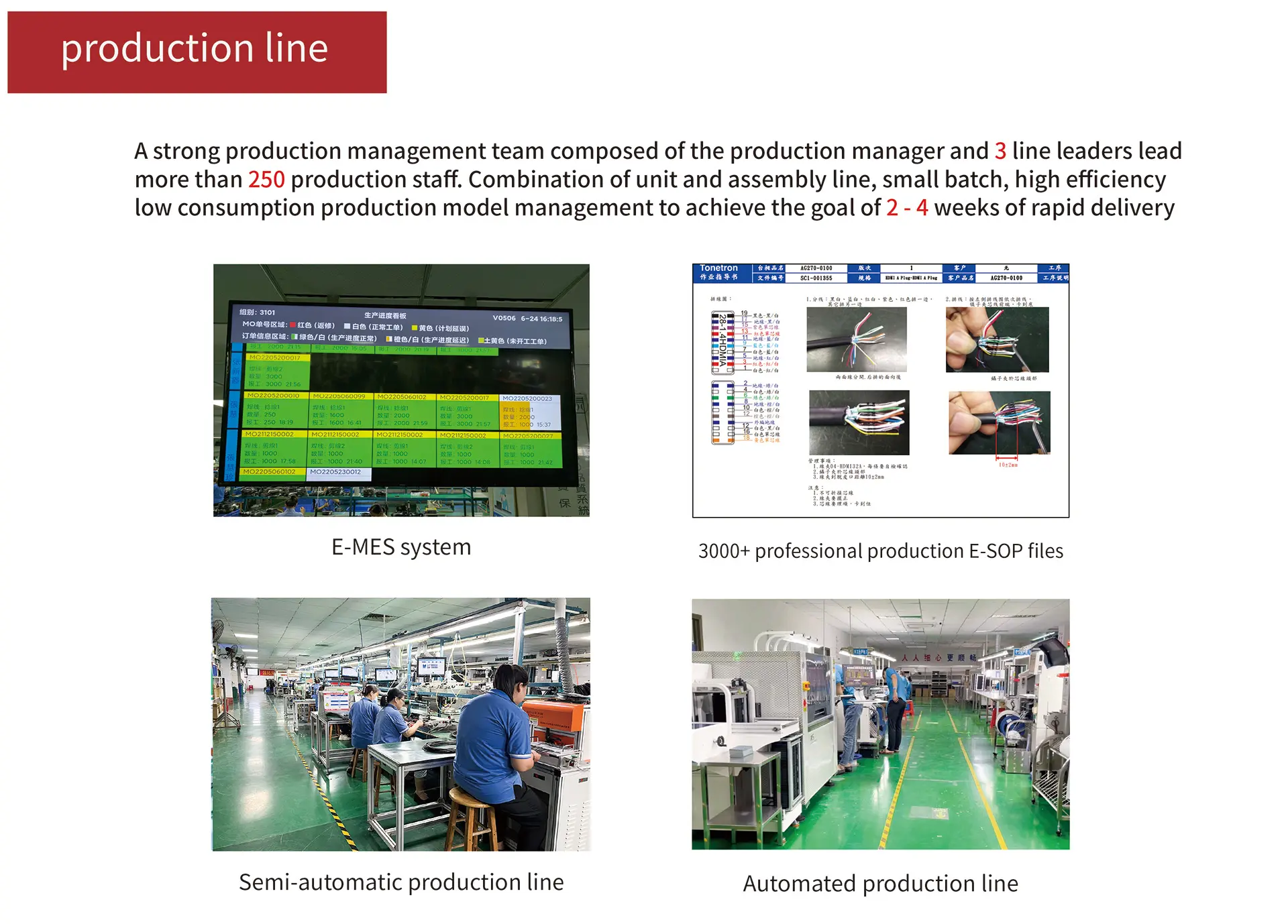
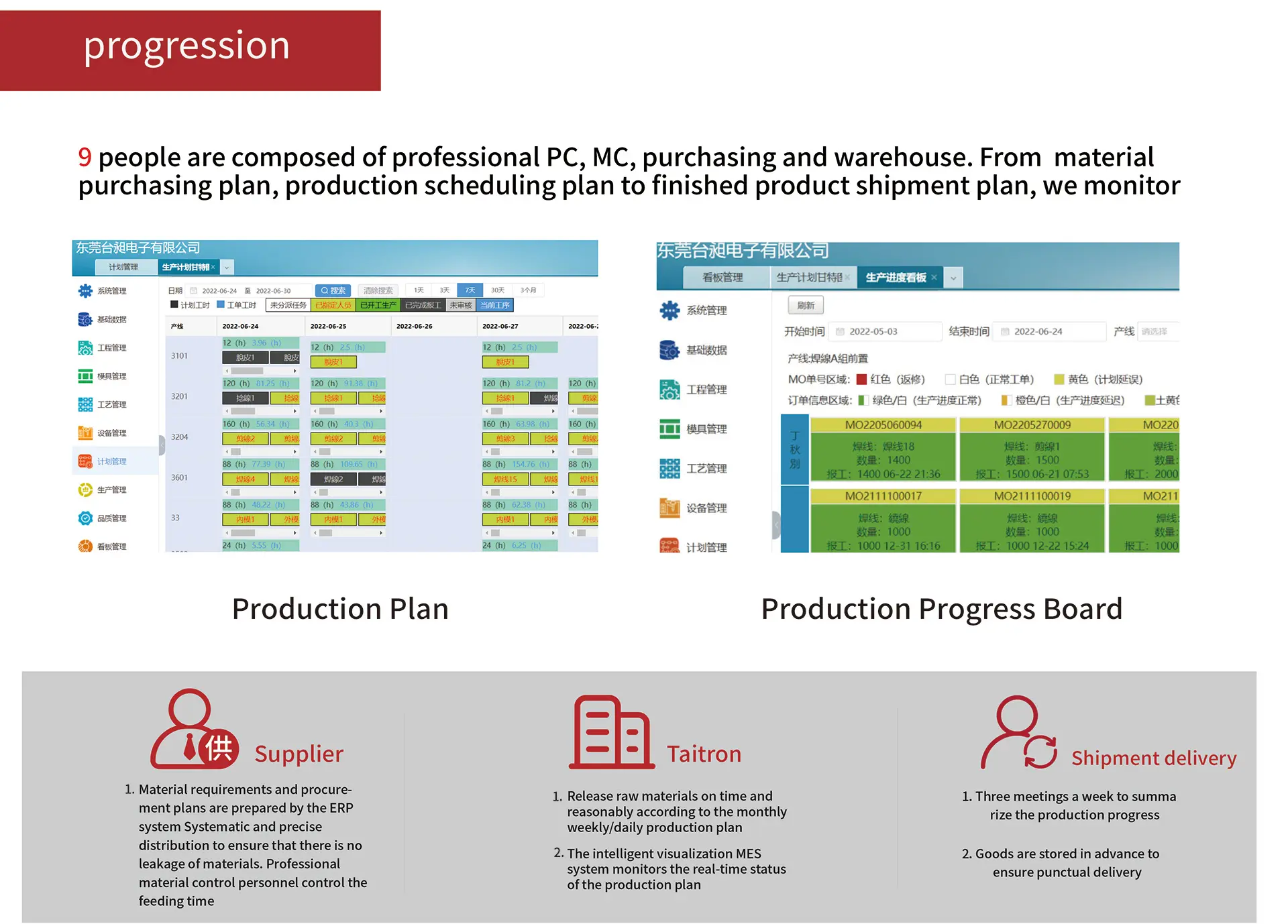
Tailored high-bandwidth configurations designed to solve data challenges in critical business environments.
Medical imaging systems like high-resolution MRIs, CT scans, and surgical displays depend on stable video pipelines. Our specialized DisplayPort assemblies support high bit depths (10-bit and 12-bit HDR) with minimal transmission errors. This ensures medical professionals receive clear, detailed imagery for accurate clinical diagnoses.
Production studios rely on real-time video signals with zero latency. Our DisplayPort cables feature double-shielded, low-attenuation conductors that resist interference from surrounding equipment. This ensures stable performance for overhead runs, editing suites, and live master control setups.
Modern vehicles feature digital cockpits, high-resolution HUDs, and rear-passenger entertainment displays. Our automotive-grade DisplayPort cables are designed to withstand physical vibration, high temperatures, and electromagnetic interference. This ensures stable connections for essential driver assistance and telemetry data.
Combining automated production, lean manufacturing, and rigorous quality control to deliver competitive pricing.
Our facility in Dalingshan Town, Dongguan, combines manufacturing experience with modern automated processes. High-frequency digital cables must meet strict technical specifications. By automating critical steps of production, we minimize human error and ensure consistent quality across large orders.
Our automation strategy includes several advanced manufacturing stages:
This automated approach reduces manufacturing waste and increases production yield. These efficiencies allow us to offer competitive, factory-direct pricing to our international partners while maintaining high quality standards.
Simplifying logistics, customs clearance, and customizable OEM/ODM services for commercial procurement departments.
For international buyers and procurement teams, managing supply chains requires clear technical specifications and reliable shipping timelines. As an experienced exporter, we align our sales and engineering support with standard commercial purchasing workflows.
We provide full design flexibility. Clients can specify wire gauges (from 28 AWG up to 34 AWG), select jacket materials (such as standard PVC, durable TPE, or braided nylon), and customize connector shells (including zinc alloy, aluminum, or molded plastic) to fit their applications.
Our factory processes are structured to keep lead times consistent. We work closely with raw material vendors to secure quality copper and shielding foils. This allows us to scale production efficiently, even during peak industry seasons.
We offer flexible shipping options, including FOB, CIF, and DDU/DDP terms. Our close proximity to major ports in Shenzhen, Guangzhou, and Hong Kong ensures fast transport times for ocean freight and priority air shipments.
Ensuring our cable designs meet environmental, safety, and operational certifications worldwide.
Navigating different environmental regulations is critical for global distributors. Our DisplayPort assemblies are manufactured to comply with major international requirements, facilitating smooth imports and distribution in various regions.
Addressing key engineering questions, manufacturing capabilities, and ordering processes.
We test every batch of high-frequency cables using Time Domain Reflectometry (TDR) and network analyzers. These tests measure characteristic impedance, return loss, attenuation, and intra-pair/inter-pair skew to ensure complete compliance with VESA specifications before shipping.
Yes, we provide full OEM and ODM services. This includes custom branding, custom molding designs, specific wiring configurations, and non-standard pinouts (such as disabling Pin 20 to prevent power delivery issues between connected devices).
We keep production efficient through automated assembly lines, high-speed terminal crimping, and automated soldering. In addition, our location in the Dalingshan Town industrial area gives us access to a complete local supply chain for raw materials, lowering manufacturing and logistics costs.
Our standard MOQ for custom cable production is 1,000 units. Typical lead times are 25 to 35 days from final design approval and deposit receipt, depending on material specifications and current order volumes.
Reliable legacy converters, optical systems, and high-speed data transmission lines built to global standards.
 Taichang Electronic