Famous DP Cable to HDMI Product & Factories

High-Fidelity Audio-Visual Conversion, Heavy-Duty Hardware Implementations, and OEM/ODM Manufacturing Excellence for Global Enterprise Networks

Featured High-Performance AV Connectivity Products

Explore our engineered collection of high-bandwidth digital display interfaces and active conversion adaptors built for system integrators, professional e-sports, and commercial visualization setups.
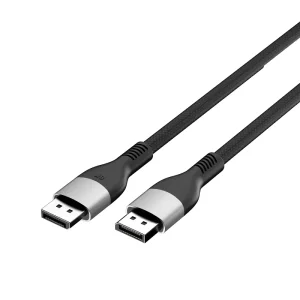
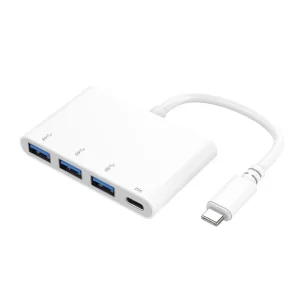
ODM Wholesale OEM 8K DP Cable

ODM Wholesale OEM 8K DP Cable (8K@60Hz, 4K@144Hz, 2K@240Hz) HBR3 Support 32.4Gbps, HDR, HDCP 2.2, FreeSync G-Sync, Braided Display Port for Gaming Monitor, Graphics, PC Company, Supplier

View Product Specifications
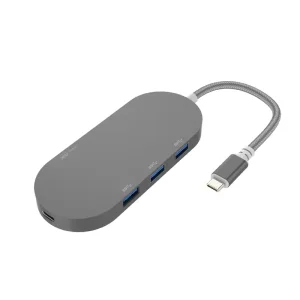
China USB C 4 in 1 Adapter

China USB C 4 in 1 Adapter - MP462 Manufacturer, Exporters

View Product Specifications
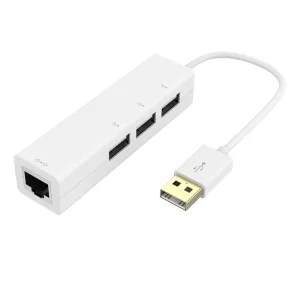
Cheap USB A 4 in 1 Adapter

Cheap USB A 4 in 1 Adapter - MP300 Exporters, Factories

View Product Specifications
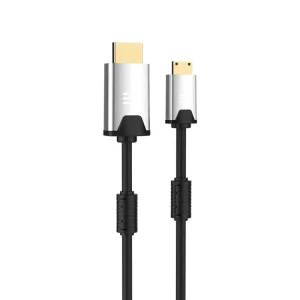
Custom HDMI A to C Cable

Custom HDMI A to C Cable - HMC287 Manufacturers, Factories

View Product Specifications
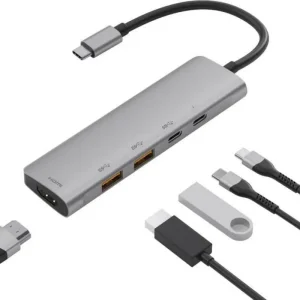
Discount USB C 5 in 1 Adapter

Discount USB C 5 in 1 Adapter - MP461GR Manufacturer, Companies

View Product Specifications
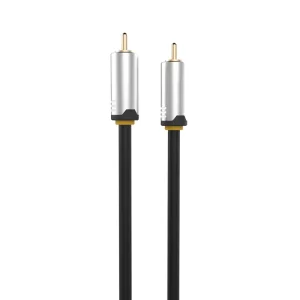
CE Certification RCA cable

CE Certification RCA cable - HMC263 Product, Supplier

View Product Specifications
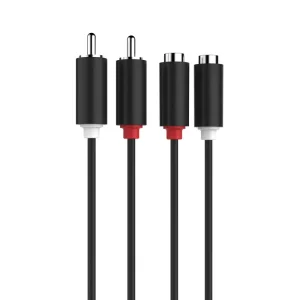
Discount 2 x RCA Audio Extension cable

Discount 2 x RCA Audio Extension cable - PB102 Manufacturer, Company

View Product Specifications
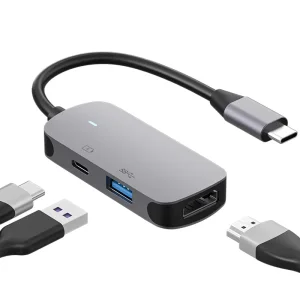
Buy Docking Station, 3 in 1 USB Hubs

Buy Docking Station, 3 in 1 USB Hubs Manufacturers, Pricelist

View Product Specifications

1. Understanding DP to HDMI Signal Mismatch & Conversion Dynamics

In modern high-definition visualization ecosystems, bridging differing interface protocols is a persistent challenge. DisplayPort (DP) and High-Definition Multimedia Interface (HDMI) represent two fundamentally distinct methods of data transmission. DisplayPort, developed by the Video Electronics Standards Association (VESA), relies on micro-packetized data structures similar to PCI Express. It transmits video and audio in packets over 1, 2, or 4 lanes, using low-voltage differential signaling (LVDS) with self-clocking mechanisms. Conversely, HDMI, driven by a consortium of consumer electronics leaders, utilizes Transition Minimized Differential Signaling (TMDS) or, in the case of HDMI 2.1, Fixed Rate Link (FRL), which rely on a continuous clock channel and structured control periods.

Because of this core difference, connecting a DisplayPort source to an HDMI display requires structural translation. While passive adapters exist, they rely heavily on the source device supporting Dual-Mode DisplayPort (DP++), which allows the GPU to alter its physical transmission parameters to output TMDS signaling. However, DP++ has major bandwidth limitations. For resolutions such as 4K at 60Hz and beyond—including the cutting-edge 8K standard—active protocol conversion is mandatory. Active converters contain dedicated chipsets (e.g., from manufacturers like Parade, Synopsys, or Realtek) that physically receive packetized DisplayPort data, unpack it, buffer the stream, and regenerate a native TMDS or FRL HDMI signal with a clean, low-jitter clock output.

"Bridging DP and HDMI is not simply a matter of rewiring pins. It is a real-time hardware translation process that demands complex IC architectures to ensure zero-latency synchronization, correct color space translation, and robust HDCP key exchange."

2. The Technical Evolution: From DP 1.4/HDMI 2.0 to DP 2.1/HDMI 2.1

As display resolutions surge to 8K and refresh rates exceed 240Hz for immersive environments, the technical roadmap for DP to HDMI conversion continues to evolve rapidly. The table below represents the paradigm shift in bandwidth demands and protocol complexity over successive hardware generations:

Legacy Era (FHD/4K30)

Standards: DP 1.2 to HDMI 1.4
Max Bandwidth: 10.2 Gbps (HDMI Link)
Core Chipset: Passive level shifters.
Limitations: Limited to 8-bit color, no HDR support, and high susceptibility to signal decay over lengths exceeding 3 meters.

Mainstream Ultra HD

Standards: DP 1.4a to HDMI 2.0b
Max Bandwidth: 18 Gbps (HDMI Link)
Core Chipset: Active DP-to-TMDS converters.
Features: Supporting 4K@60Hz, HDR10, static metadata transmission, HDCP 2.2 pass-through, and up to 32 channels of LPCM audio.

Next-Gen 8K / VRR Era

Standards: DP 2.1 to HDMI 2.1a
Max Bandwidth: 48 Gbps (HDMI Link)
Core Chipset: Smart active microprocessors.
Features: 8K@60Hz, 4K@120Hz/144Hz, Display Stream Compression (DSC 1.2a), Dynamic HDR (Dolby Vision), VRR, ALLM, and G-Sync/FreeSync bridging.

For industrial and commercial applications, the transition to active conversion chipsets with integrated DSC (Display Stream Compression) has been critical. DSC allows high-resolution video data to be visually-losslessly compressed at a 3:1 ratio, enabling 8K display streams to fit within legacy bandwidth limits while preventing visual latency or artifacting. Furthermore, modern microchips inside these high-end cables automatically manage EDID (Extended Display Identification Data) handshakes, ensuring that host PCs correctly register the target HDMI television's color space, variable refresh rate options, and sound profiles immediately upon connection.

Macro-Industry Solutions & System Integration

High-bandwidth AV bridges are vital infrastructure across major global sectors, powering mission-critical displays with zero tolerance for failure.

99.999%
Uptime in Command Centers
< 1ms
Signal Translation Latency
10K+
Flex Life Rating Cycle
0%
Signal Distortion Tolerated

Medical Diagnostic Visualization

In MRI and PACS imaging suites, diagnostic-grade monitors require ultra-accurate grayscale output and high-resolution imaging. DP-to-HDMI active translation enables professional medical computers with VESA DisplayPort outputs to reliably link to high-end OLED and LED surgical monitors, maintaining perfect color-space fidelity with DICOM compliance.

Aviation & Military Simulation

Real-time training simulators utilize complex graphics processing systems feeding multi-display arrays. Cable failure isn't an option. Gold-plated connector pins, structural zinc-alloy shielding, and highly-engineered PCB signal re-drivers inside our DP-to-HDMI assemblies ensure consistent 144Hz video playback without latency or dropouts.

Broadcast & Production Control

Television studios utilize multi-viewer arrays where raw video inputs must be converted to run on commercial HDMI monitoring panels. Active DisplayPort to HDMI hardware enables continuous 24/7 video processing without thermal buildup or EMI interference with adjacent high-frequency radio and audio recording equipment.

Enterprise Control & Operation Rooms

Smart city operations and logistics hubs depend on massive video wall displays. These systems use industrial servers with multiple DP ports linked to HDMI matrix switchers. Our specialized connection solutions support CEC (Consumer Electronics Control) routing and robust HDCP handshakes to prevent system lockouts.

3. Company Profile: The Taitron Electronics Manufacturing Legacy

In 1984, Dongguan Taitron Electronics Limited., formerly known as Tonetron, was founded in Keelung, Taiwan. In 1993, it moved to the self-built independent production industrial park in Dalingshan Town, Dongguan City, China, and changed its name to Dongguan Taitron Electronics Limited.

38 years to pass professional video and audio peripheral eguipment connection line manufacturing as the foungation, Gradually develop to the high-end audio and video cable data cable such as HDMI2.1 cable, DP2.0 cable, USB4 data cable, USB-C 3.1Gen2 data cable, high-power USB charging cable, 8K HD conversion cable, multi-functional Type-C expansion dock and other products research and development and manufacturing.

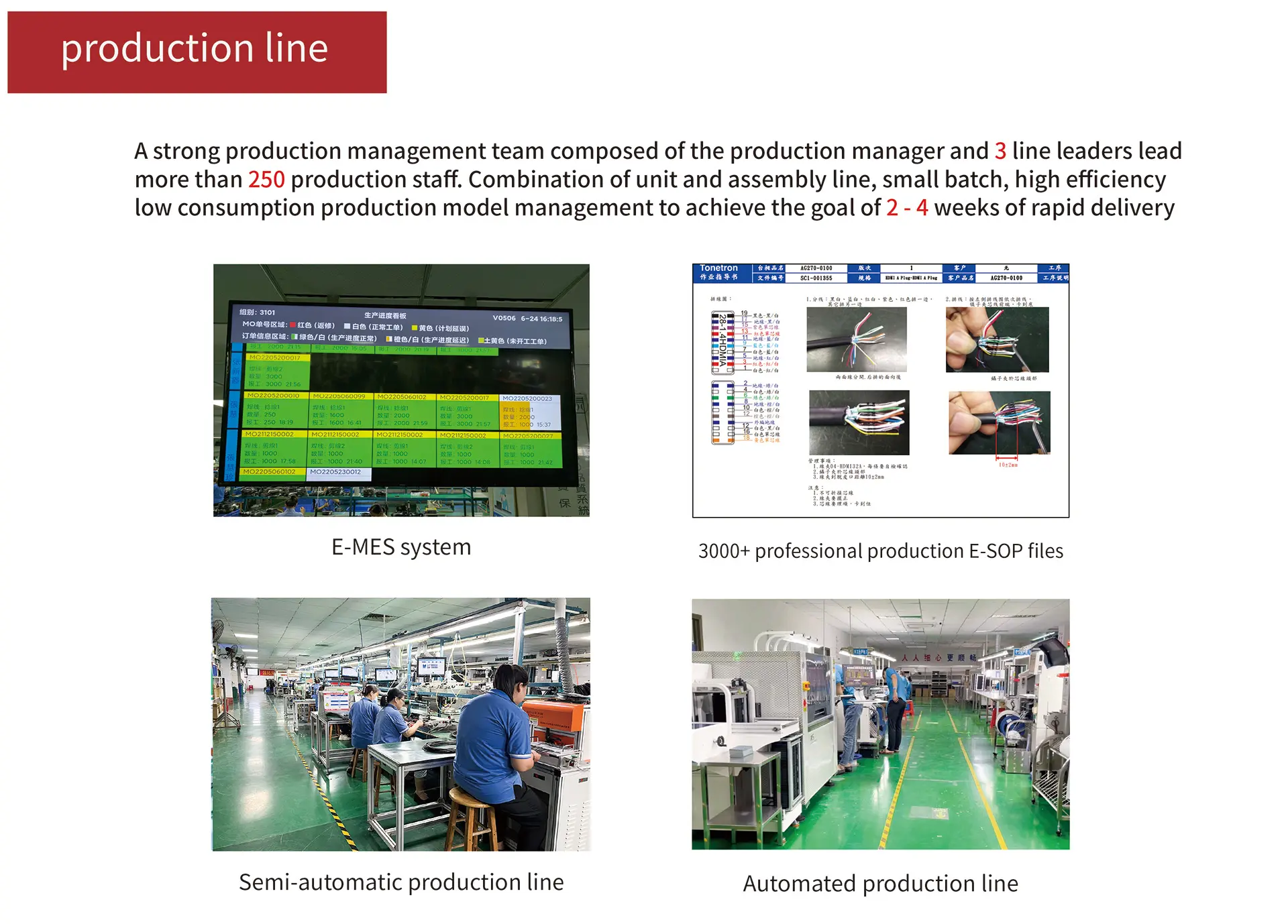
Over nearly four decades, Dongguan Taitron has optimized its production processes, moving from basic manual cable termination to automated high-frequency soldering and digital inspection systems. Operating in the electronic manufacturing hub of Dongguan, China, the facility benefits from a deep local component ecosystem, reliable logistical networks, and a pool of experienced technicians. The transition from our early Keelung roots to our massive modern facility in Dalingshan Town reflects our commitment to vertical integration, structural scale, and quality control.
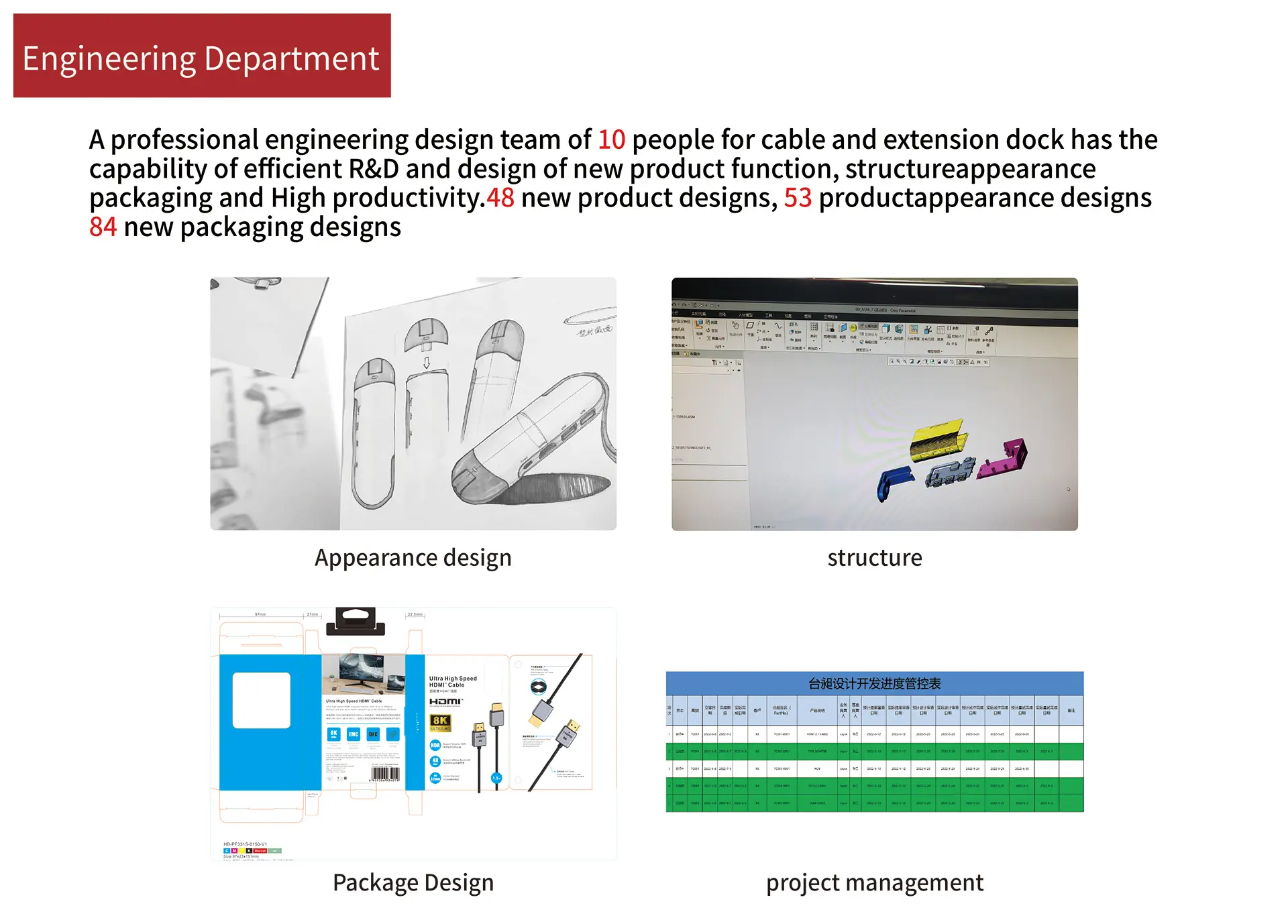
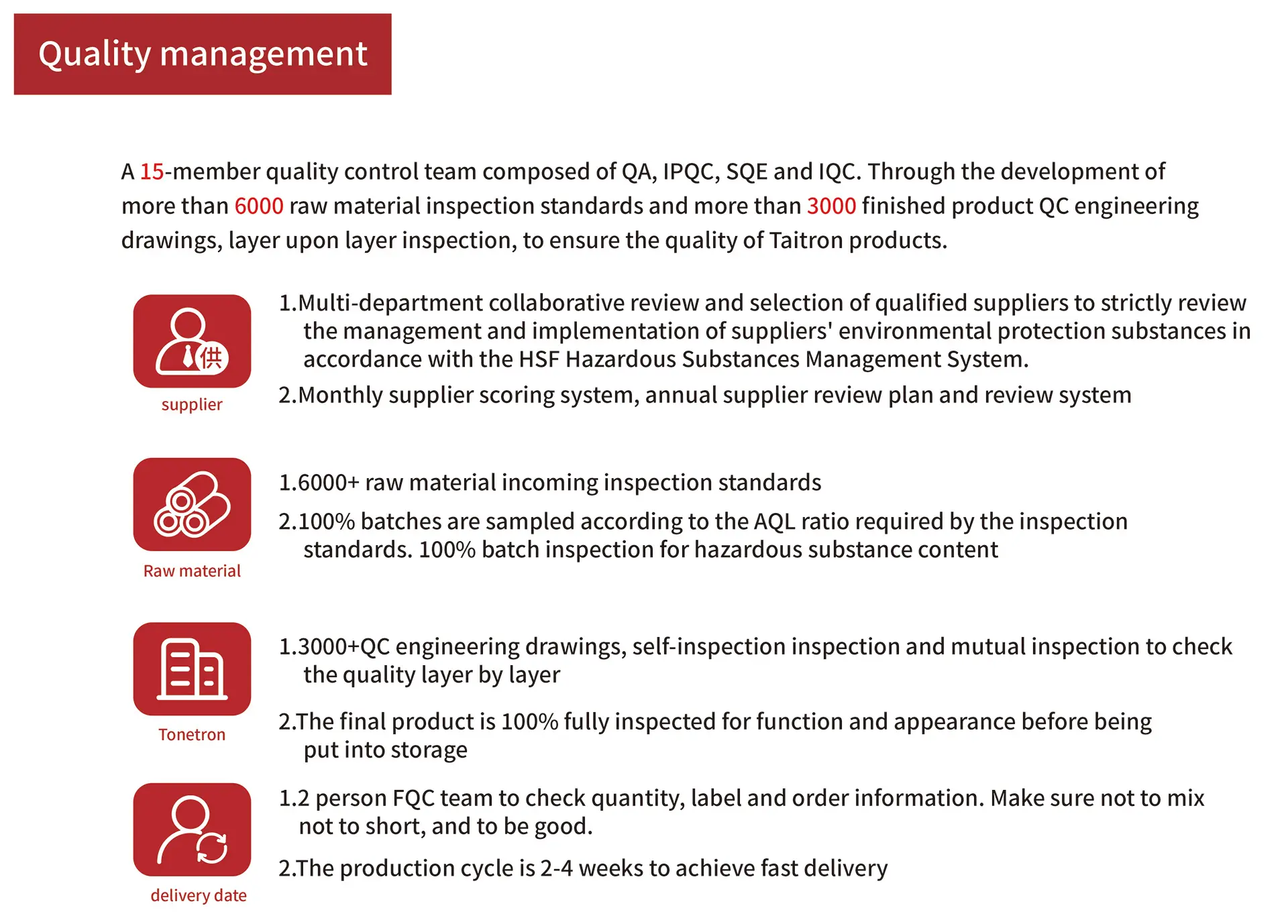
4. Global Procurement & Sourcing Framework: Assessing Quality Metrics

Enterprise procurement departments must look beyond unit cost when selecting a manufacturing partner for DP to HDMI cables and active adapters. To avoid field failures, signal dropout, and recall costs, sourcing managers should evaluate the following structural parameters:

  • Impedance Tolerance Control: High-speed differential pairs inside the cable must hold a strict differential impedance profile of 100 ohms ± 5 ohms. Variations outside this range cause signal reflections, resulting in high Bit Error Rates (BER) and screen flickering.
  • EMI Shielding Architecture: Heavy-duty shielding is critical. Premium cables utilize multi-layer shielding consisting of individual aluminum foil wraps around each twisted pair, a secondary foil layer covering all internal conductors, and an outer high-density tinned copper braid (minimum 85% coverage).
  • Trace-Length Equalization & Intra-Pair Skew: The arrival time difference (skew) between signals on the positive and negative traces of a differential pair must not exceed 10 picoseconds. Poor manufacturing alignment can cause phase shifting, rendering the conversion chip unable to decode the visual stream.
  • Active Chipset Selection: Active adapters must use reliable, certified silicon brands. Lower-tier, unbranded microchips struggle with heat dissipation and fail to perform HDCP authentication handshakes when connected to modern Blu-Ray players, game consoles, or secure workstation GPUs.
  • Connector Mechanical Strength: Connectors require gold plating (minimum 3 micro-inches up to 15 micro-inches for enterprise-grade) to prevent contact surface corrosion, wrapped in a zinc-alloy metal shell to resist mechanical stress and dynamic bending fatigue.

5. Localized Compliance, Certifications, and Environmental Safeguards

To successfully import and distribute AV equipment in key international jurisdictions, full regulatory compliance is required. Dongguan Taitron ensures all products meet or exceed global standards:

North American Markets (FCC, UL, Prop 65) Cables sold in the US and Canada must pass strict FCC Part 15 Class B testing for electromagnetic emissions. Heavy-duty jacket options with CL2 or CL3 ratings are available for in-wall commercial installations. Additionally, materials are tested for California Proposition 65 compliance to ensure they are free of harmful chemicals.
European Markets (CE, RoHS, REACH, WEEE) Products entering the EU must bear the CE mark, proving compliance with low-voltage and electromagnetic compatibility directives. We guarantee strict adherence to RoHS (Restriction of Hazardous Substances) and REACH (Registration, Evaluation, Authorization and Restriction of Chemicals), certifying that no heavy metals or restricted phthalates are used.

Industry Technical Q&A (FAQ)

Technical answers to critical hardware questions, aiding procurement specialists and design engineers in choosing the correct cabling architecture.

1. What is the main structural difference between Active and Passive DP to HDMI cables?
Passive DP to HDMI adapters rely entirely on the source device (such as a computer graphics card) supporting Dual-Mode DisplayPort (DP++). The GPU detects the connected adapter and shifts its output signals to native TMDS. However, DP++ cannot drive high bandwidths. Active adapters contain a dedicated digital-to-analog and protocol-translation chipset inside the connector head. This chipset receives DisplayPort signal packets and converts them into native HDMI streams. Active conversion is required for all premium video interfaces (such as 4K at 60Hz and higher, multi-screen configurations, and VRR applications).
2. Why do passive DP to HDMI cables fail to output 4K resolution at 120Hz?
To output 4K at 120Hz, an active bandwidth of up to 48 Gbps (HDMI 2.1) or 32.4 Gbps (DP 1.4 with DSC) is required. The legacy DP++ dual-mode standard used in passive cables is designed for HDMI 1.4 / 2.0 specifications, which max out at 18 Gbps. Passive configurations cannot convert the high-frequency signaling required for 4K@120Hz or 8K resolutions, nor can they handle HDMI 2.1 Fixed Rate Link (FRL) signaling. Achieving high frame rates requires active conversion chipsets to negotiate the link parameters with the GPU.
3. How does Dongguan Taitron achieve consistent impedance control on high-frequency differential pairs?
We use automated manufacturing systems to ensure physical consistency across all production lines. The physical geometry of the copper wire, including the distance between the two lines of a differential pair, must be precise to maintain the 100-ohm target impedance. Our facility utilizes automated wire stripping and precision gas-shielded pulse welding to eliminate human error during wire termination. We test all batches using Time Domain Reflectometers (TDR) to map structural impedance anomalies, verifying that every output cable is free of signal-degrading reflections.
4. Is DisplayPort to HDMI conversion bidirectional, and if not, why?
No, standard DisplayPort to HDMI cables and adapters are unidirectional. They only function from a DisplayPort source to an HDMI display. DisplayPort relies on micro-packets with variable link training, while HDMI is a continuous stream interface. The active conversion chips inside the cable are designed to read DisplayPort packet structures and output TMDS or FRL signals. To send a signal from an HDMI source (such as a gaming console) to a DisplayPort monitor, a different, specialized conversion chip is required to convert TMDS back into DisplayPort packets.
5. What role does HDCP play during the DP-to-HDMI protocol conversion?
High-bandwidth Digital Content Protection (HDCP) prevents the unauthorized copying of digital media. DisplayPort and HDMI use different encryption standards (HDCP 2.2/2.3 vs HDCP 1.4/2.2 over TMDS). The active chipset in the cable must act as an HDCP repeater, decrypting incoming DisplayPort data streams and re-encrypting them into HDMI-compliant formats. If the translation chip fails to perform this key exchange within milliseconds, the display will show a black screen or "HDCP Error" message when playing protected content. We use certified conversion chips that manage HDCP handshakes to prevent system dropouts.
6. What certifications are mandatory for importing AV connection lines into the European Union and North America?
For North American markets, cables must comply with FCC Part 15 regulations for electromagnetic interference, and dynamic cabling must meet UL safety standards (with CL2/CL3 fire ratings for structural in-wall setups). In Europe, cables must bear the CE mark, indicating compliance with the Low Voltage Directive and EMC Directive. Additionally, importing to the EU requires adherence to REACH and RoHS directives to ensure no hazardous substances are present in the PVC jackets, solder, or electronic components.

Featured High-Performance AV Connectivity Products (Continued)

Browse additional OEM adapters and premium cabling solutions designed to bridge multiple generations of display interfaces and multi-purpose data hubs.
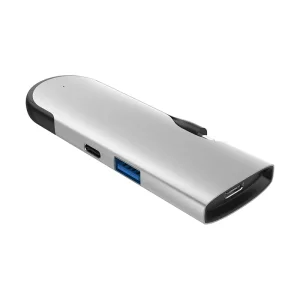
Famous USB C 5 in 1 Adapter

Famous USB C 5 in 1 Adapter - PF414A Manufacturers, Company

View Product Specifications
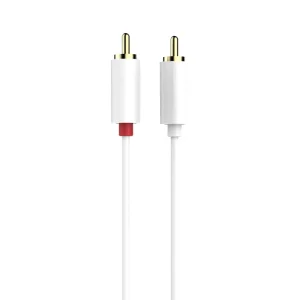
Discount 2 x RCA Audio cable

Discount 2 x RCA Audio cable - MP101 Company, Quotes

View Product Specifications
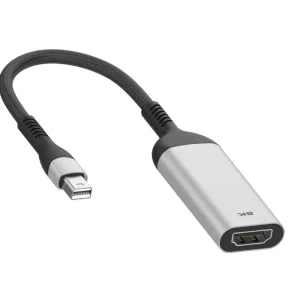
OEM MiniDP to HDMI 8K Adapter

OEM MiniDP to HDMI 8K Adapter - PF352K8 Manufacturers, Product

View Product Specifications
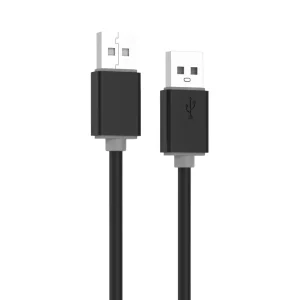
Wholesale USB Type A 2.0 cable

Wholesale USB Type A 2.0 cable - PB469 Products, Exporter

View Product Specifications
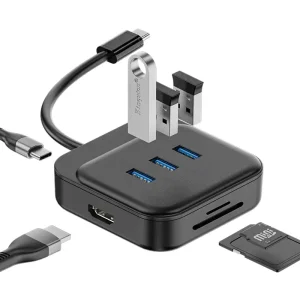
China Square Docking Station, 6 in 1 USB Hub

China Square Docking Station, 6 in 1 USB Hub Quotes, Pricelist

View Product Specifications
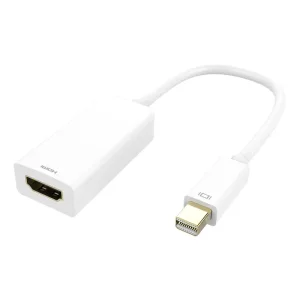
Discount MiniDP to HDMI 4K/30Hz Adapter

Discount MiniDP to HDMI 4K/30Hz Adapter - MP352 Manufacturers, Factory

View Product Specifications
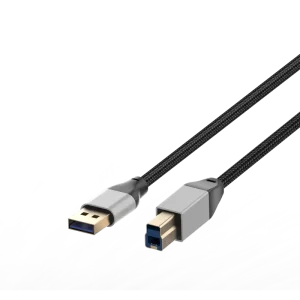
CE Certification USB-A Male to USB-B 3.0 Male cable

CE Certification USB-A Male to USB-B 3.0 Male cable, USB 3.0 Type B Upstream Cord Nylon Braided Compatible with Docking Station, External Hard Drivers, Scanner, Printer and More(Black) PF460G Manufacturer, Factories

View Product Specifications
Cheap Docking Station 5 in 1 USBC Hub

Cheap Docking Station 5 in 1 USBC Hub Exporter, Suppliers

View Product Specifications