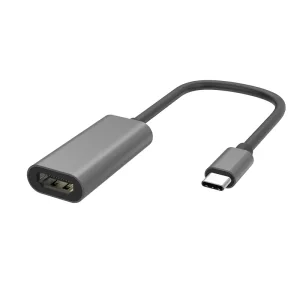
Explore our high-performance line of display and interface connection components engineered for reliability, enterprise scale, and long-term durability.
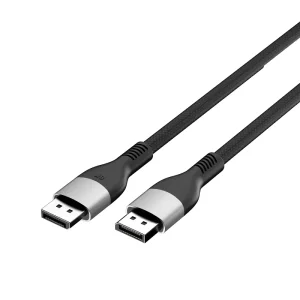
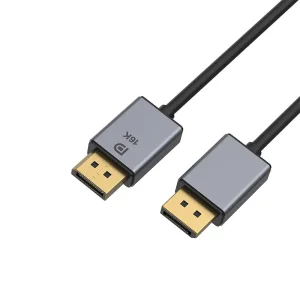
In high-end video distribution, command centers, and industrial display setups, DisplayPort 1.4 remains a foundational protocol. Released by the Video Electronics Standards Association (VESA), DisplayPort 1.4 utilizes High Bit Rate 3 (HBR3) link rates to achieve a total bandwidth of 32.4 Gbps, with a max payload rate of 25.92 Gbps. This massive throughput enables resolution profiles such as 8K UHD (7680x4320) at 60Hz or 4K UHD (3840x2100) at 144Hz when integrated with Display Stream Compression (DSC 1.2).
For B2B procurement agencies and hardware manufacturers, specifying the exact raw construction elements of DP 1.4 cables is critical. Inferior structural shielding or low-purity conductors cause packet loss, screen flickering, and failures during electromagnetic compatibility (EMC) testing. As a specialist manufacturer, we maintain tight tolerances on return loss, insertion loss, and cross-talk to ensure our cables meet exact VESA standards.
| Specification Feature | DisplayPort 1.4 Technical Parameters (HBR3) | Operational Impact for Enterprise Systems |
|---|---|---|
| Max Total Bandwidth | 32.4 Gbps | Supports uncompressed high-resolution multi-stream audio-visual signals. |
| Max Data Rate | 25.92 Gbps | Ensures smooth rendering at high framerates (e.g., 4K@144Hz, 2K@240Hz). |
| Display Stream Compression | DSC 1.2 (Visual Lossless) | Enables 8K resolution at 60Hz and HDR deep-color reproduction. |
| Forward Error Correction | FEC Integration | Corrects data transmission errors, ensuring high-fidelity picture outputs. |
| High Dynamic Range | Static & Dynamic HDR support | Delivers precise color mapping, ideal for medical imaging and editing setups. |
| Audio Capabilities | 32 Audio Channels, 1536 kHz Sample Rate | Guarantees immersive, multi-channel surround sound configurations. |
In global supply chains, purchasing agents face challenges balancing cost, performance, and regulatory compliance. Sourcing DP 1.4 components requires analyzing physical materials. Cheap DisplayPort cables often substitute Oxygen-Free Copper (OFC) with Copper-Clad Steel (CCS) or Copper-Clad Aluminum (CCA), reducing raw manufacturing costs but introducing high electrical resistance and signal loss over distances exceeding 2 meters.
Additionally, modern corporate environments require stringent regulatory compliance. Sourced components must conform to EU standards like RoHS (Restriction of Hazardous Substances) and REACH (Registration, Evaluation, Authorisation and Restriction of Chemicals), alongside certifications like CE, FCC, and UL. Our automated production processes utilize advanced physical testing procedures to ensure compliance, keeping you safe from customs issues and product liability claims.
"A chain is only as strong as its weakest link. In ultra-high-definition setups, using consumer-grade cables in enterprise environments results in costly maintenance visits. Buying certified DisplayPort 1.4 components directly from OEM factories ensures consistent signal stability and long-term project viability."
Features thick aluminum foil protection combined with a high-density Al-Mg braid. This setup prevents electromagnetic interference (EMI) in high-density rack configurations.
Equipped with 24K gold-plated connectors and automated soldering. This prevents corrosion and preserves optimal contact resistance through thousands of insertion cycles.
Designed with isolated power routing on Pin 20. This prevents power flowback issues that can damage expensive graphics cards and displays.
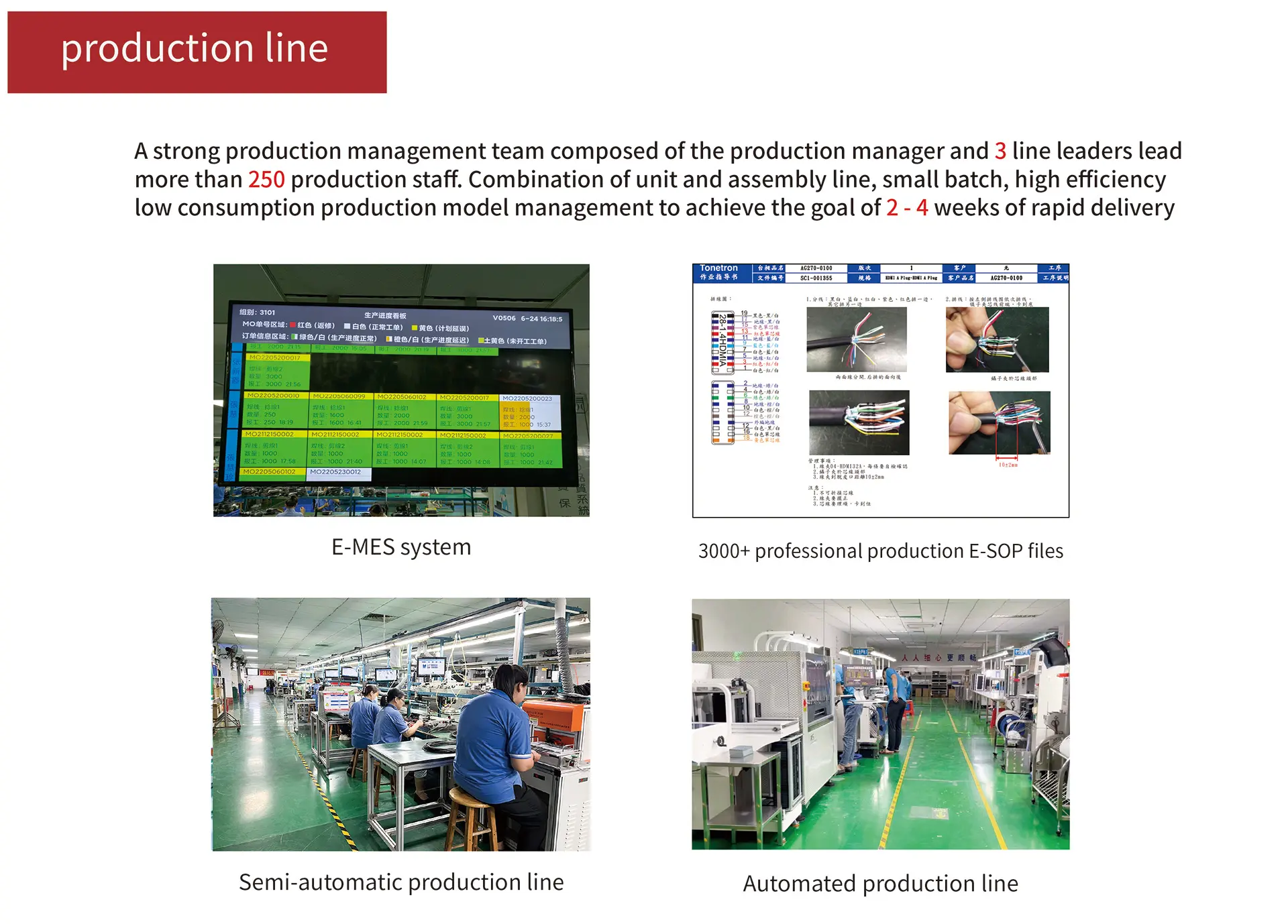
Founded in 1984 in Keelung, Taiwan, under the name Tonetron, our company established its roots in high-fidelity audio and video cable engineering. In 1993, we expanded operations by building a dedicated production industrial park in Dalingshan Town, Dongguan City, China, renaming our enterprise to Dongguan Taitron Electronics Limited.
Over the last 38 years, we have transitioned from traditional analog audio and video cables to high-speed digital interconnects. Today, our product range includes high-end HDMI 2.1 cables, DP 2.0/2.1 cables, USB4 data cables, USB-C 3.1 Gen2 cables, high-power USB charging cords, 8K HD conversion cables, and multi-functional Type-C docking stations.
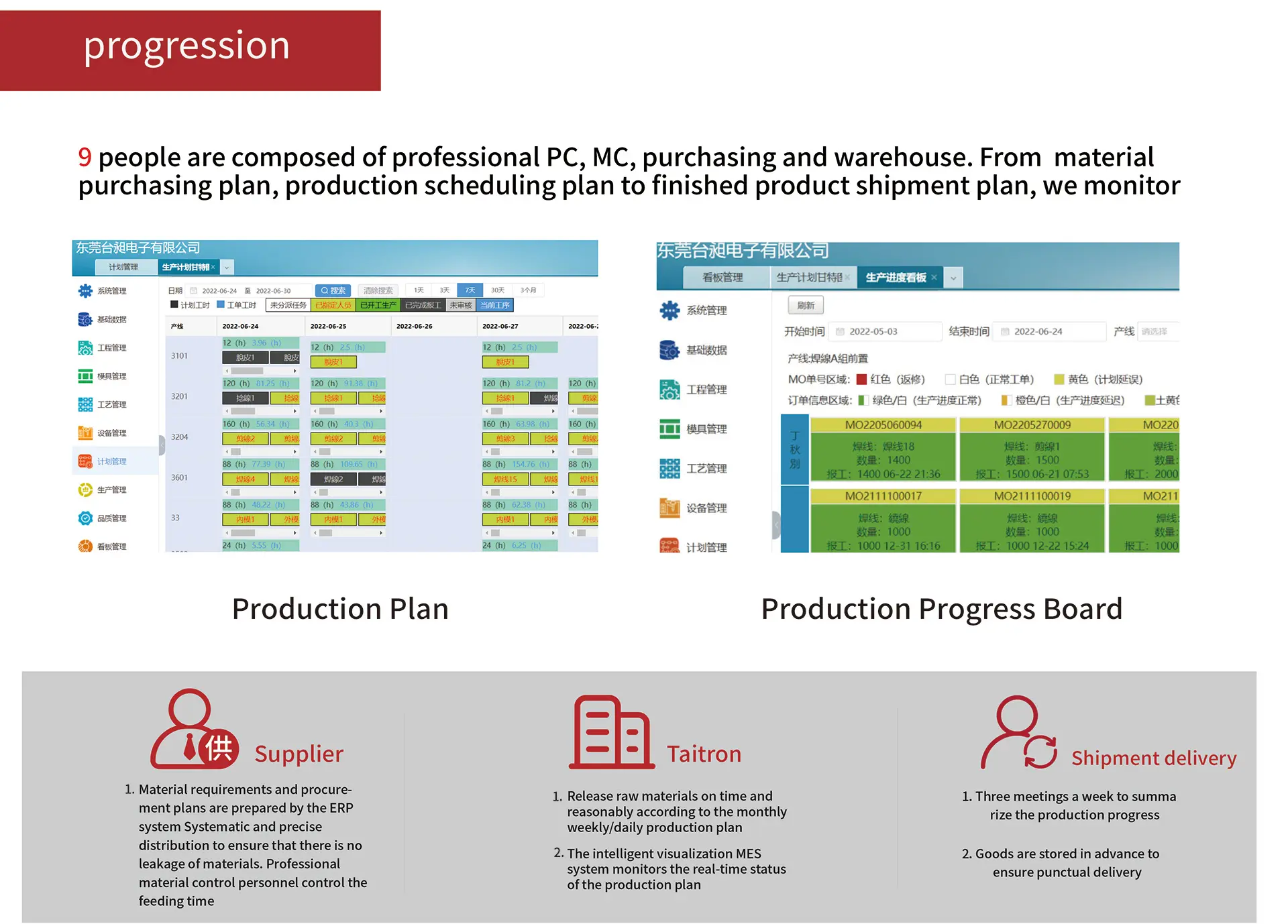
By coupling classic manufacturing expertise with modern, automated assembly lines, we support global brands, distributors, and OEMs. This ensures consistent mechanical tolerances, reliable high-frequency transmission, and robust supply chain support.
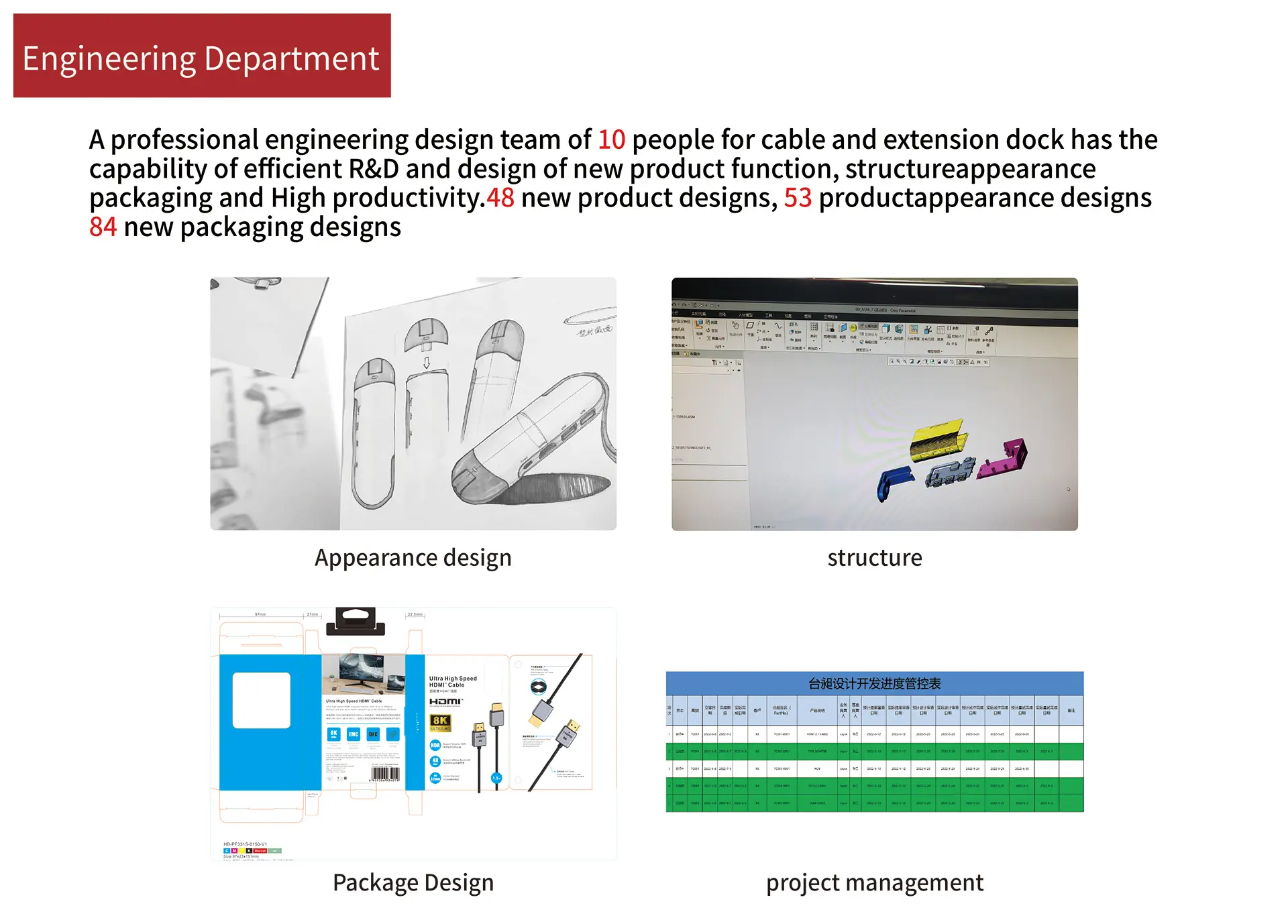
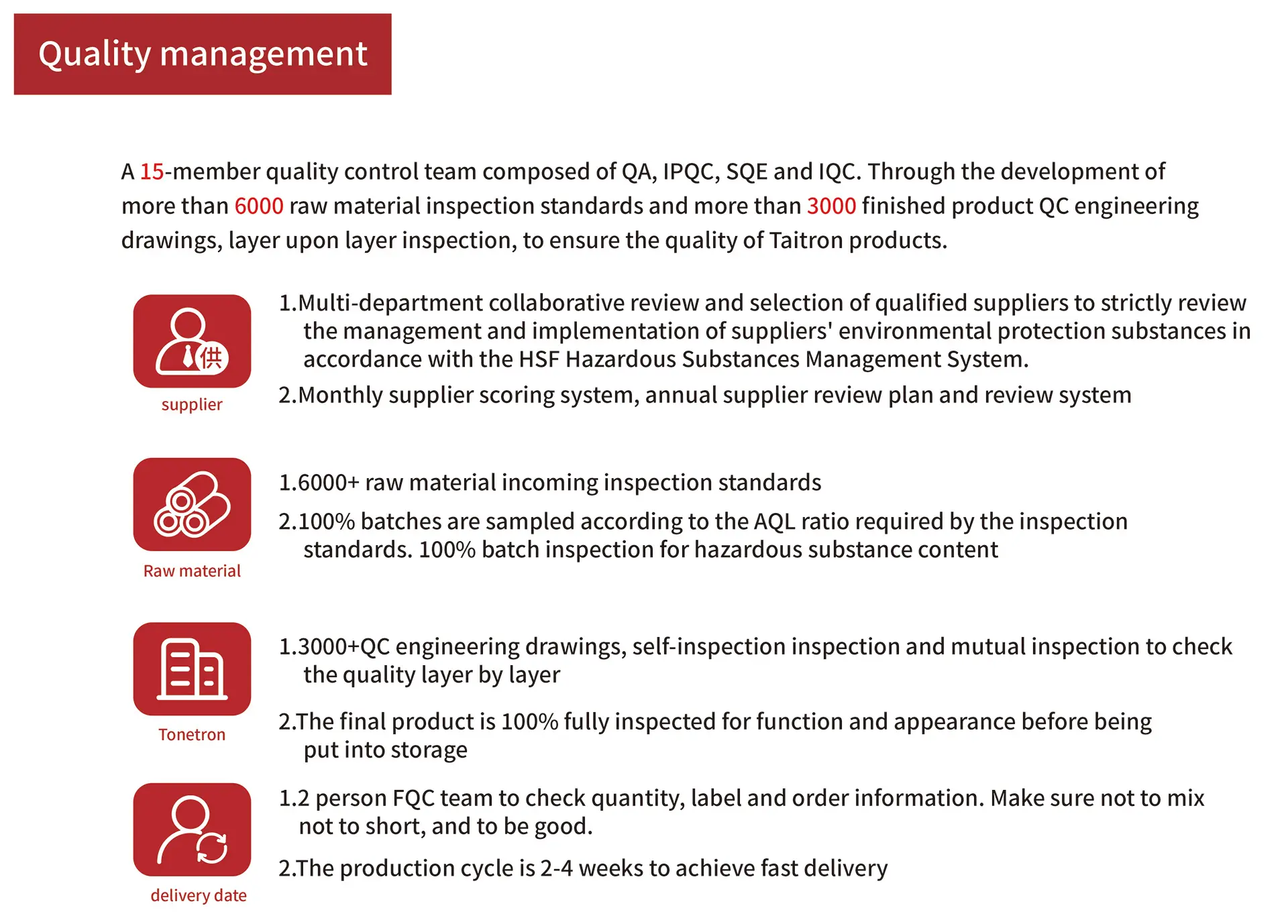

B2B pricing for DisplayPort 1.4 cables varies based on design specifications, material selections, and order volumes. Understanding these pricing variables helps purchasing departments manage costs and optimize quality. Below are the key drivers that shape our custom OEM quotation process:
As display technology evolves toward 10K and 16K resolutions, VESA has introduced DisplayPort 2.0 and 2.1. These newer standards utilize Ultra High Bit Rate (UHBR) links to achieve transmission bandwidths of up to 80 Gbps. While DisplayPort 2.1 is growing in high-end graphics and professional gaming monitors, DisplayPort 1.4 remains a highly cost-effective option for many standard enterprise setups.
DisplayPort 1.4 offers plenty of bandwidth for mainstream enterprise applications, including multi-screen retail signage, medical displays, office workstations, and standard 4K@124Hz gaming setups. Our factories manufacture both DP 1.4 (HBR3) and DP 2.1 (UHBR20) cables. This allows procurement departments to source both established and next-generation connectivity products from a single, reliable manufacturer.
Frequently asked technical questions answered by our engineering and manufacturing department.
Pin 20 on a standard DisplayPort connector carries 3.3V power (DP_PWR) to energize active adapters and dongles. When connecting two self-powered devices, like a PC graphics card and a desktop monitor, a cable with a connected Pin 20 can cause power to flow back into the system. This can lead to system instability, boot failures, or physical damage to the hardware components. Our manufacturing processes isolate Pin 20 on all passive DP-to-DP cables, meeting VESA guidelines for system safety.
Using passive copper conductors, a standard DP 1.4 cable maintains full HBR3 (32.4 Gbps) signal integrity up to 3 meters. For lengths between 3 and 5 meters, we use thicker 26 AWG oxygen-free copper conductors to offset signal attenuation. For installations extending beyond 5 meters, we recommend using active copper cables (with integrated signal boosters) or Active Optical Cables (AOC), which use optical fibers to carry data over long distances without EMI issues.
DSC 1.2 is a visually lossless compression protocol that compresses video data streams by up to a 3:1 ratio. This compression enables high bandwidth resolutions, such as 8K UHD at 60Hz or 4K at 144Hz with HDR, to transmit within the 32.4 Gbps limit of DisplayPort 1.4. This allows system integrators to achieve higher image clarity and performance without needing to upgrade their physical cable infrastructure to more expensive standards.
Yes. DisplayPort 1.4 includes native support for VESA's Adaptive-Sync technology, which is the foundation for both NVIDIA G-Sync and AMD FreeSync. This feature dynamically synchronizes the display's refresh rate with the GPU's frame output, eliminating screen tearing and input stuttering in high-refresh-rate setups.
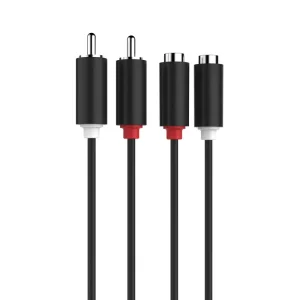
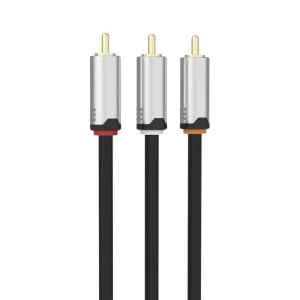
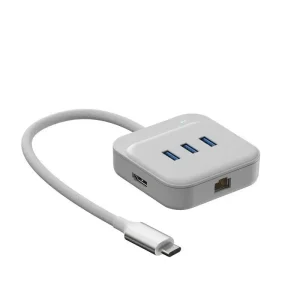
Explore our wider catalog of audio, video, and hub connectivity accessories manufactured to the same rigorous industrial specifications.
 Taichang Electronic