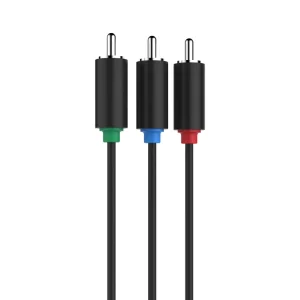
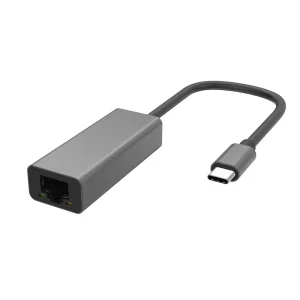
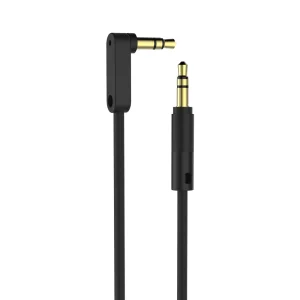
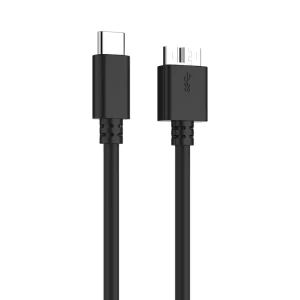
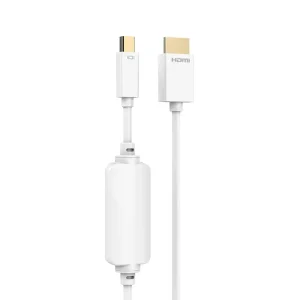
Engineered for signal integrity, reliable bandwidth distribution, and structural longevity.
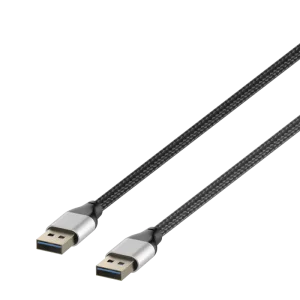
In modern commercial imaging, DisplayPort Multi-Stream Transport (MST) stands as a foundational mechanism for high-bandwidth displays. Introduced in DisplayPort 1.2, MST allows multiple independent video signals to run through a single DP output port. By multiplexing several data packet streams, MST enables display configurations such as daisy-chaining and hub distribution, bypassing the cabling limitations of legacy single-stream video architectures.
The operating principle of DisplayPort MST centers on the allocation of Virtual Channels. The raw bandwidth of a DisplayPort link (e.g., 21.6 Gbps for DP 1.2 HBR2, 32.4 Gbps for DP 1.4 HBR3, and up to 80 Gbps for DP 2.1 UHBR) is partitioned into 64 time slots. The MST routing engine distributes these time slots among connected displays based on resolution, refresh rate, and color space requirements. This allows developers to integrate high-density multi-display setups without installing secondary graphic engines, minimizing hardware overhead and hardware failure points.
Splits a single physical DisplayPort link into several independent logical streams with dynamic allocation based on real-time hardware capabilities.
Simplifies enterprise workstations by connecting monitors in series (PC to Monitor 1, Monitor 1 to Monitor 2), reducing cable runs and clutter.
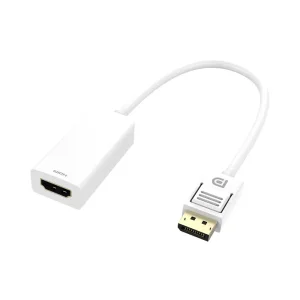
Enables conversion of DP MST outputs into multiple alternative interfaces (e.g., HDMI, DVI, or VGA) via dedicated onboard chipsets.
Enterprise IT procurement managers and system integrators face unique challenges when deploying DP MST hardware. Unlike consumer applications, commercial installations prioritize prolonged MTBF (Mean Time Between Failures), thermal dispersion under continuous load, and broad multi-vendor hardware compatibility. A single design failure can compromise critical operations, such as financial trading floors, security operations centers (SOCs), or medical telemetry stations.
For large-scale infrastructure deployments, key integration requirements include:
Tracing our origins from a specialized production facility in 1984 to a modern high-end R&D hub.
In 1984, Dongguan Taitron Electronics Limited., formerly known as Tonetron, was founded in Keelung, Taiwan. In 1993, it moved to the self-built independent production industrial park in Dalingshan Town, Dongguan City, China, and changed its name to Dongguan Taitron Electronics Limited.
38 years to pass professional video and audio peripheral equipment connection line manufacturing as the foundation, Gradually develop to the high-end audio and video cable data cable such as HDMI2.1 cable, DP2.0 cable, USB4 data cable, USB-C 3.1Gen2 data cable, high-power USB charging cable, 8K HD conversion cable, multi-functional Type-C expansion dock and other products research and development and manufacturing.
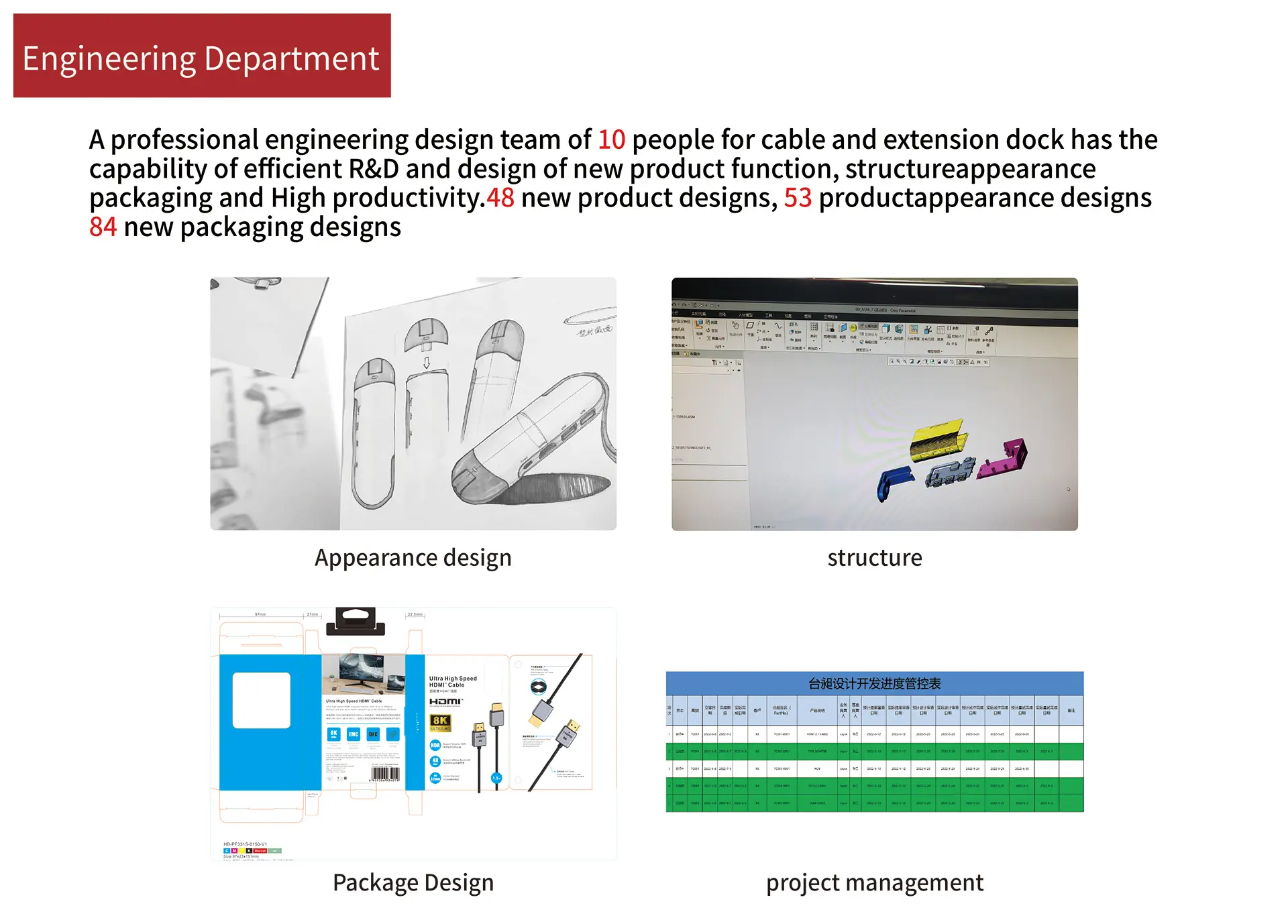
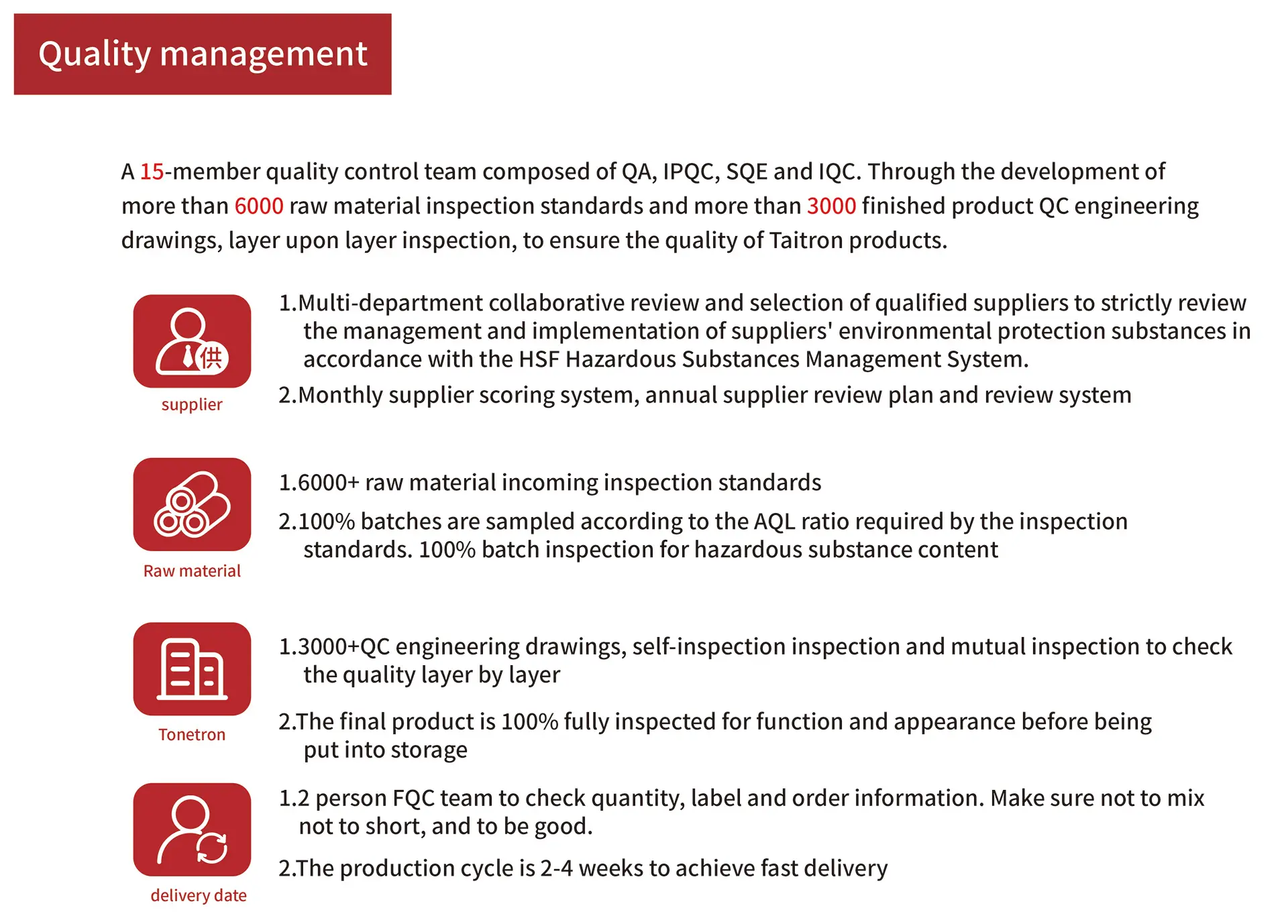

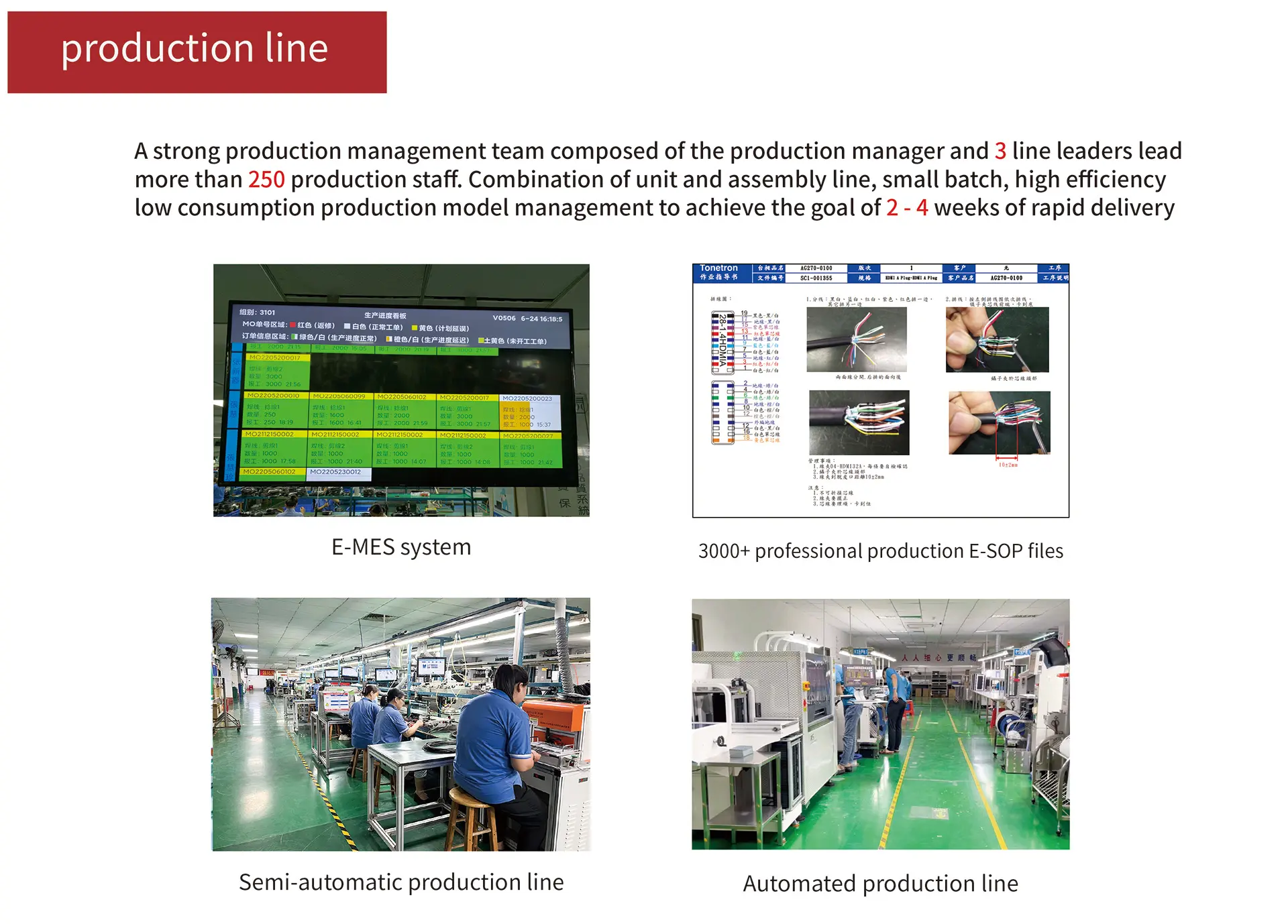
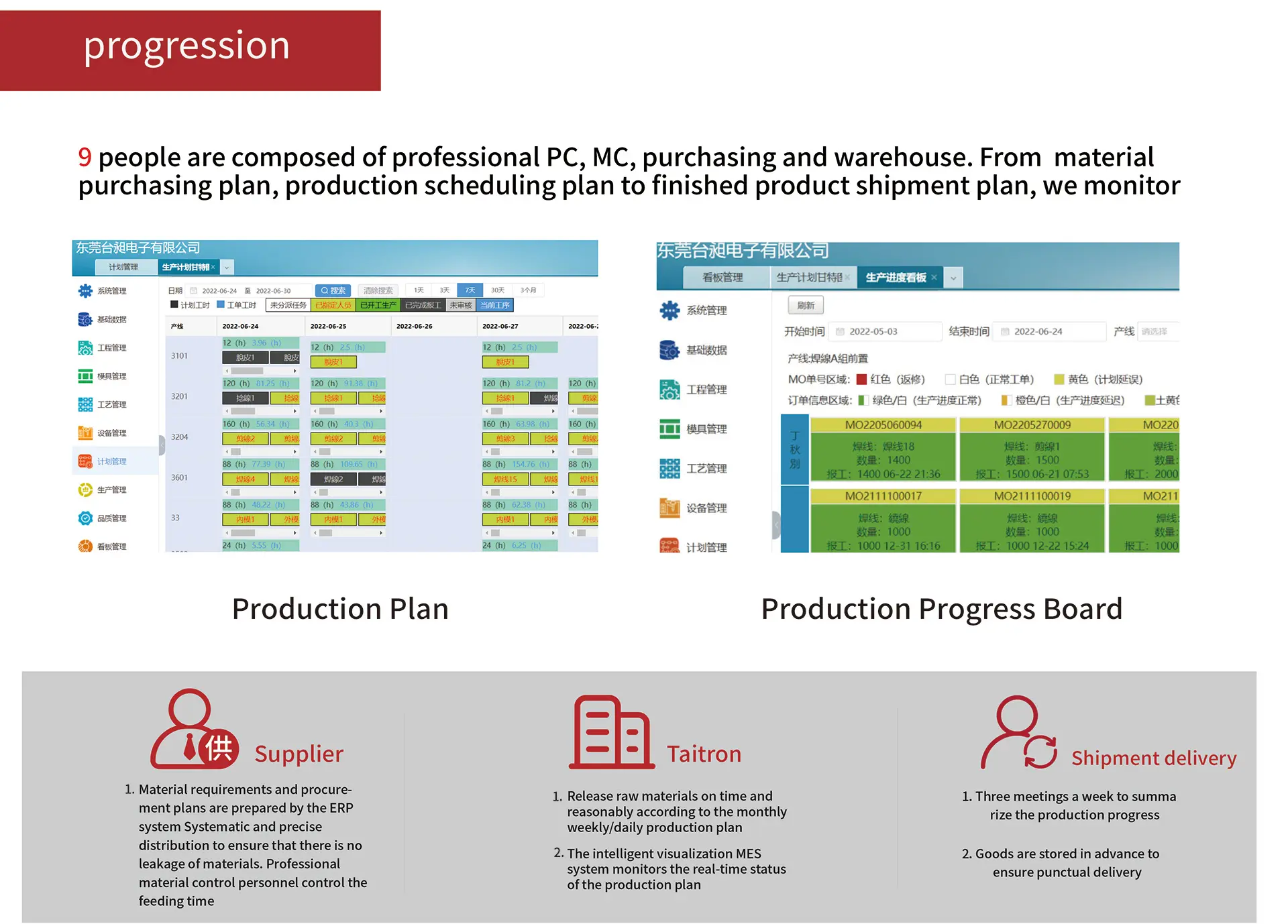
Operating out of Dalingshan Town, Dongguan City, China, Dongguan Taitron Electronics Limited utilizes a Factory 4.0 production philosophy. Our facility leverages automated assembly, real-time tracking, and optical automated inspection systems (AOI) to scale up production while minimizing dimensional and technical errors. By integrating our raw cable extrusion lines, multi-layer PCB design, and precision metal-stamping workshops, we maintain complete control over the entire supply chain.
For overseas wholesale buyers, this vertical integration translates to high supply chain stability. Many assembly operations rely on third-party components, exposing them to market shortages and inconsistent wire configurations. In contrast, Taitron manages the entire production cycle from copper drawing and shielding braiding to final enclosure overmolding. This vertical integration allows us to keep lead times stable and protect our international partners from supply disruptions.
Wholesale pricing for DisplayPort MST hubs, adapters, and splitters is determined by the underlying chipset, port selection, and manufacturing certifications. Enterprise buyers must balance initial hardware costs against long-term maintenance overhead.
| Product Category | Primary Chipsets Used | Max Resolution Support | Target Application | Key Price Drivers |
|---|---|---|---|---|
| DP to HDMI Adapters | Synopsys, Parade, Realtek | 1080p @ 60Hz to 4K @ 60Hz | SME Workstations & Legacy Displays | Active vs. Passive Conversion, Shell Material |
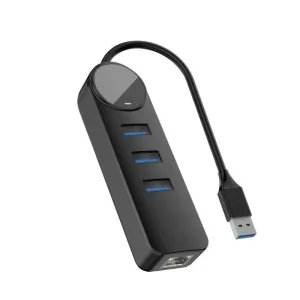
| DP MST Hubs (1-to-3 Splitters) | STMicroelectronics, MegaChips | 3x 4K @ 60Hz (DP 1.4 DSC) | Financial Trading & Command Centers | DSC Support, Power Input Type, ESD Protection |
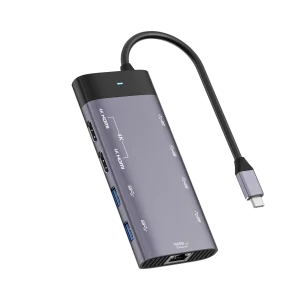
| USB-C MST Multi-port Docks | Realtek, VIA Labs, Synopsys | Dual 4K @ 60Hz + USB Data + PD | Executive Offices, Engineering Workstations | Power Delivery Rating, Aluminum Enclosures |
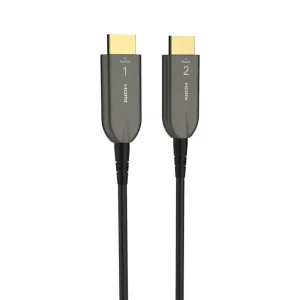
| Active Optical Cables (AOC) | Silicon Line, II-VI Incorporated | 4K @ 120Hz to 8K @ 60Hz | Medical Imaging, Server Rooms, Arenas | Optical Engine Grade, Shielding Layers |
When evaluating suppliers, analyzing unit costs in isolation can be misleading. High-speed signal transmission requires strict adherence to geometric tolerances and pure copper conductors. Low-cost alternatives often save on materials by reducing copper wire gauges or using lower-grade plastic housings, which can lead to signal dropouts, screen flicker, and failures in high-interference commercial settings.
DisplayPort MST technology is used across a wide range of commercial sectors. By distributing multiple independent visual streams through a single interface, it simplifies system architecture and reduces deployment costs.
In centralized security operations centers (SOCs) and emergency dispatch rooms, operators must monitor multiple live telemetry streams concurrently. Installing separate computers for each monitor increases power consumption, heat generation, and space requirements. DP MST splitters allow operators to run up to four HD displays from a single low-footprint rack server, simplifying display management and reducing installation complexity.
Medical imaging systems, such as MRI and CT console setups, require dual-monitor displays to show patient records alongside high-fidelity diagnostic scans. In these environments, signal dropouts are not acceptable. Our active DP to HDMI adapters and MST hubs feature multi-layered shielding to prevent interference from nearby clinical instruments, ensuring steady, accurate signal transmission.
Financial analysts and traders rely on multi-monitor configurations to track market data, live feeds, and execution windows simultaneously. High-reliability MST hubs allow traders to daisy-chain three to four 1080p or 4K monitors directly from a single workstation GPU output, keeping desks organized and cabling simple.
Modern retail hubs, airports, and transport terminals use multi-screen video walls to display public notices and advertisements. Using individual video cables for each screen over long distances can be costly and difficult to maintain. Using active DP MST over USB-C or optical cables allows system integrators to route high-resolution content to multiple daisy-chained screens from a single central media player, simplifying installation and maintenance.
Technical inquiries answered by our engineering and product development departments.
SST (Single-Stream Transport) mode, introduced in DisplayPort 1.0, broadcasts a single video stream to connected screens, meaning all linked monitors display mirrored images. MST (Multi-Stream Transport) mode, introduced in DisplayPort 1.2, packetizes the video data to send multiple independent video streams through a single port, enabling extended desktop configurations across multiple monitors.
The lack of MST support on macOS is a software limitation in Apple's OS drivers, which restrict external connections to Single-Stream Transport (SST). When using an MST hub on a Mac, the connected external monitors will only mirror each other. To achieve extended desktop displays on Mac hardware, you must use alternative technologies like Thunderbolt daisy-chains or active USB-to-video converters (e.g., DisplayLink).
Display Stream Compression (DSC) is a visually lossless compression standard that allows higher-resolution signals to fit within existing bandwidth limits. With DSC enabled on a DisplayPort 1.4 link, an MST hub can support up to three 4K monitors at 60Hz. Without DSC, the same DP 1.4 connection is limited to dual 4K monitors at 30Hz or a single 4K monitor at 60Hz.
We use Time-Domain Reflectometry (TDR) to test for impedance anomalies along the wire, network analyzers to measure attenuation and crosstalk, and mechanical tests for flex and pull resistance. This testing regimen helps ensure our cables deliver consistent performance in demanding commercial and industrial environments.
Engineered to meet international compliance standards (CE, FCC, RoHS) for industrial applications.
 Taichang Electronic