Engineered for maximum signal integrity, ultra-low insertion loss, and cross-platform compatibility.
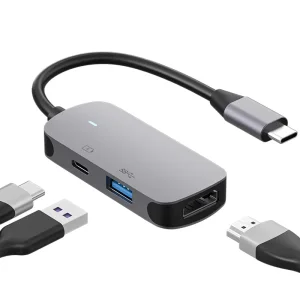
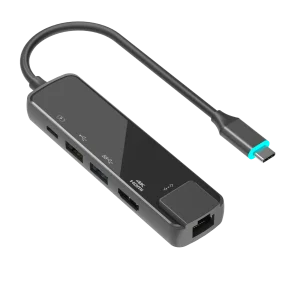
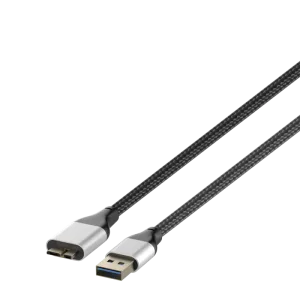
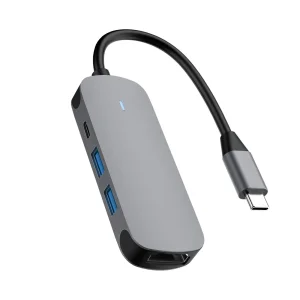
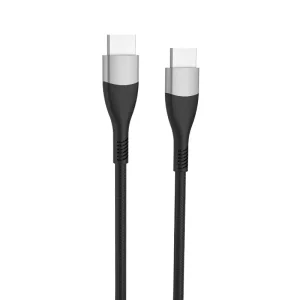
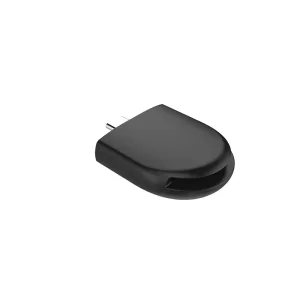
Unpacking the technical requirements, design pipelines, and supply-chain metrics for enterprise-level deployments.
In the modern era of edge computing, high-definition broadcast media, autonomous telemetry, and smart manufacturing, data transfer performance remains a critical bottleneck. As digital storage media speeds advance—surpassing legacy constraints with UHS-II, UHS-III, and SD Express (utilizing PCIe and NVMe protocols)—the hardware bridging the physical storage cards to host computers must keep pace. The USB C to SD Card Reader has transitioned from a basic consumer accessory into a highly specialized industrial interface.
Dongguan Taitron Electronics Ltd., utilizing over 38 years of research and production expertise, provides this comprehensive overview of high-speed data transmission standards, B2B procurement benchmarks, and manufacturing capabilities. This whitepaper analyzes the mechanical, electrical, and thermal parameters required for reliable connectivity, demonstrating why global distributors and industrial integrators choose certified manufacturers to safeguard data integrity and secure long-term component supply chains.
"Data transfer reliability is not merely about peak transfer speeds; it is defined by sustained performance under variable thermal loads, robust electrostatic discharge (ESD) shielding, and mechanical durability designed for thousands of connection cycles."
Deciphering the underlying technology of premium Type-C card readers, controllers, and differential trace routing.
Modern card readers support multiple bus interface configurations. While UHS-I employs a single row of pins running at up to 104 MB/s, UHS-II introduces a second row of interface pins, enabling Full-Duplex transfers at 156 MB/s or Half-Duplex transfers up to 312 MB/s.
The reliability of a USB-C card reader depends on its controller chip (e.g., Genesis Logic, Realtek, or ASMedia). The controller handles protocol translation, bad-block management, and dynamic power distribution.
USB-C operates at high data rates that can interfere with wireless networks (like 2.4GHz Wi-Fi). Effective shielding is essential to prevent signal degradation and protect components from electrical surges.
For engineering departments planning hardware integration or bulk custom procurement, the table below highlights the performance indicators across different generations of card reader architectures designed by Taitron:
| Bus Standard | Physical Interface | Theoretical Max Speed | Typical Real-World Speed | Primary Target Application |
|---|---|---|---|---|
| SD 3.0 (UHS-I) | Single Row Pins | 104 MB/s | 90 - 95 MB/s | Consumer DSLRs, GPS Telemetry, IoT Edge Devices |
| SD 4.0 (UHS-II) | Dual Row Pins | 312 MB/s | 250 - 280 MB/s | 4K Cinema Cameras, Professional Field Recording |
| SD 7.0 (SD Express) | PCIe Gen3 x1 + NVMe | 985 MB/s | 820 - 870 MB/s | 8K RAW Video Capture, Machine Vision, Industrial Data Logging |
| SD 8.0 (SD Express) | PCIe Gen4 x2 + NVMe | 3940 MB/s | 2800 - 3200 MB/s | High-Speed Computing, Automotive ADAS Systems |
In 1984, Dongguan Taitron Electronics Limited., formerly known as Tonetron, was founded in Keelung, Taiwan. Underpinning its early operations with an emphasis on engineering excellence and raw cable design, the enterprise established a strong reputation for precision. In 1993, to accommodate expanding global export demands, the company moved to a self-built independent production industrial park in Dalingshan Town, Dongguan City, China, changing its official operating name to Dongguan Taitron Electronics Limited.
For over 38 years, Taitron has focused on the manufacturing of professional video and audio peripheral equipment connection lines. This foundation paved the way for advanced research and development in high-end data transmission media, including HDMI 2.1, DisplayPort 2.0, USB4, USB-C 3.1 Gen2 cables, high-power charging delivery connections, 8K HD converters, and multi-functional Type-C expansion docks and SD card readers.
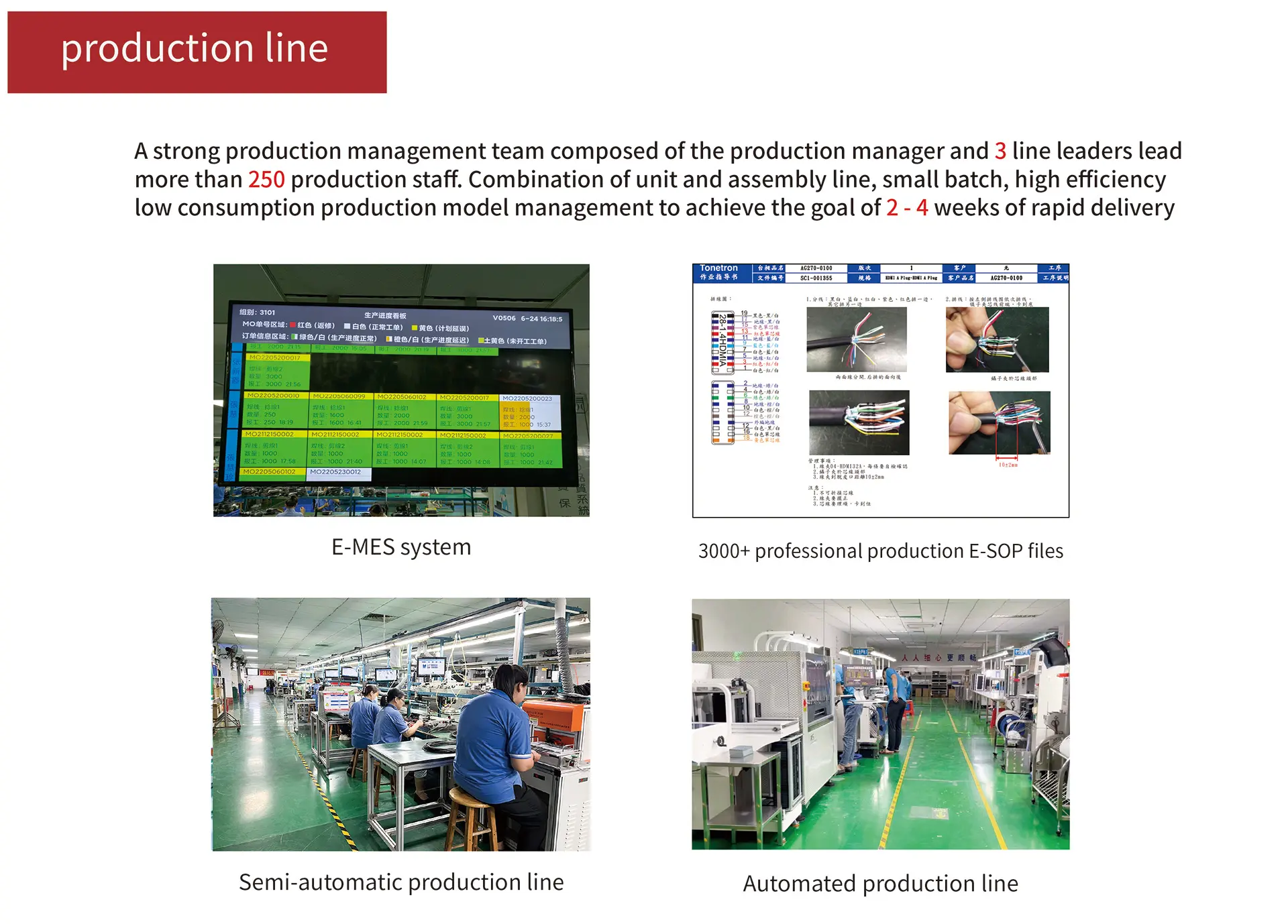
Taitron offers vertically integrated production capabilities under one roof. From raw material copper drawing, wire extrusion, and connector shell molding to automated Surface Mount Technology (SMT) and comprehensive electronic testing, every step is managed on-site. This structural setup allows us to maintain strict quality standards, competitive pricing, and flexible customization capabilities for OEM and ODM clients worldwide.
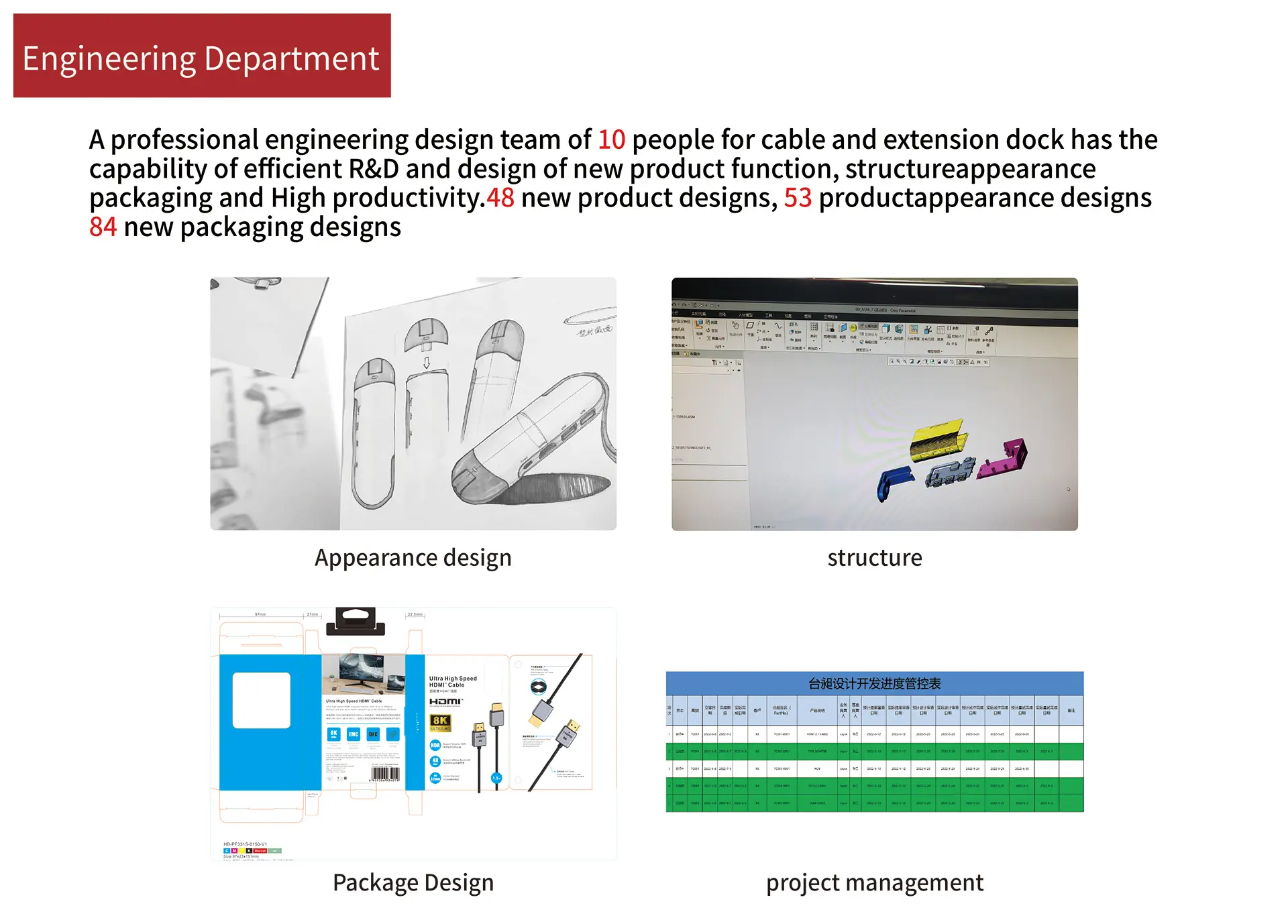 Engineering Department
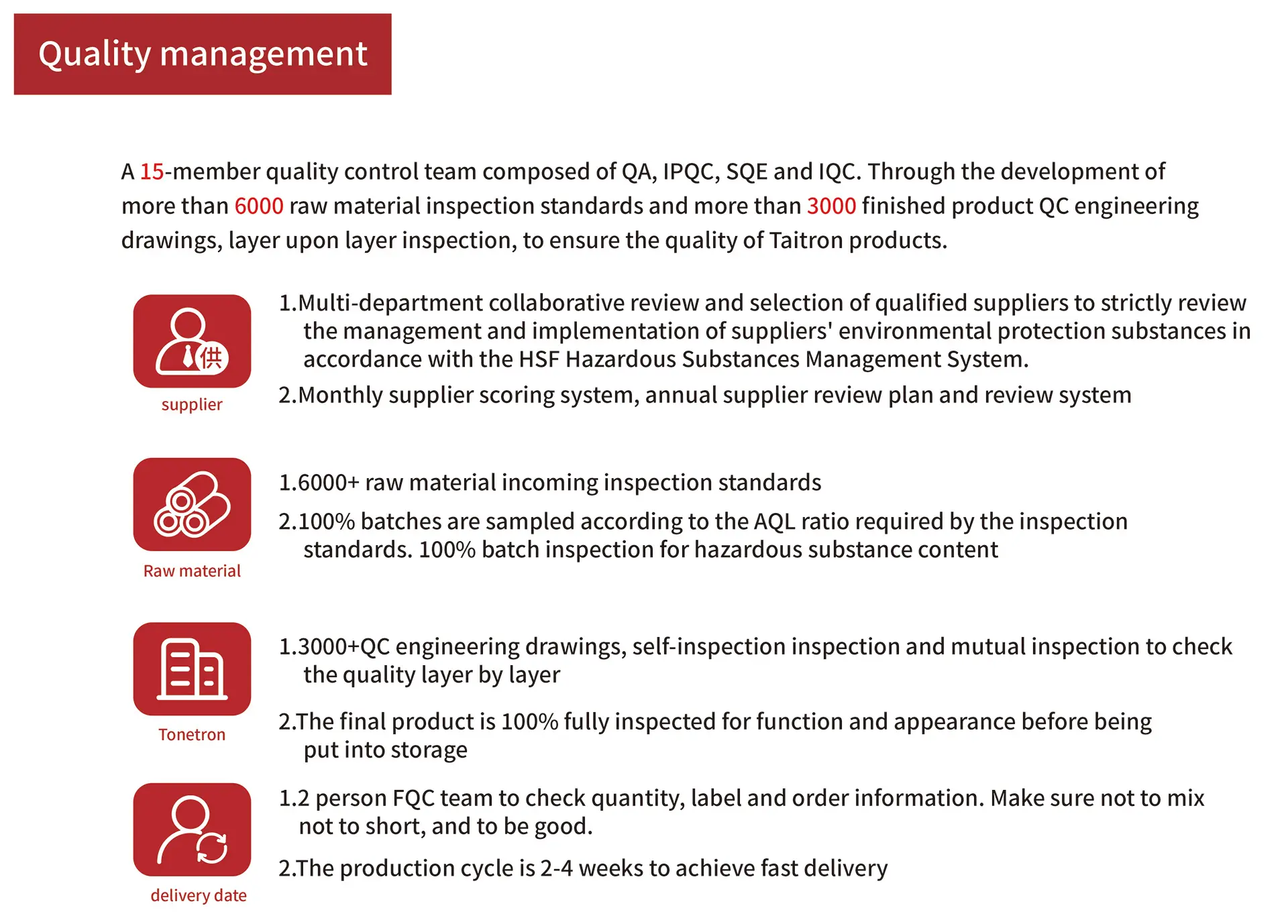 Quality Management
 Production Assembly
 Cable Extrusion
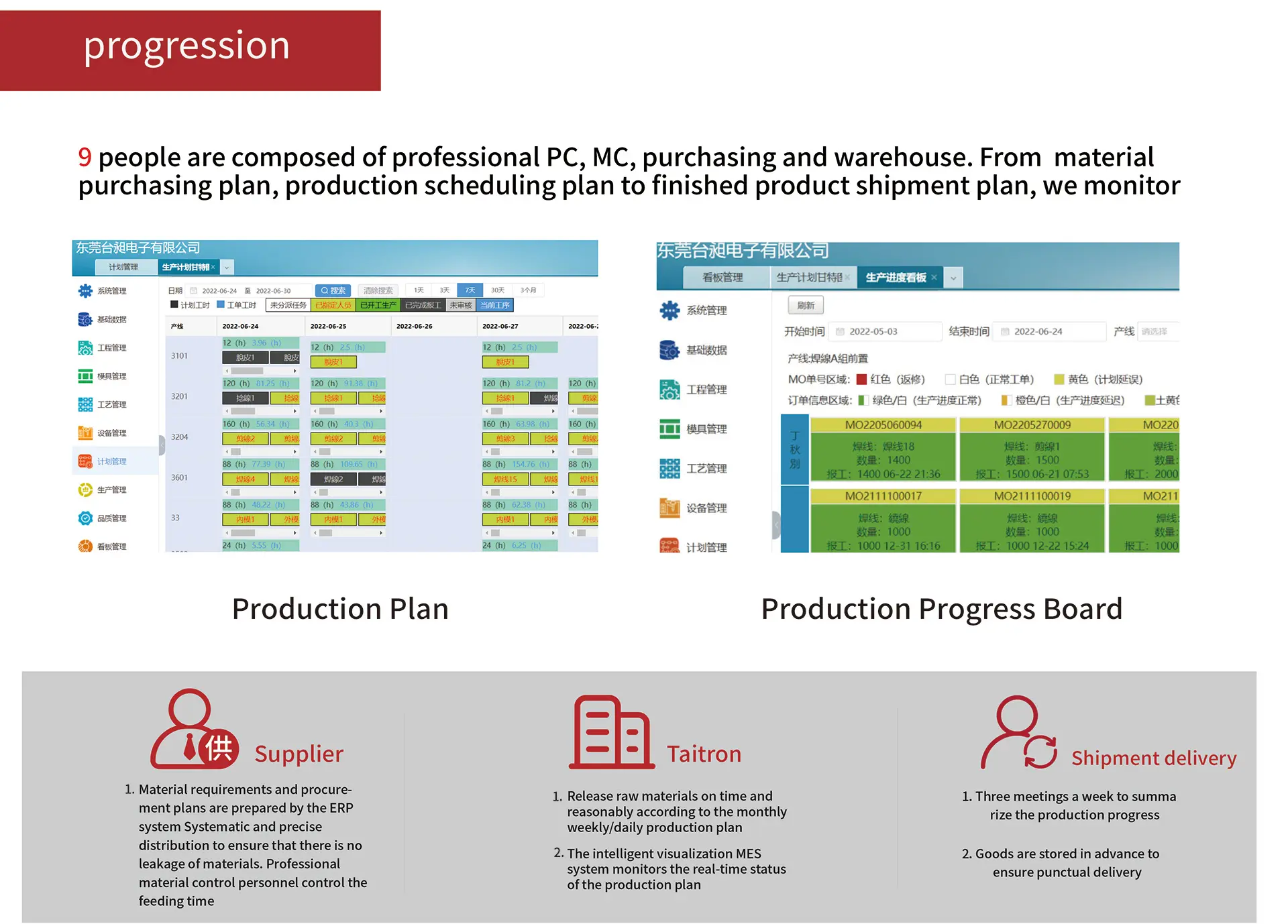 Testing & Verification
How enterprise and commercial systems utilize USB-C SD card readers across key global markets.
Logistics and autonomous driving fleets collect high-volume telemetry, LIDAR, and drive camera video data on local SD cards during operation. At distribution hubs, field personnel use ruggedized USB-C SD readers to quickly transfer this data directly to local edge servers for processing and model training.
Precision farming systems use drones equipped with multi-spectral cameras to capture crop health data. After drone retrieval, operators connect high-capacity SD cards via USB-C readers to ruggedized field tablets, enabling rapid local analysis of vegetation indices and water requirements.
Medical imaging devices (such as portable ultrasound scanners) store high-resolution DICOM files on internal SD cards. Hospital workstations and medical tablets access this diagnostic imaging data via EMI-shielded USB-C SD card readers, maintaining clinic-wide regulatory compliance and data integrity.
Dongguan is a global hub for consumer electronics manufacturing, offering deep supply chain integration and high efficiency. Operating out of our Dalingshan facility, Dongguan Taitron Electronics Ltd. leverages this ecosystem to streamline the sourcing of high-grade copper, premium plastics, structural metals, and raw PCBs.
Our localized supply ecosystem keeps lead times short and allows us to scale production up or down in response to fluctuating market demands. Rather than outsourcing secondary processes, our integrated operations keep drawing, shielding, extrusion, SMT assembly, and final QC in-house. This centralized control reduces logistics bottlenecks, lowers costs, and ensures consistent quality.
For global importers, this localized control minimizes production delays and ensures reliable supply. Through long-term agreements with component suppliers and chip fabricators, Taitron helps B2B clients manage market supply fluctuations, ensuring stable delivery schedules even during chip shortages or global shipping bottlenecks.
Understanding the international compliance frameworks and rigorous testing routines at Taitron.
To qualify for distribution in highly regulated markets such as the European Union, North America, Japan, and Oceania, USB-C peripherals must pass a strict battery of certification tests. Dongguan Taitron Electronics Ltd. designs all active components, PCB layers, and connectors to meet these international regulatory requirements. We verify conformity through independent testing labs, providing full CE, FCC, RoHS, and REACH documentation.
Our quality management program runs throughout the production process:
Addressing common questions about architecture, customization, and bulk ordering.
Explore our full line of connectivity hardware, built to industry standards.
 Taichang Electronic