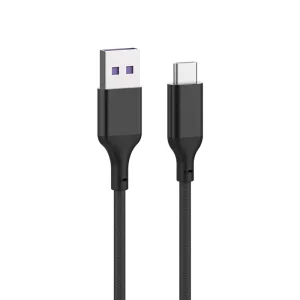
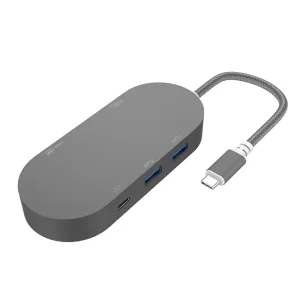
Explore our high-performance adapters, docks, and connection cables engineered for reliable signal integrity and optimal deployment speeds.
Years of Engineering Heritage
Units Delivered Globally
Next-Gen Ethernet Support
ISO & CE Certified Auditing
Analyzing industry trends, technical architectures, global procurement metrics, and the roadmap toward multi-gigabit wired infrastructure.
In an increasingly digitized workspace, the demand for stable, high-throughput, and low-latency network connections has never been more critical. The Type C USB Ethernet Adapter has evolved from a simple convenience accessory into an essential component of enterprise infrastructure. With modern ultrabooks and enterprise-grade thin clients systematically omitting RJ45 ports to achieve slimmer profiles, organizations face a connectivity paradox: they require the flexibility of thin laptops without compromising the security, reliability, and sheer speed of wired local area networks (LANs).
As a leading ODM Type C USB Ethernet Adapter Manufacturer & Supplier, we recognize that procurement and hardware design involve more than just matching specifications on a datasheet. It requires deep compliance with international standards, optimization of physical layer (PHY) components, thermal dissipation engineering, and seamless compatibility across hybrid operating environments.
The market for USB-C Ethernet controllers is experiencing a major transition driven by two primary forces: the rise of 2.5GBASE-T / 5GBASE-T Ethernet standards and the universal adoption of USB4 and Thunderbolt interfaces. While standard Gigabit Ethernet (1000Mbps) remains the baseline for basic office use, corporate data centers, creative studios, and engineering environments are transitioning to 2.5Gbps and 5Gbps architectures. This transition leverages existing Category 5e and Category 6 copper cabling while eliminating bandwidth bottlenecks for network-attached storage (NAS) backups, video editing, and complex local computations.
Furthermore, energy conservation regulations (such as IEEE 802.3az Energy-Efficient Ethernet) have become standard requirements for large-scale enterprise deployments. Our adapters are designed to dynamically adjust power consumption based on network traffic load and cable length, helping multinational corporations meet their Environmental, Social, and Governance (ESG) targets by minimizing unnecessary power consumption across hundreds of thousands of active nodes.
We support hardware-level configuration of vendor ID (VID), product ID (PID), and unique MAC address ranges directly on the controller ROM (e.g., Realtek RTL8153, ASIX AX88179A).
Full support for PXE Boot (Preboot Execution Environment), Wake-on-LAN (WoL), MAC Address Pass-Through (MAPT), and IEEE 802.1Q VLAN tagging for secure network topologies.
Our enclosures feature advanced aluminum housings paired with custom thermal pads to maintain core component temperatures well below thermal throttling limits during sustained loads.
Enterprise procurement professionals and global hardware importers must navigate challenges related to product durability, compatibility, and consistency of supply. Off-the-shelf consumer adapters often fail within months under continuous office use due to poor strain relief, low-grade controller chips, or insufficient EMI (Electromagnetic Interference) shielding. When deploying tens of thousands of endpoints, high failure rates quickly erode cost savings by increasing IT support tickets.
To address this, our ODM design cycle targets these common vulnerabilities:
Wired Type-C networking is an essential enabler across several key industries:
From our origins in Taiwan to our state-of-the-art independent production industrial park in Dongguan, China.
Founded in 1984 as Tonetron in Keelung, Taiwan, our company built its foundation on manufacturing high-quality audio and video peripheral connection lines. Driven by the rapid growth of the global hardware market, we expanded our operations and in 1993, relocated to a self-built, independent production industrial park in Dalingshan Town, Dongguan City, China, officially changing our name to Dongguan Taitron Electronics Limited.
With 38 years of experience in high-precision cable manufacturing, we have systematically expanded our capabilities. Today, we specialize in the research, development, and manufacturing of advanced audio/video cables and data interfaces, including HDMI 2.1, DisplayPort 2.0, USB4, USB-C 3.1 Gen2, high-power USB charging cables, 8K video adapters, and multifunctional Type-C docking stations.
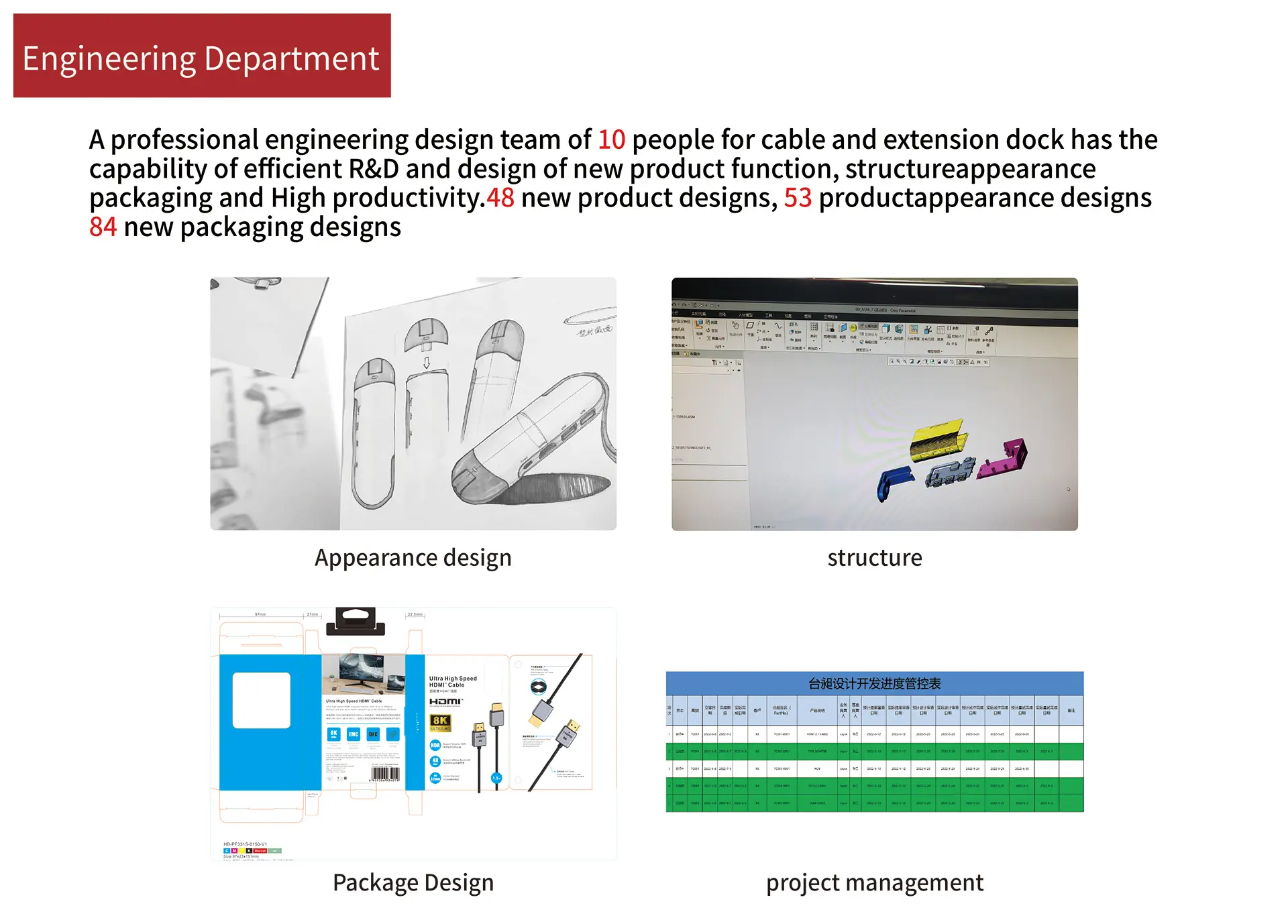
Our vertically integrated production facility allows us to manage the entire product lifecycle in-house—from initial industrial design and tooling creation to injection molding, automated assembly, testing, and final packaging. This structure ensures strict quality control and predictable lead times for our global partners.
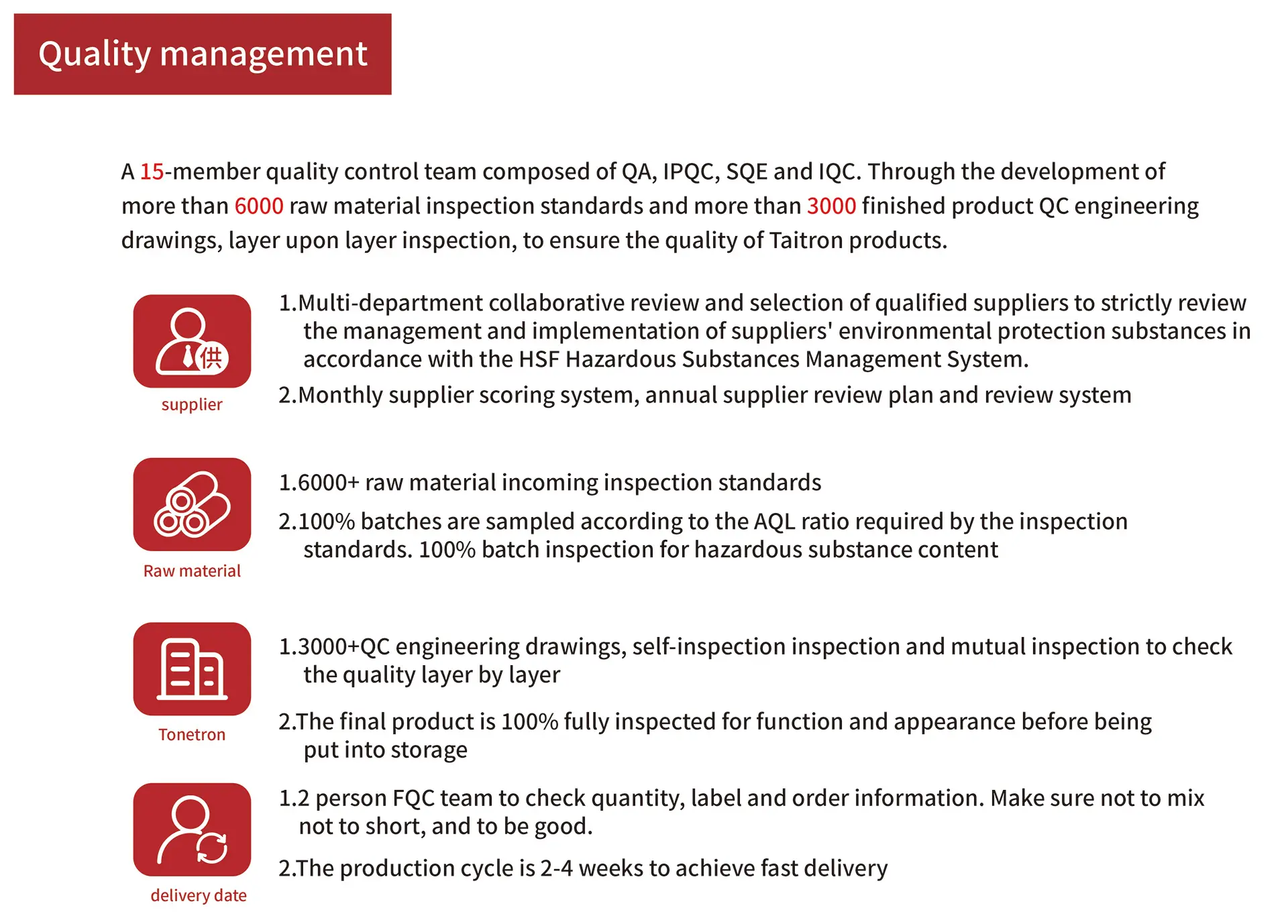

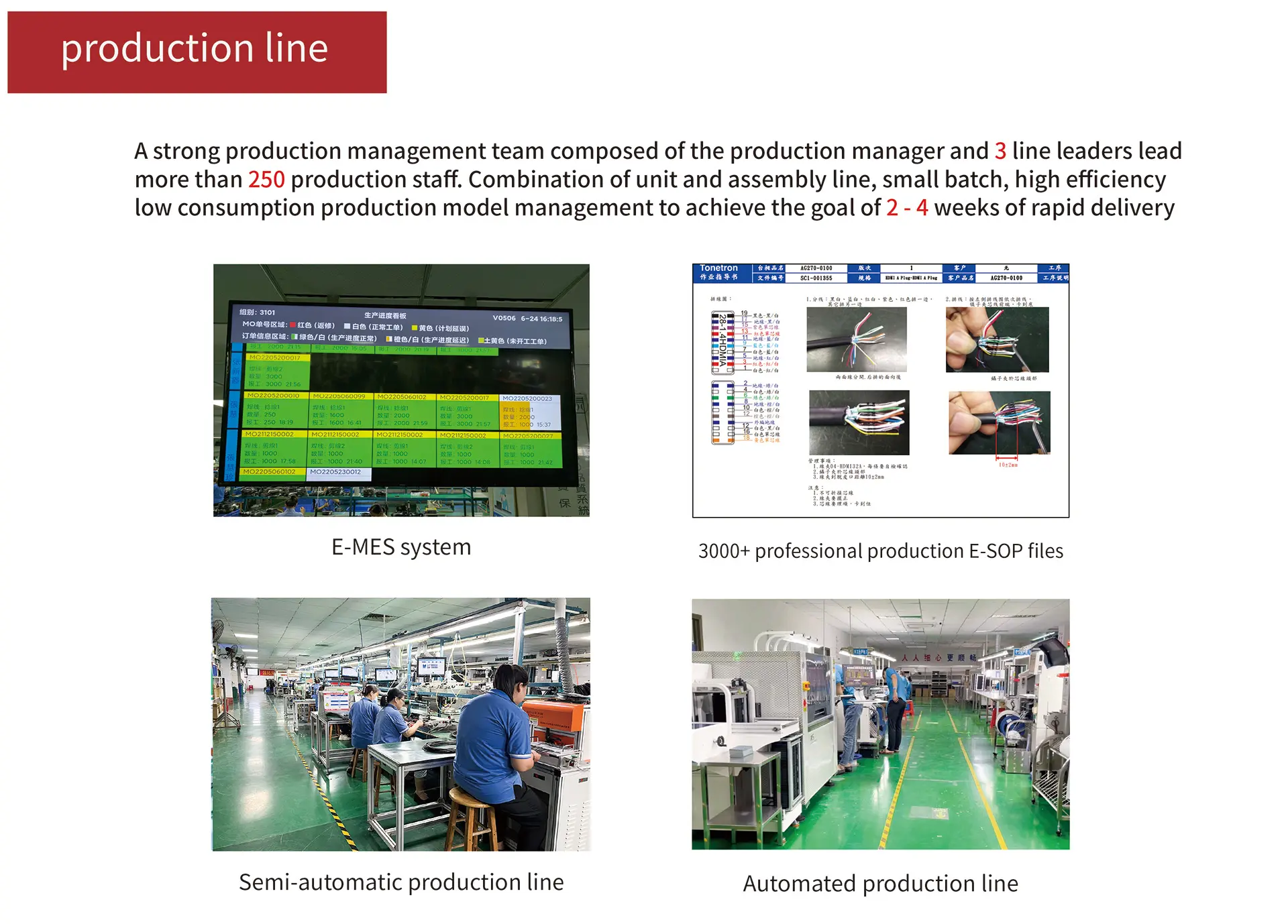
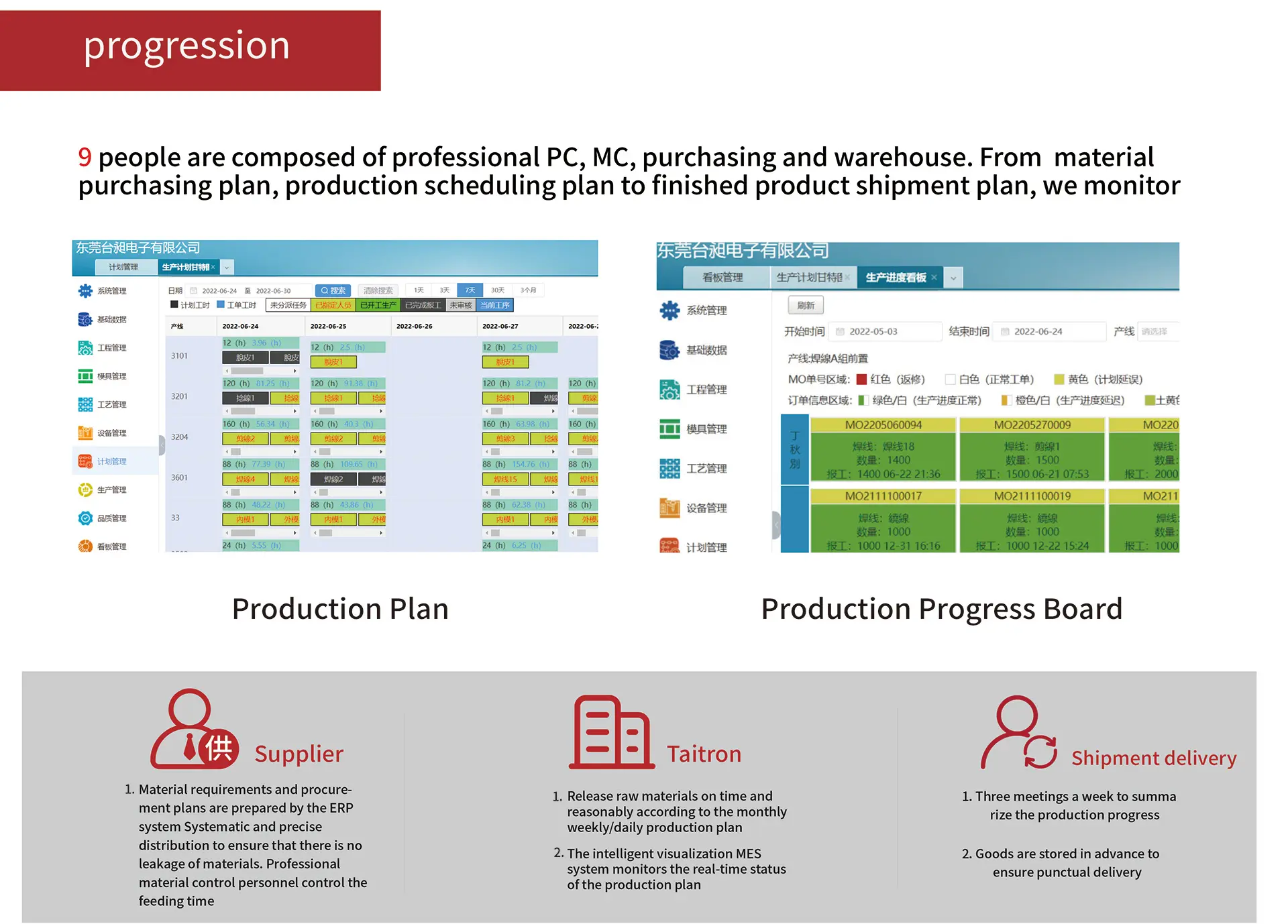
A reliable connection requires adherence to international standards. At Dongguan Taitron Electronics, we employ a multi-layered quality control framework that spans raw materials through to final testing:
As networks evolve, we continue to align our R&D with emerging communication technologies. Our technical roadmap focuses on three main areas:
Universal Interface Consolidation: We are designing the next generation of our adapters to natively support USB4 and Thunderbolt 4 protocols. This allows our adapters to operate within high-speed daisy-chained workstation configurations without introducing latency or network jitter.
Thermal Efficiency through GaN Integration: To support multi-port designs and high-power delivery pass-through (up to 100W/140W), we are integrating Gallium Nitride (GaN) components. This technology reduces heat generation, allowing for smaller enclosures while maintaining high power transfer rates.
Sustainable Materials: In response to increasing environmental regulations and corporate ESG goals, we are actively transitioning our product housings to use post-consumer recycled (PCR) plastics and bio-based plastics, without compromising structural integrity or electrical performance.
Technical clarifications for hardware buyers, engineers, and supply chain managers.
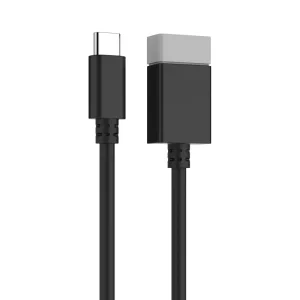
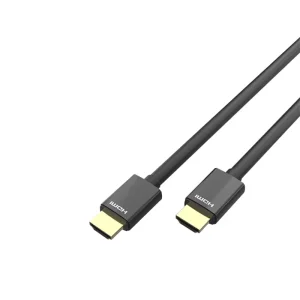
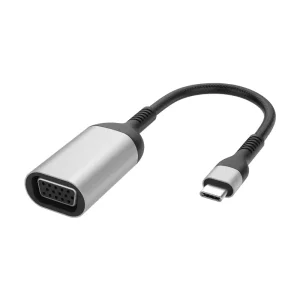
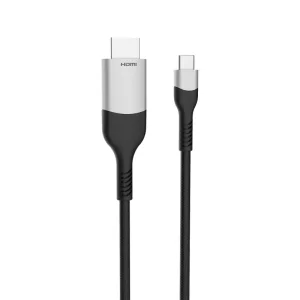
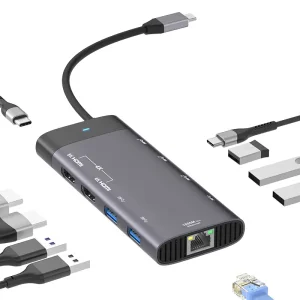
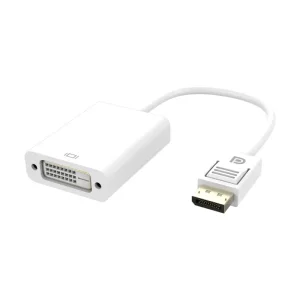
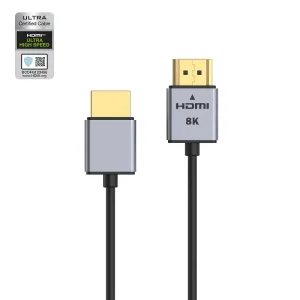
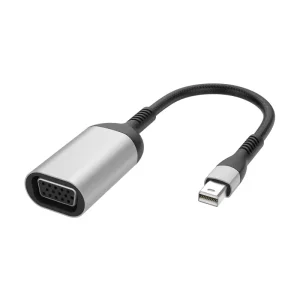
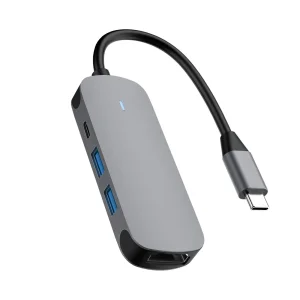
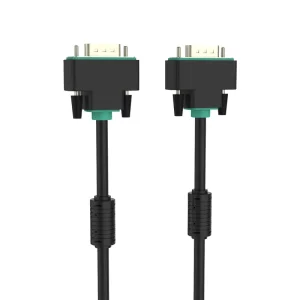
Complementary connectivity devices, including High-Speed HDMI, DisplayPort, VGA, and multifunctional docking hubs designed for modern workstations.
 Taichang Electronic