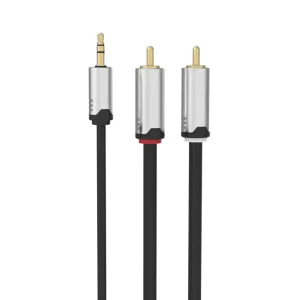
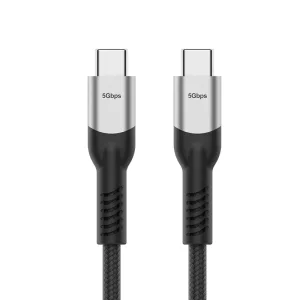
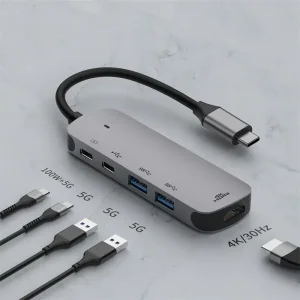
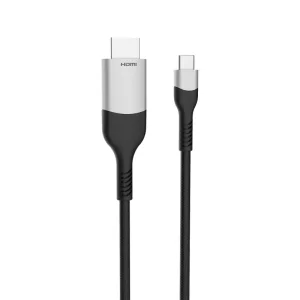
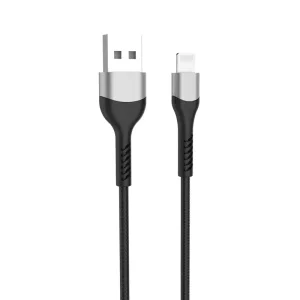
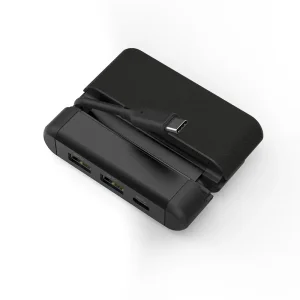
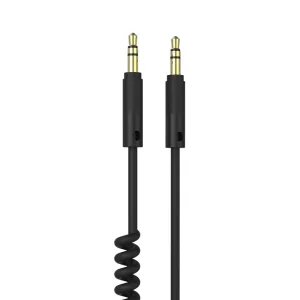
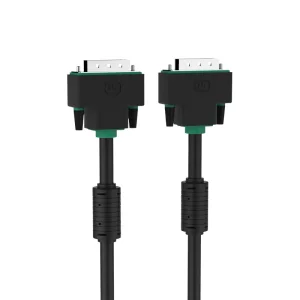
Explore our industrial-grade adapters, performance cables, and advanced docking systems engineered for global supply chains.
In the contemporary digital landscape, corporate workspaces, control centers, and high-frequency trading terminals rely heavily on multi-monitor configurations to ensure operational efficiency. Multi-Stream Transport (MST), an advanced technology standardized by the Video Electronics Standards Association (VESA) for DisplayPort connections, has emerged as the cornerstone of multi-display setups. An MST hub enables a single digital video output source (typically a USB-C or DisplayPort terminal) to distribute uncompressed, high-definition video signals across multiple independent displays. This eliminates the clutter of traditional cable routing and significantly reduces hardware deployment overhead.
For B2B procurement managers, sourcing OEM MST hubs requires a deep understanding of technical compliance, bandwidth allocation logic, and manufacturing sustainability. A trusted OEM hub MST manufacturer must deliver products that survive rigorous thermal demands, prevent signal attenuation, and guarantee cross-platform compatibility across Windows, Chrome OS, and macOS platforms. With our deep experience dating back to 1984, we address this demand through our cutting-edge manufacturing lines in Dongguan, China.
In 1984, Dongguan Taitron Electronics Limited., formerly known as Tonetron, was founded in Keelung, Taiwan. In 1993, it moved to the self-built independent production industrial park in Dalingshan Town, Dongguan City, China, and changed its name to Dongguan Taitron Electronics Limited.
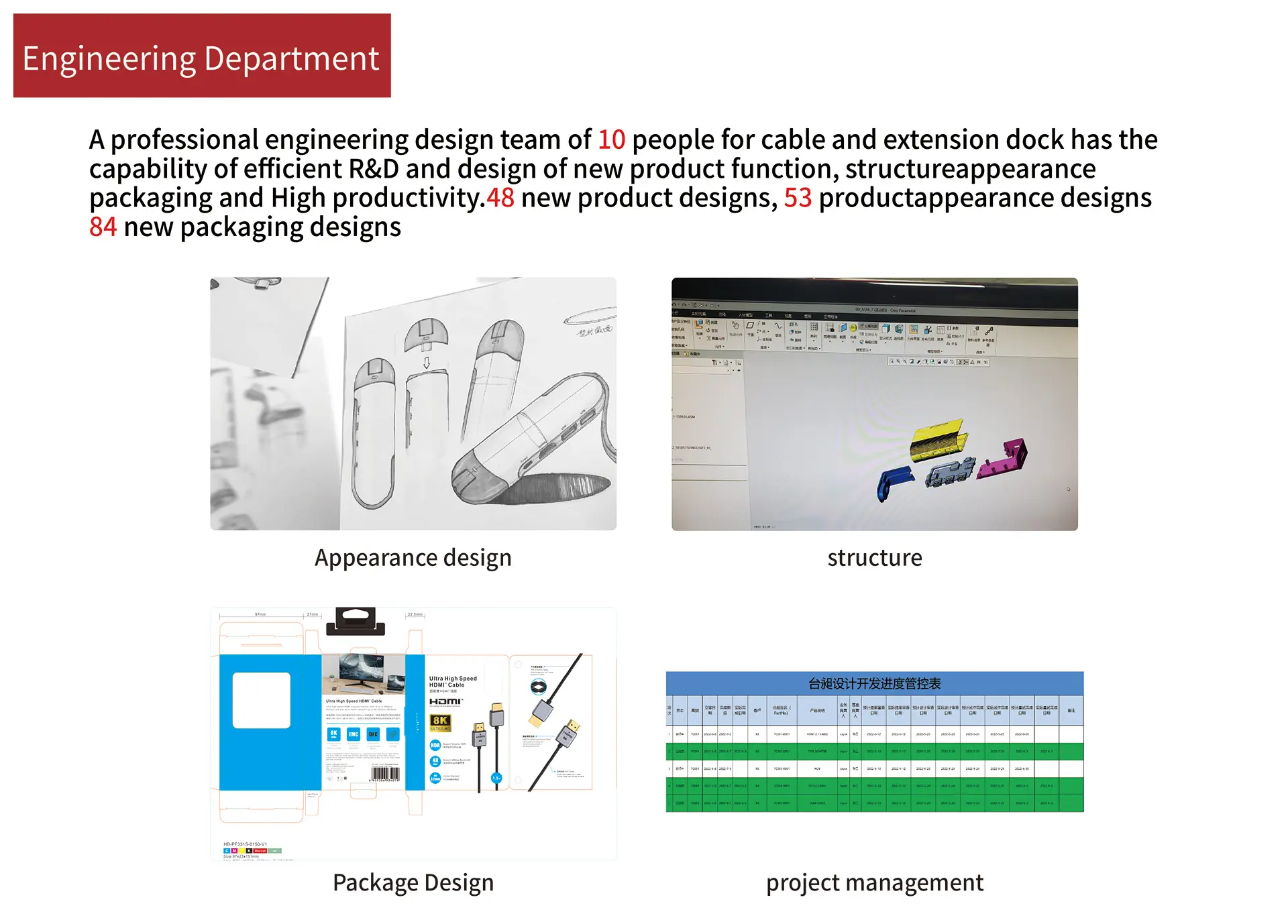
38 years to pass professional video and audio peripheral eguipment connection line manufacturing as the foungation, Gradually develop to the high-end audio and video cable data cable such as HDMI2.1 cable, DP2.0 cable, USB4 data cable, USB-C 3.1Gen2 data cable, high-power USB charging cable, 8K HD conversion cable, multi-functional Type-C expansion dock and other products research and development and manufacturing.
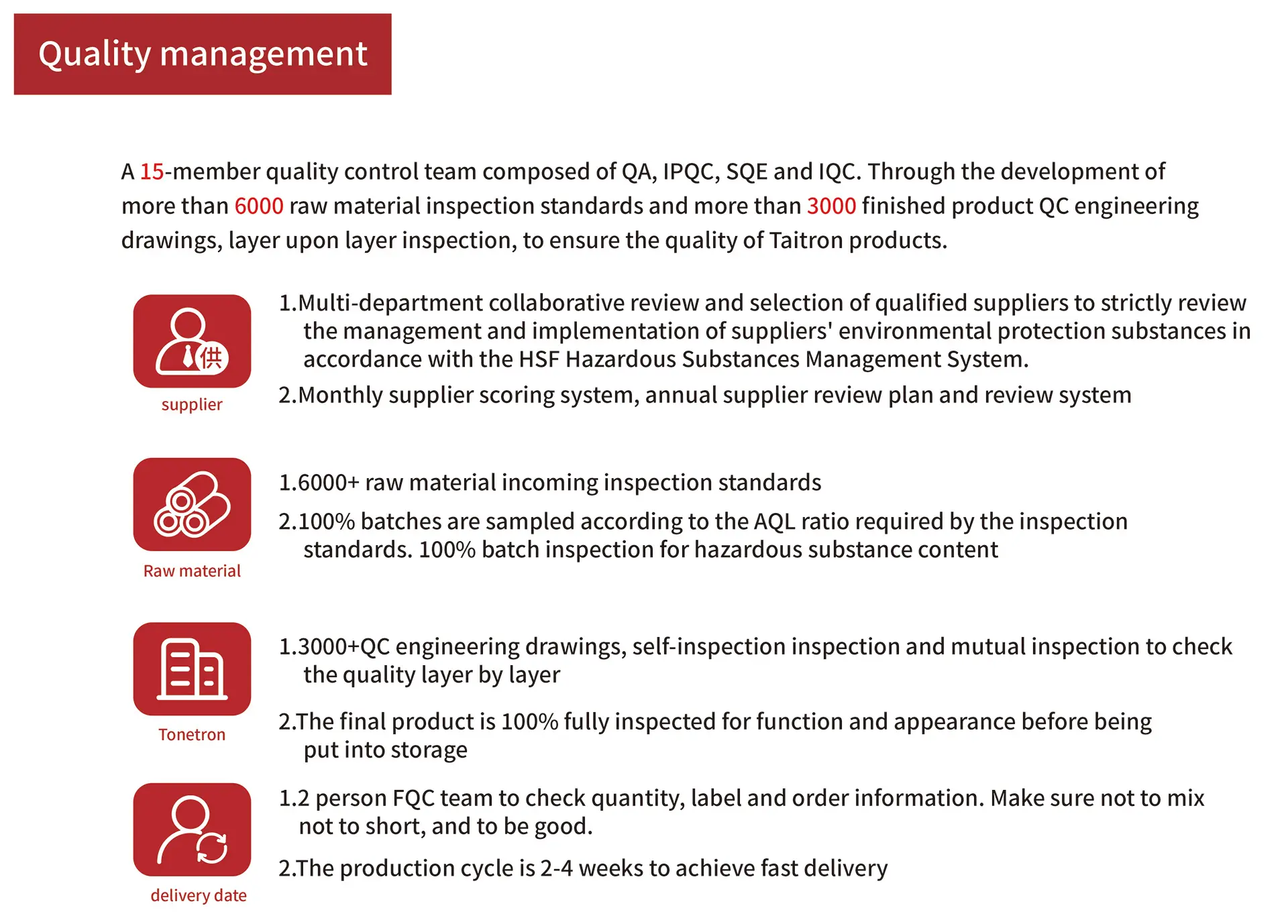
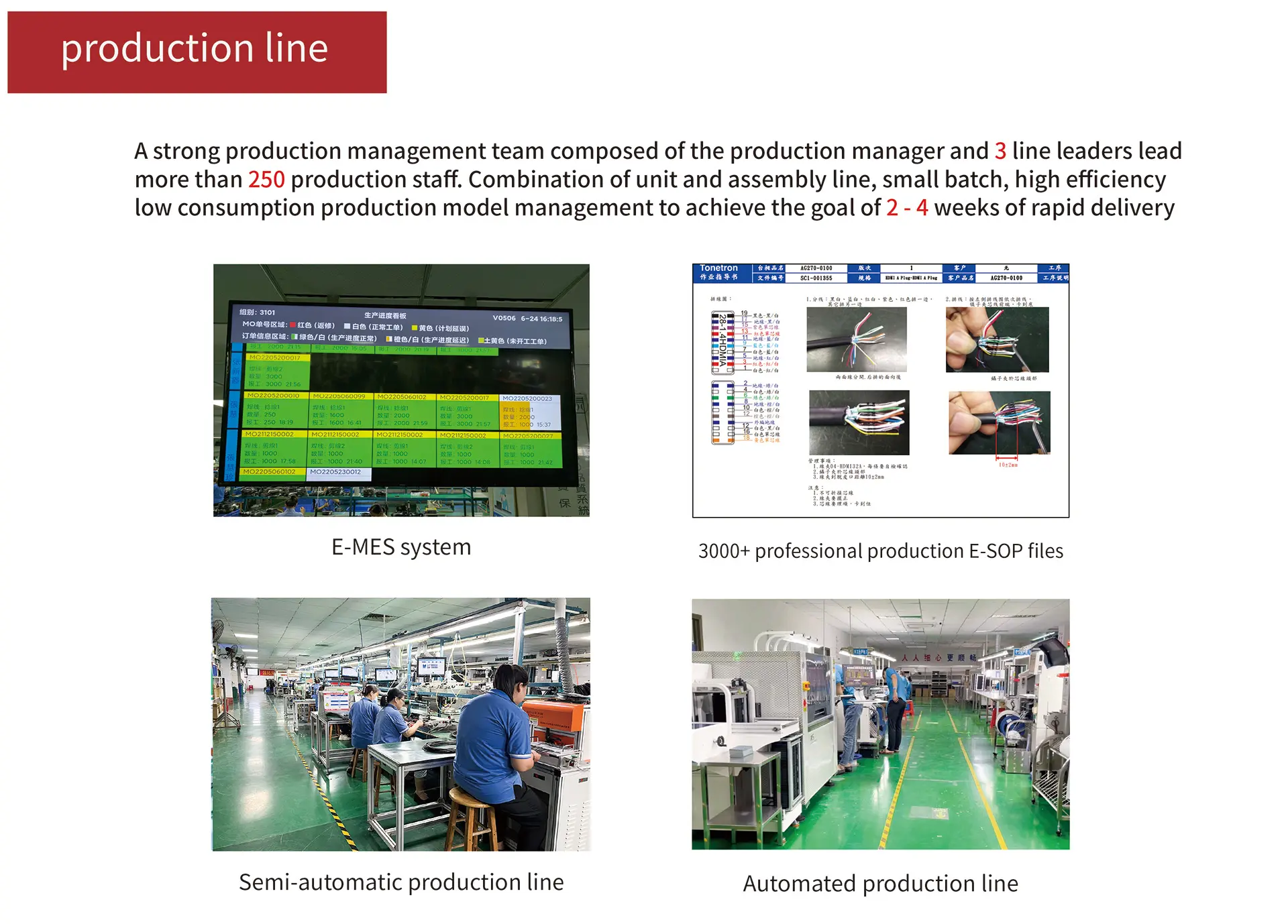
This operational longevity gives us a profound edge in quality control and process automation. Over the decades, we have evolved alongside the VESA and USB-IF specifications. Transitioning from basic analog connectivity to complex digital transport solutions, we now specialize in high-end Type-C docking stations and advanced MST hub architectures. Our factory spans tens of thousands of square meters, housing advanced testing setups that simulate real-world usage and verify performance under extreme electrostatic discharge (ESD) and physical tension.

The global demand for high-speed connectivity solutions is expanding rapidly. Enterprises are moving away from traditional desktop systems to flexible USB-C and Thunderbolt ecosystems. In this shift, Multi-Stream Transport (MST) is essential. MST technology allows systems to send multiple video streams over a single interface. This is vital for modern operations that require clean workspaces without losing video performance.
Industries like software development, finance, and medical imaging rely heavily on MST-enabled hardware. Financial institutions use multi-monitor hubs to display market data across several screens concurrently. Medical imaging rooms require dual or triple high-resolution monitors to display patient records and scans at the same time. The emergence of hybrid workspaces has also increased the demand for MST docks. Now, employees expect to connect their laptops to multiple external displays, network systems, and power sources using a single cable.
Geographically, North American and European markets lead in adopting high-end MST hub solutions, driven by corporate upgrading cycles and strict workplace ergonomics regulations. Concurrently, fast-growing industrial sectors in the Asia-Pacific region are adopting MST hubs for automated assembly line monitoring, cleanroom control systems, and localized server rack configurations. This shift highlights the need for reliable, enterprise-grade hardware that maintains performance over long operating periods.
Our manufacturing complex in Dalingshan Town, Dongguan, benefits from being in the heart of the world’s most integrated electronics supply chain. Sourcing premium components—such as high-grade aluminum shells, gold-plated connectors, high-frequency PCB board configurations, and microchips—takes days instead of weeks. This local ecosystem allows us to reduce product lead times and provide cost-effective options for global importers.
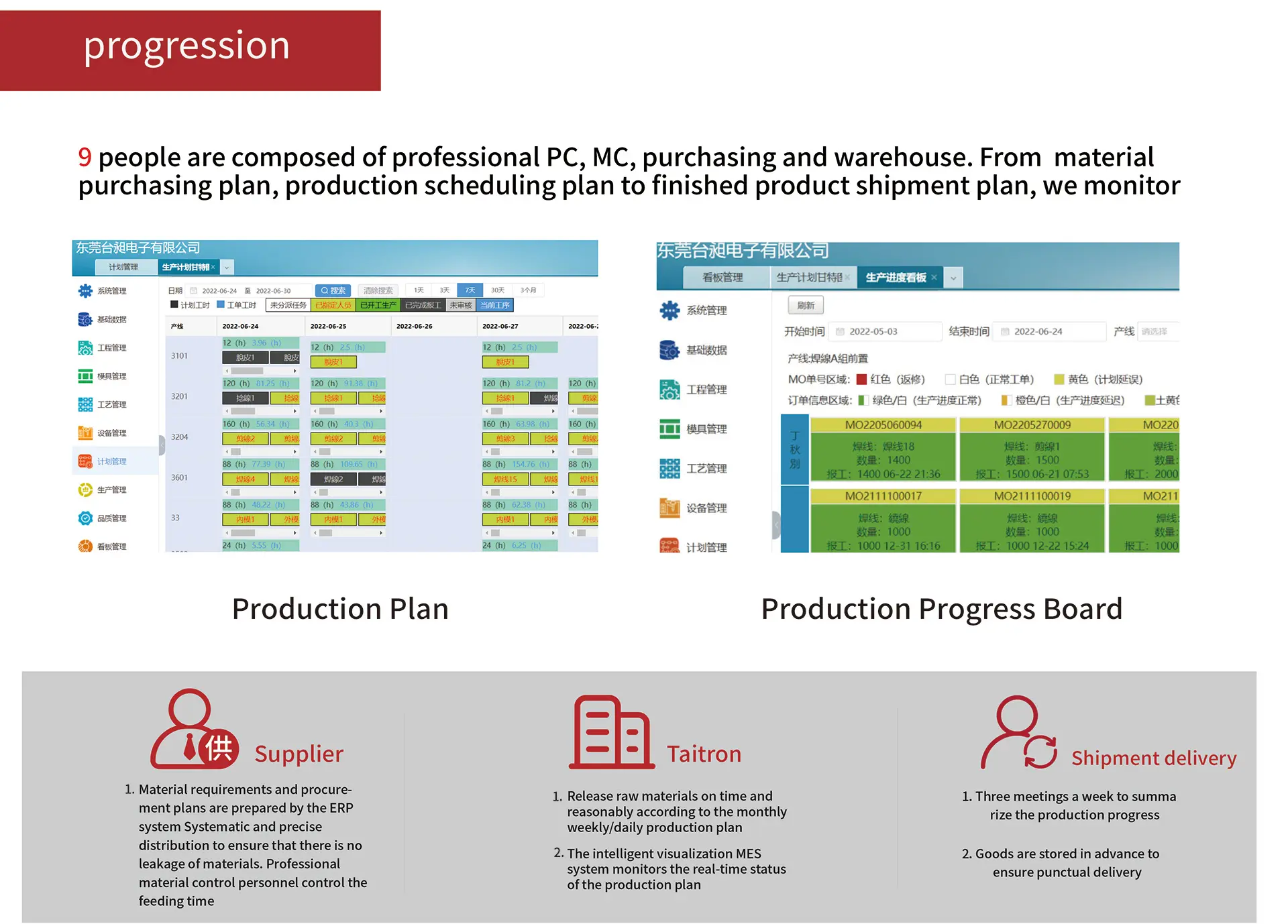
This integrated approach allows us to respond quickly to market changes. For example, if a new chipset version improves performance or resolves a software bug, we can update our production processes immediately. We also maintain a stable supply of materials, shielding our clients from sudden price increases in global copper and chip markets.
Enterprise connectivity needs vary by industry. That is why we offer tailored solutions for specific application scenarios. We design and build custom solutions for our global clients, including custom port arrays, specific color schemes, custom packaging, and specialized firmware configurations.
Here are several key sectors where our customized MST products are deployed:
Our OEM services cover all design aspects, from initial PCB layout to heat sink placement. We use high-efficiency aluminum housings with precision thermal paths to ensure the MST chips remain cool during continuous operation, preventing display flicker or disconnects.
Navigating the pricelist of MST hub manufacturing requires a clear understanding of the component options that affect final production costs. The unit price of an OEM MST hub is determined by three main technical choices:
1. Main Controller Chipset selection: The core processing chip determines compatibility, display limits, and temperature management. Standard options support dual displays, while premium chips support triple displays and high refresh rates. Top-tier chipsets cost more but offer better firmware support, minimizing user return rates.
2. PCB Assembly (PCBA) Complexity and Layers: Multi-display signals need clean routing to avoid interference. High-speed USB4 and MST designs require 6-layer or 8-layer PCBs with quality shielding. This increases production costs but prevents signal loss and screen flickering when multiple ports are in use.
3. Enclosure Material & Heat Dissipation Design: Plastic casings are more cost-effective but suffer from limited heat dissipation. Solid aluminum enclosures, featuring integrated thermal pads, provide a robust and durable design that handles higher temperatures and matches premium hardware styles.
We work with B2B buyers to optimize these technical features based on target retail prices or corporate procurement budgets. By manufacturing key parts of the cable assemblies ourselves, we provide competitive pricing and consistent quality compared to simple assembly factories.
The display connectivity industry is moving towards higher bandwidths and unified protocols. The integration of USB4 and Thunderbolt 4 has resolved past limitations of MST, allowing single-port systems to drive multiple high-resolution displays alongside high-speed data transfer. Additionally, VESA's Display Stream Compression (DSC) allows MST hubs to stream ultra-high-definition signals with minimal visual loss, enabling triple 4K/60Hz layouts over standard Type-C ports.
Additionally, modern USB Power Delivery (PD 3.1) supports up to 140W and 240W configurations. This allows next-generation MST docking stations to supply power to high-performance workstations directly from the hub, reducing cable management complexity.
As a technology-focused OEM/ODM manufacturer, Dongguan Taitron Electronics keeps pace with these standards. We continue to invest in research and development to update our product lines, ensuring our clients receive hardware that complies with current VESA and USB-IF guidelines.
Read through our detailed technical FAQ to address common implementation questions and system design challenges.
Explore our additional range of performance connectors, high-speed adapters, and legacy cables designed for commercial and consumer markets.
 Taichang Electronic